

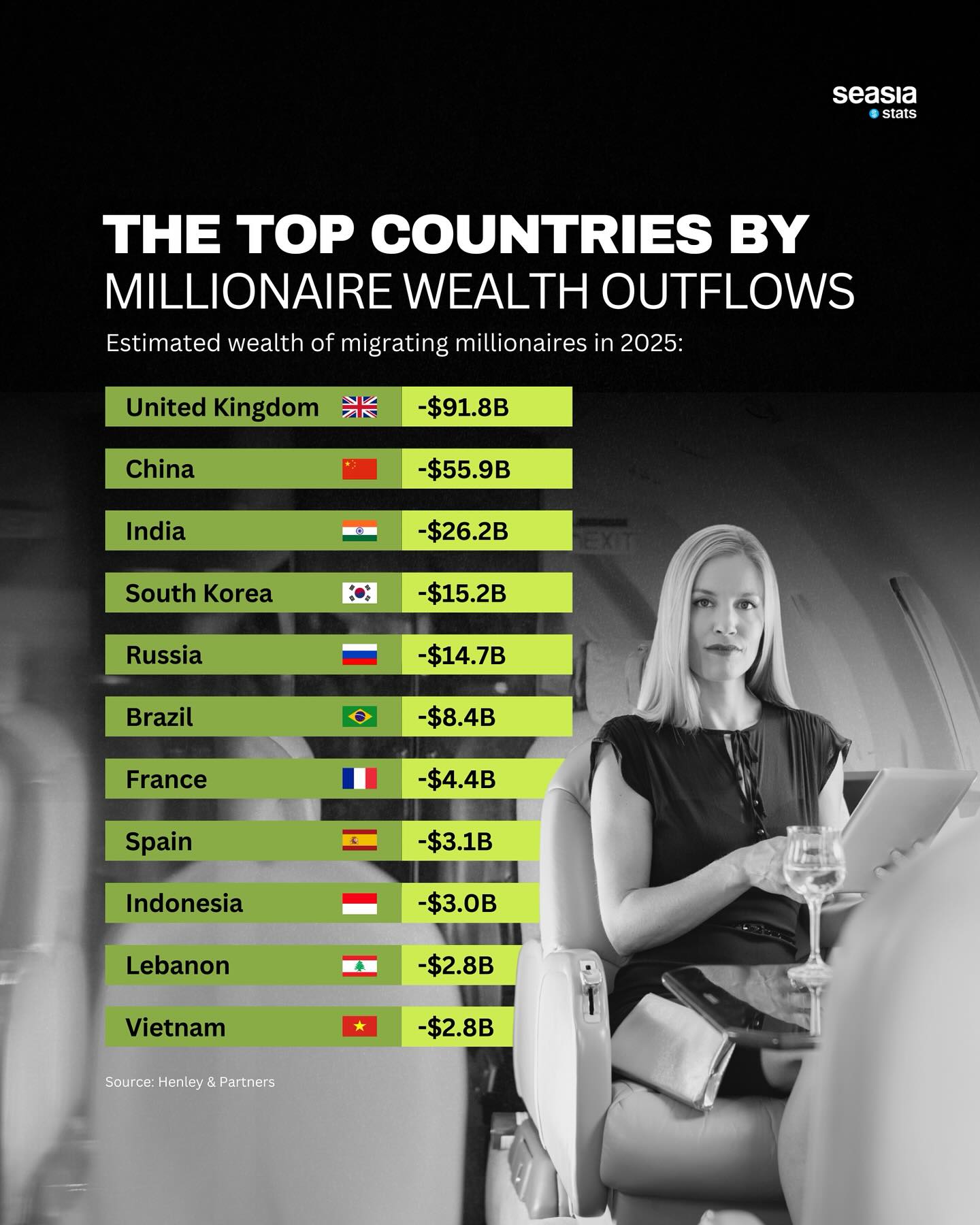
In 2025, the United Kingdom leads the world in millionaire wealth outflows, with an estimated $91.8 billion leaving the country. This reflects the growing trend of high-net-worth individuals (HNWIs) seeking better living conditions, tax advantages, and enhanced security in other countries. The outflows are largely attributed to political uncertainty, high taxes, and shifting economic conditions, prompting wealthy individuals to look for more stable, lucrative environments for both lifestyle and investment opportunities.
The massive outflow from the UK highlights a growing concern among affluent individuals who are relocating their assets abroad. Countries like Switzerland, Singapore, and the United States are seeing increasing demand from British millionaires who are looking for better conditions to safeguard their wealth and secure their future. The migration of these top-tier investors also signals global competition for attracting and retaining high-value residents.
China and India: Rising Trends of Wealth Migration
Following closely is China, with an estimated $55.9 billion in wealth outflows in 2025. The migration is driven by a combination of factors, including political instability, strict regulations, and a desire for greater investment opportunities abroad. The country’s high-net-worth individuals are increasingly opting for more open financial systems, better governance, and a higher quality of life in destinations like Singapore and the United States.
India follows with $26.2 billion in wealth leaving the country. While India has become one of the fastest-growing economies, its high-net-worth individuals are seeking stability and access to global markets for investment and financial growth. Concerns over economic instability, infrastructure challenges, and governance issues are key drivers for the migration of wealth. As a result, more affluent Indians are moving their assets and families to countries with stable economic environments and better opportunities for business and education.
South Korea and Russia: Significant Outflows Amid Uncertainty
South Korea and Russia round out the top five countries experiencing significant millionaire wealth outflows. South Korea loses approximately $15.2 billion due to concerns about the country's economic stability, property prices, and governmental policies that have made affluent individuals seek other options. On the other hand, Russia sees $14.7 billion in outflows, largely due to the political climate, economic sanctions, and the growing desire among Russian millionaires for safer, more stable environments outside of Russia. Both countries are facing similar pressures to retain their wealthy populations as they compete for global investment.
Notable Outflows in Other Countries
Beyond the top five, countries like Brazil, France, Spain, Indonesia, Lebanon, and Vietnam also experience notable wealth outflows. These countries, while not losing as much as the global leaders, still show signs of economic and political stress. The figures underscore growing concerns about governance, financial ecosystems, and investment opportunities at home. For example, in Indonesia and Vietnam, the outflows are relatively smaller at $3.0 billion and $2.8 billion, respectively, but still indicate a shift in wealth as wealthy individuals seek more stable environments for investment.
In Southeast Asia, cities like Jakarta and Ho Chi Minh City remain attractive investment hubs but face challenges in infrastructure, governance, and financial systems that drive affluent individuals to seek international opportunities. Despite the outflows, these cities continue to be key economic players, drawing attention from both regional and global investors looking to capitalize on the growing markets of Southeast Asia.
The Global Race for Wealth Retention
The trend of millionaire wealth migration underscores a larger global phenomenon, where countries compete to attract high-net-worth individuals and retain their capital. This outflow of wealth is not just about individuals seeking new destinations; it’s a reflection of how global economic shifts, governance concerns, and investment opportunities are driving wealth to new locations.
As countries like the United Kingdom, China, and India face outflows, they must address the challenges that drive wealthy individuals to seek alternatives. For the receiving countries, attracting this wealth means offering favorable tax regimes, business opportunities, and a high quality of life. This global redistribution of wealth will continue to shape the future of global economies, creating opportunities for countries that can provide the stability and growth that affluent individuals seek.


