

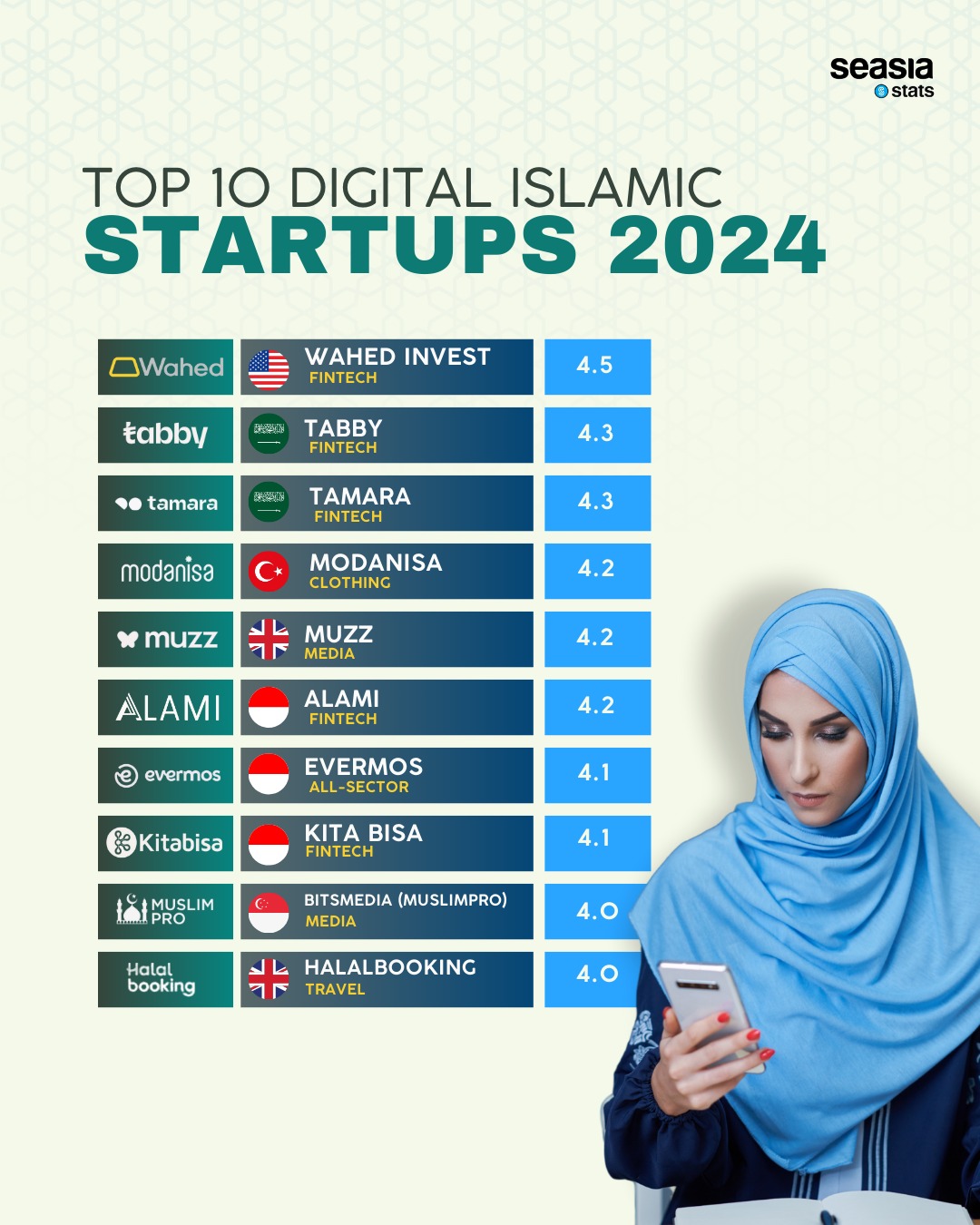
Alaam Gateway and DinarStandard have spotlighted 30 digital-first startups reshaping the Islamic economy with their innovative solutions. Here's a closer look at the Top 10 Digital Islamic Startups of 2024, based on their impact, innovation, and alignment with Islamic values.
1. Wahed Invest (USA)
- Sector: Fintech
- Rating: 4.5
- Impact: Wahed Invest simplifies halal investing, providing Sharia-compliant portfolios to make ethical investing accessible to Muslims worldwide.
2. Tabby (Saudi Arabia)
- Sector: Fintech
- Rating: 4.3
- Impact: Tabby introduces a "Buy Now, Pay Later" model tailored to the Islamic lifestyle, empowering consumers to manage finances responsibly.
3. Tamara (Saudi Arabia)
- Sector: Fintech
- Rating: 4.3
- Impact: Similar to Tabby, Tamara focuses on seamless e-commerce experiences by offering flexible, interest-free payment plans.
4. Modanisa (Türkiye)
- Sector: Clothing
- Rating: 4.2
- Impact: Modanisa pioneers modest fashion, catering to Muslim women seeking stylish yet conservative clothing options.
5. Muzz (United Kingdom)
- Sector: Media
- Rating: 4.2
- Impact: Muzz builds a media hub for Islamic content, fostering learning and connection among Muslims globally.
6. Alami (Indonesia)
- Sector: Fintech
- Rating: 4.2
- Impact: Alami champions peer-to-peer lending aligned with Islamic finance, creating opportunities for ethical funding and investment.
7. Evermos (Indonesia)
- Sector: All-Sector
- Rating: 4.1
- Impact: Evermos bridges entrepreneurs and consumers, supporting small businesses and enhancing local economies.
8. Kita Bisa (Indonesia)
- Sector: Fintech
- Rating: 4.1
- Impact: Kita Bisa enables value-driven crowdfunding for social and community projects, encouraging collective impact.
9. Bitsmedia (Muslim Pro) (Singapore)
- Sector: Media
- Rating: 4.0
- Impact: Bitsmedia’s Muslim Pro app serves as a comprehensive Islamic lifestyle platform, offering prayer tools, Quran access, and community features.
10. HalalBooking (United Kingdom)
- Sector: Travel
- Rating: 4.0
- Impact: HalalBooking revolutionizes Muslim-friendly travel by ensuring halal-compliant accommodations and services.
Key Takeaways
These startups are redefining how technology integrates with Islamic values, driving ethical innovation and fostering inclusive growth. They highlight the diverse sectors in the Islamic economy, from fintech and fashion to travel and media, underscoring the immense potential of this market.


