

Brunei Darussalam
The Land of Unexpected Treasures
Search
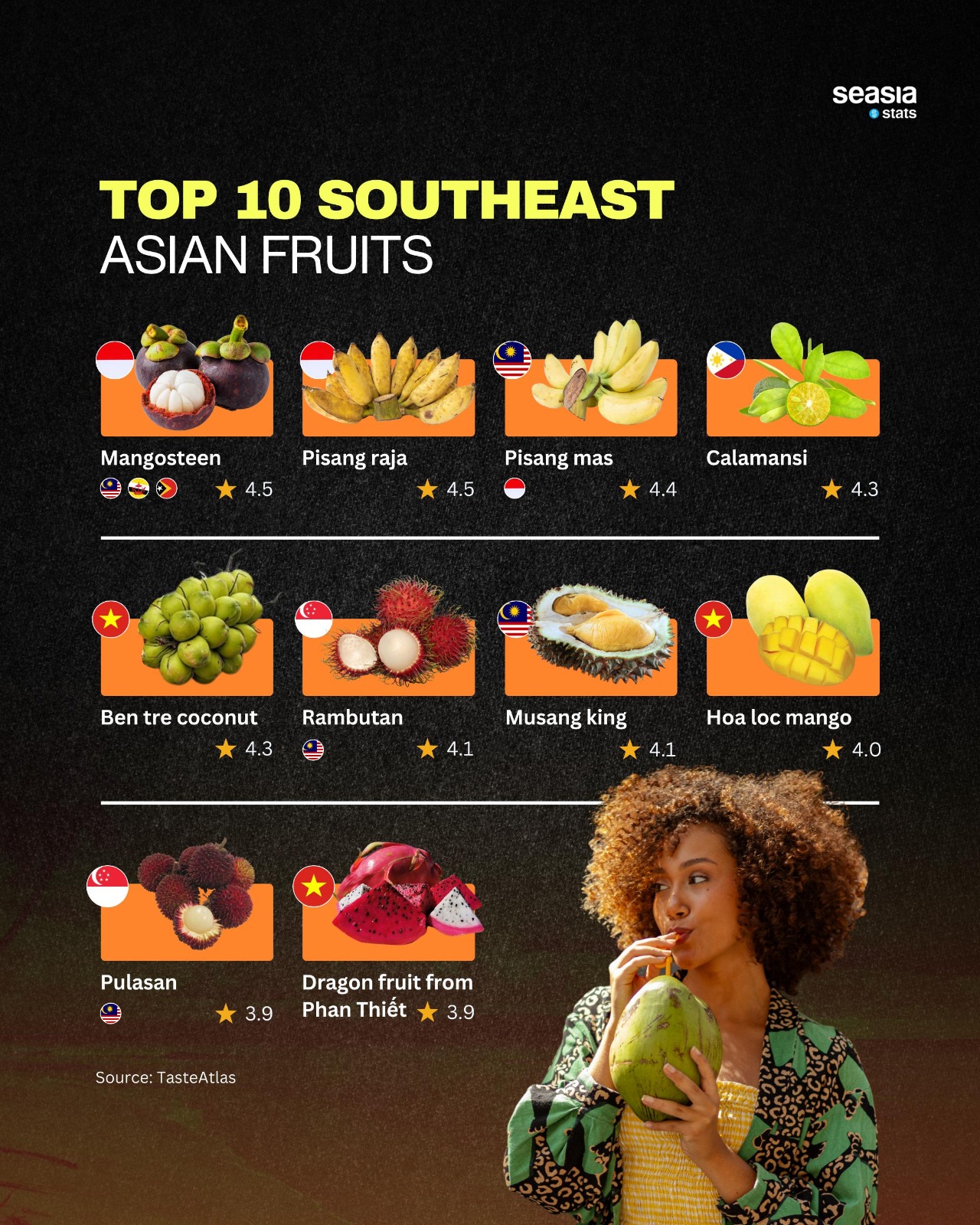
Southeast Asia is a treasure trove for fruit enthusiasts, with its diverse range of tropical fruits offering a sweet, tangy, and sometimes even exotic experience. The latest TasteAtlas rankings spotlight the region’s finest fruits, each with its own unique flavor profile and cultural significance. Whether you’re savoring the rich and creamy durian or enjoying the refreshing bite of a rambutan, these fruits are much more than just snacks—they’re part of the vibrant culinary identity of Southeast Asia.
The Mangosteen, often hailed as the “queen of fruits,” takes the top spot in TasteAtlas' rankings, sharing the honor with Pisang Raja, a premium banana variety cherished across Indonesia and Malaysia. Both fruits earned an impressive 4.5-star rating, a testament to their exceptional flavor profiles. The mangosteen’s tangy sweetness combined with its juicy texture makes it a tropical favorite, while Pisang Raja is known for its rich sweetness, making it a popular choice for both everyday snacks and desserts.
Pisang Mas, another banana variety with a similar level of sweetness, follows closely behind with a 4.4-star rating. This delightful fruit, beloved in both Indonesia and Malaysia, stands out for its smooth texture and intense flavor, making it a must-try for banana lovers across Southeast Asia.
The Calamansi, a citrus fruit native to the Philippines, receives a 4.3-star rating, thanks to its sharp, zesty flavor that packs a punch in both drinks and dishes. The tangy notes of calamansi elevate everything from marinades to refreshing iced beverages, making it a beloved ingredient in Filipino cuisine.
Similarly, the Ben Tre Coconut from Vietnam also earns 4.3 stars, recognized not only for its sweet coconut water but also for its creamy texture and versatility. Found abundantly in the Ben Tre Province, this coconut is an integral part of the region’s culinary offerings, from coconut-based desserts to savory dishes.
No list of Southeast Asian fruits is complete without the infamous Durian. Known as the “king of fruits,” Musang King Durian stands at 4.1 stars, loved for its creamy texture and distinct aroma. While its scent can be polarizing, the durian’s rich flavor makes it a delicacy, often used in desserts and savory dishes across the region.
The Rambutan, another 4.1-star fruit, is just as exciting with its vibrant, spiky exterior and juicy, sweet flesh. This exotic fruit, found throughout Indonesia, Malaysia, and Thailand, offers a refreshing bite that captures the essence of Southeast Asia’s tropical landscapes.
Another standout is Hoa Loc Mango, a tropical treasure from Viet Nam that has won hearts with its sweet, tender flesh and delightful golden color. Scoring 4.0 stars, it is often enjoyed as a street snack or used to create upscale desserts, showcasing the mango’s versatility and irresistible taste.
Other fruits rounding out the list include Pulasan from Singapore and Malaysia, as well as Dragon Fruit from Phan Thiết, Viet Nam. Both earning 3.9 stars, these fruits are cherished for their unique looks and flavors, adding a touch of color and excitement to the region’s fruit offerings.
Southeast Asia’s rich cultural and geographical diversity makes it the perfect home for a wide variety of tropical fruits. From the sweet and creamy musang king durian to the tangy burst of calamansi, these fruits offer an authentic taste of the region. The rankings from TasteAtlas are a reminder of how the subtropical climates of Southeast Asia provide not just diverse culinary experiences, but also a deeper connection to the culture and lifestyle of its people.
Whether you’re visiting a local market in Bali, strolling through a Vietnamese orchard, or simply enjoying a refreshing mango in Thailand, these fruits offer more than just flavor—they offer a taste of the tropics that you’ll never forget.


The Land of Unexpected Treasures

Land of the Khmer

The Emerald of the Equator

The Land of a Million Elephant

Land of Indigenous Malay

The Land of the Golden Pagoda

Pearl of the Orient Seas

The Lion City

Southeast Asia Region

The Land of Smiles

A Nation of the 21st Century

The Land of Blue Dragon

Beyond Southeast Asia