

Brunei Darussalam
The Land of Unexpected Treasures
Search
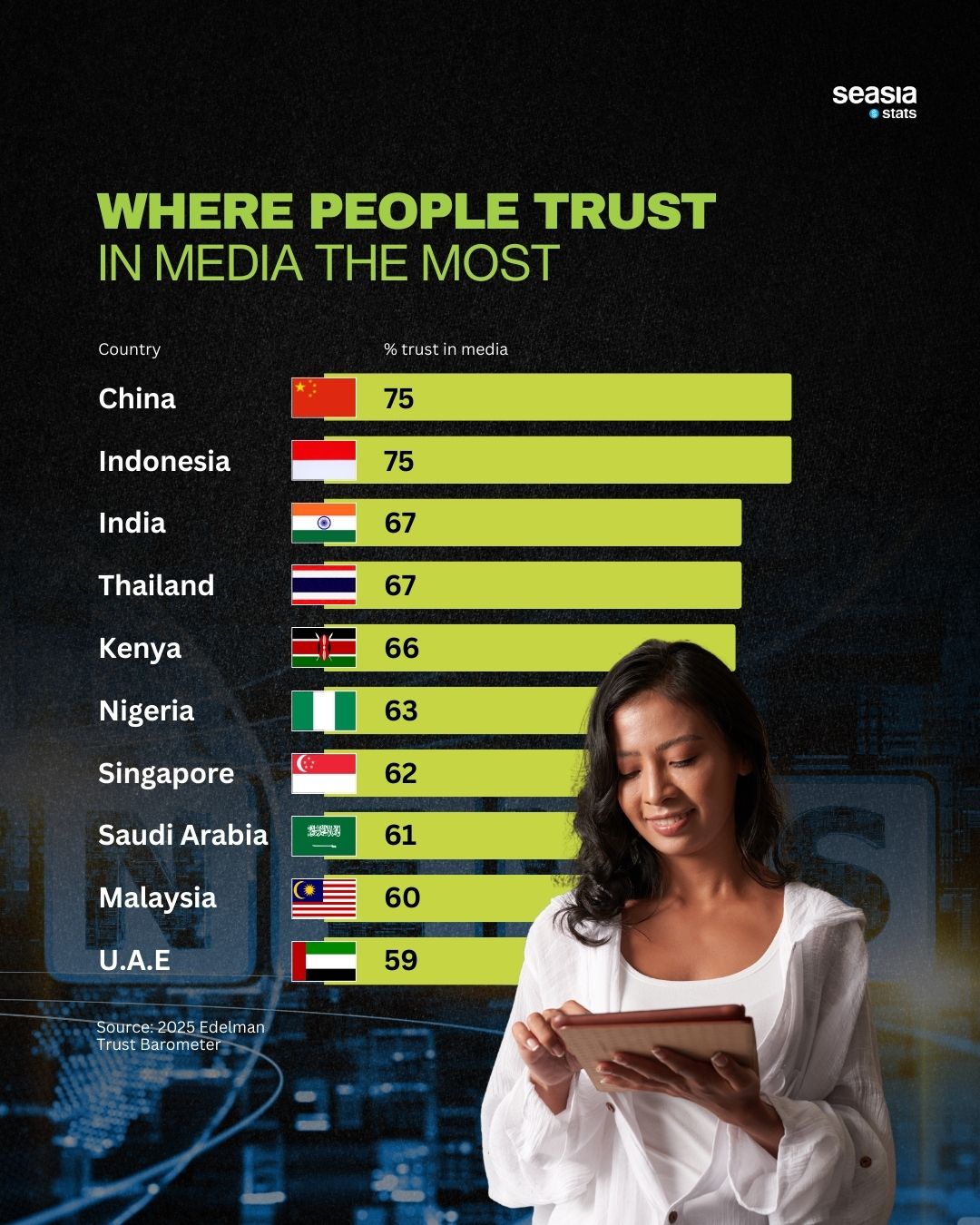
In the latest 2025 Edelman Trust Barometer, China and Indonesia emerge as global leaders in media trust, with an impressive 75% of their populations expressing confidence in their media outlets. These countries have risen to the top of the rankings, surpassing many traditionally more democratic nations. This strong trust in media reflects not only the governments’ influence but also the growing role of media in shaping public discourse in these nations.
The trust levels in these countries are a testament to how media ecosystems have evolved in China and Indonesia. China’s tightly controlled yet highly influential state media, alongside the country’s rapidly expanding digital media platforms, plays a significant role in shaping public opinion. Meanwhile, Indonesia’s online media scene is a vibrant space where diverse views find an audience, particularly among the younger generation.
India and Thailand also show strong levels of confidence in their media, with 67% of the population in each country expressing trust. This reflects a growing acceptance of media platforms in Southeast Asia and South Asia, where information is increasingly consumed through both traditional channels and new digital outlets. In Thailand, the convergence of traditional media with digital platforms has built a diverse media environment that has gained the trust of a significant portion of the population.
In Southeast Asia, countries like Singapore (62%) and Malaysia (60%) continue to demonstrate a solid level of media confidence. While regulatory environments in both countries remain a factor, digital literacy and media freedom are helping to cultivate an informed and engaged citizenry. Singapore’s strong digital media presence, coupled with a highly regulated media landscape, helps maintain public trust in its media. Similarly, Malaysia’s mix of traditional and emerging media has fostered positive perceptions of the media ecosystem.
Countries outside Southeast Asia also show relatively high levels of trust in the media. Kenya, with 66%, stands out as a key player in Africa, reflecting its increasingly dynamic media scene. While Nigeria (63%) and Saudi Arabia (61%) traditionally have more regulated media environments, they also demonstrate higher-than-expected trust. These nations have seen a rise in media platforms that are accessible and reliable, even within complex political and social climates.
Saudi Arabia’s growing digital presence, particularly in news and online platforms, has helped increase public confidence in media outlets, despite the historically skeptical attitude toward independent journalism in the region.
The findings from the Edelman Trust Barometer underscore the complex interplay between government regulation, media freedom, and digital literacy in shaping how people view their media. Countries like China and Indonesia lead not just because of media infrastructure but also due to the changing role of digital platforms that have made media more accessible and inclusive.
In Southeast Asia, youth-driven media consumption, especially via social media and digital platforms, has played a significant role in shaping public trust. These platforms allow younger, more digitally literate populations to access diverse viewpoints, building trust through engagement rather than just passive consumption of information.


The Land of Unexpected Treasures

Land of the Khmer

The Emerald of the Equator

The Land of a Million Elephant

Land of Indigenous Malay

The Land of the Golden Pagoda

Pearl of the Orient Seas

The Lion City

Southeast Asia Region

The Land of Smiles

A Nation of the 21st Century

The Land of Blue Dragon

Beyond Southeast Asia