

Brunei Darussalam
The Land of Unexpected Treasures
Search
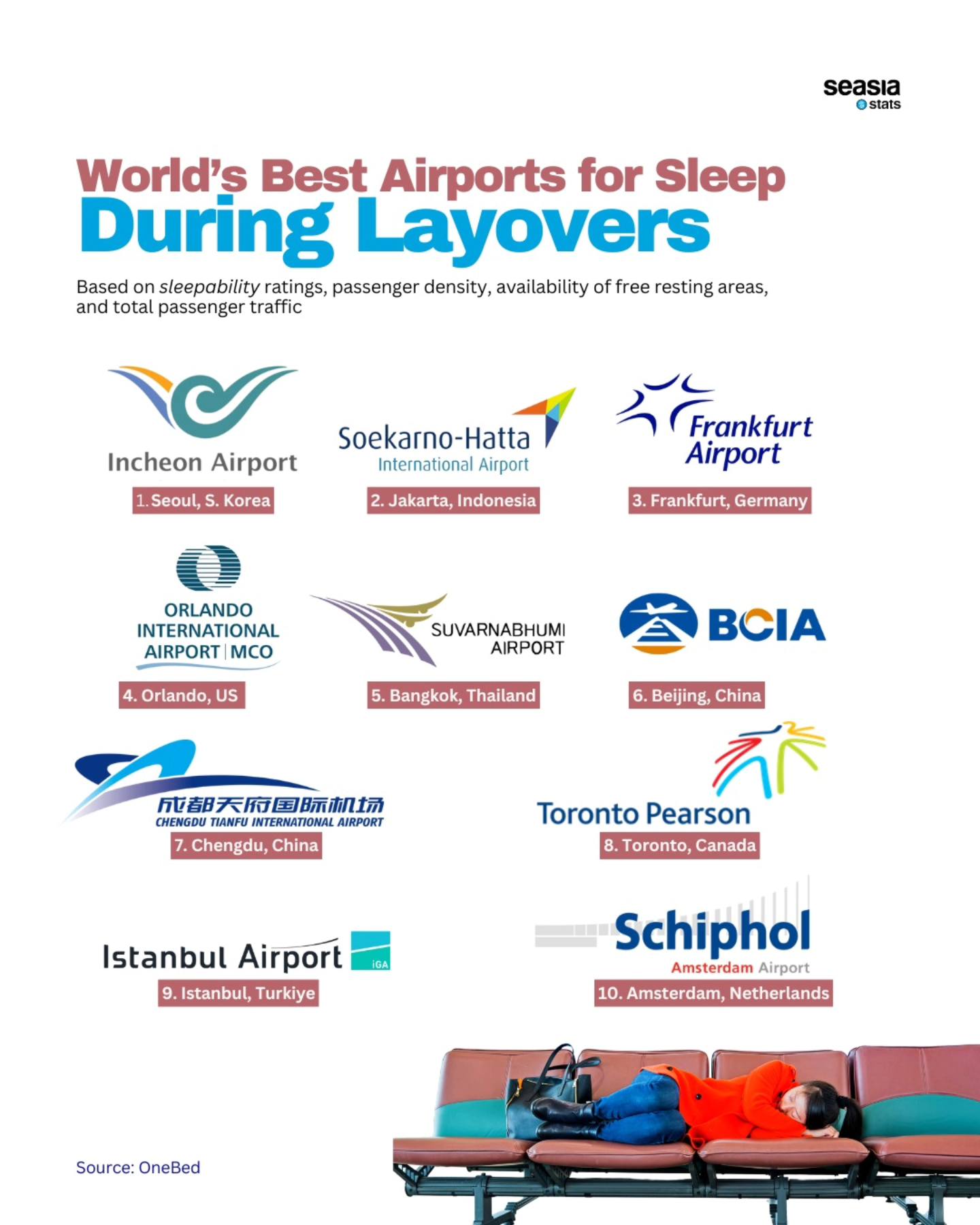
A recent analysis by Onebed highlights the best airports worldwide for sleeping during layovers, emphasizing passenger comfort through factors such as free resting areas, passenger density, and overall traffic. The findings reveal notable global leaders making strides in providing relaxing environments for travelers.
Seoul Incheon International Airport in South Korea secured the top position with an impressive sleepability score of 86. Renowned for its eight free resting areas, it also benefits from a low passenger density of 9,448 per hectare. These features make it an exceptional location for travelers seeking comfort during layovers.
The airport’s emphasis on passenger well-being, combined with its spacious design, exemplifies how infrastructure can cater to the needs of modern air travelers, transforming layovers into restful experiences.
Indonesia’s Soekarno-Hatta International Airport ranked second globally with a score of 73. Offering seven free resting areas, the airport caters to travelers' comfort despite a higher passenger density of 24,457 per hectare.
As a key gateway to Southeast Asia, Soekarno-Hatta’s placement underscores the region’s growing focus on passenger-friendly amenities, balancing increasing traffic with improved facilities.
Germany’s Frankfurt Airport secured the third spot with a score of 69. It provides six free resting areas and a moderate passenger density of 25,811 per hectare, ensuring a balance between convenience and comfort.
Orlando International Airport in the United States ranked fourth, achieving a perfect sleepability rating of 5/5. Despite having only one free resting area, its spacious layout and a relatively low passenger density of 12,294 per hectare create a relaxing environment.
Dylan Tollemache, Co-Founder and CEO of Onebed, noted the growing demand for comfortable layover experiences, stating:
“Travelers today are increasingly prioritizing comfort and convenience during long layovers or unexpected delays, and airports are responding with improved amenities to help people rest.”
Airports like Seoul Incheon and Chengdu Tianfu exemplify this trend by reducing passenger density and offering dedicated nap areas. As the aviation industry evolves, these innovations highlight a shift toward creating environments that cater to travelers' needs, redefining airports as spaces for relaxation and rest.


The Land of Unexpected Treasures

Land of the Khmer

The Emerald of the Equator

The Land of a Million Elephant

Land of Indigenous Malay

The Land of the Golden Pagoda

Pearl of the Orient Seas

The Lion City

Southeast Asia Region

The Land of Smiles

A Nation of the 21st Century

The Land of Blue Dragon

Beyond Southeast Asia