

Brunei Darussalam
The Land of Unexpected Treasures
Search
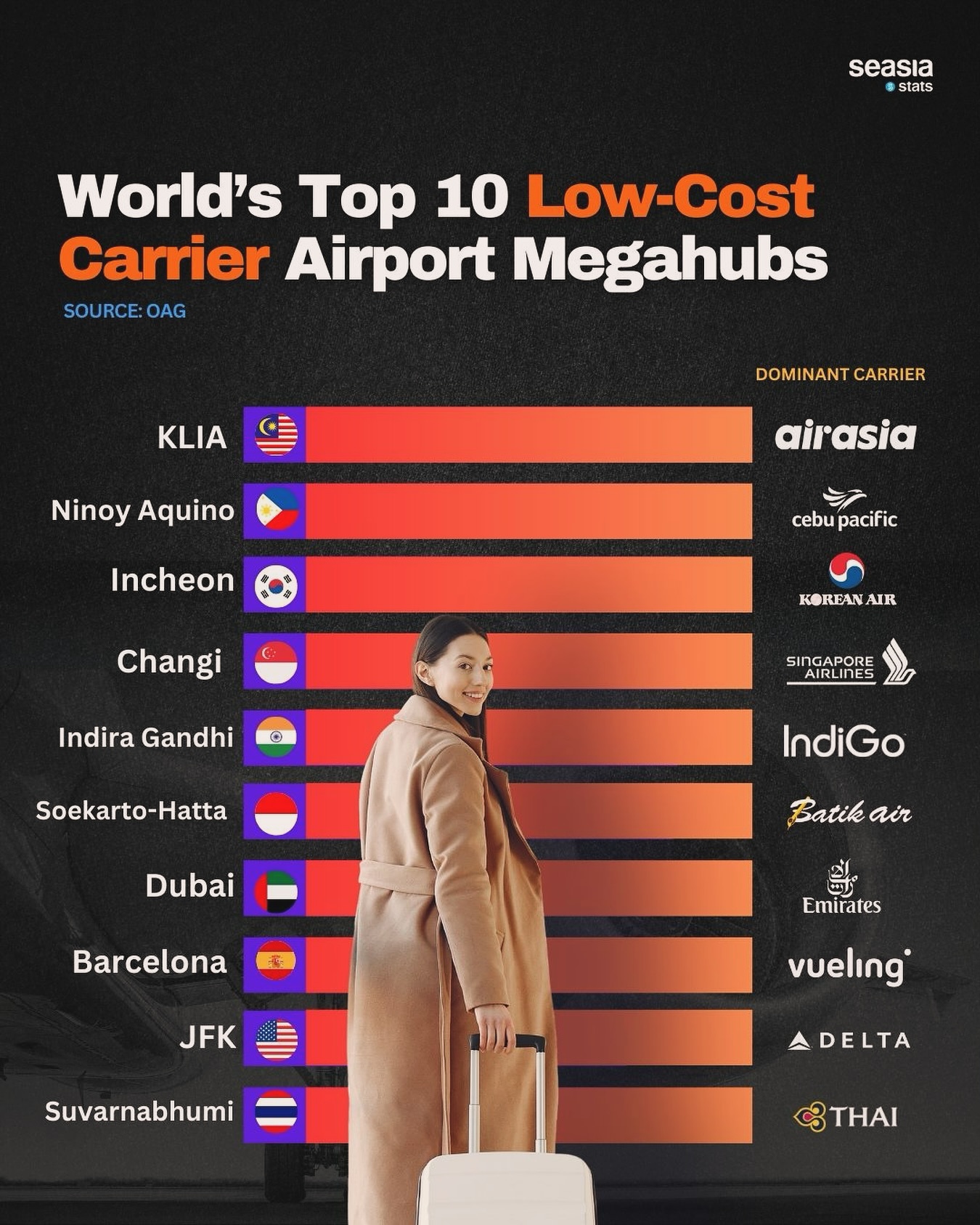
As the demand for affordable air travel continues to rise, the Asia Pacific region stands out as the leader in low-cost carrier (LCC) airport megahubs. According to the latest data from OAG, airports in this region hold a significant share of the global low-cost travel market, showcasing their crucial role in connecting travelers to various destinations without the hefty price tag. This trend reflects not only the increasing popularity of budget travel but also the strategic positioning of airlines and airports in catering to this demand.
Kuala Lumpur International Airport (KUL) takes the top spot in the rankings, providing an impressive 14,583 low-cost connections across 137 destinations. AirAsia, the dominant low-cost airline operating from KUL, controls 35% of all flights at the airport and holds 48% of the total LCC capacity. This strong presence underscores AirAsia's influence in the region, enabling travelers to explore various destinations affordably. The airport's strategic location also makes it a vital hub for travelers throughout Southeast Asia.
Manila’s Ninoy Aquino International Airport (MNL) has made significant strides in the low-cost travel market, jumping to second place in the rankings. With robust connectivity to 97 destinations, MNL demonstrates the growing importance of low-cost carriers in the Philippines, with Cebu Pacific leading the charge. This surge reflects a broader trend in the region, where consumers are increasingly seeking budget-friendly options for air travel.
Beyond Asia Pacific, Dubai International Airport (DXB) maintains its status as the highest-ranked airport outside of the region. With a network covering 279 destinations, Dubai has become a critical player in the low-cost travel landscape, catering to a diverse array of passengers. Additionally, Barcelona El Prat Airport (BCN) holds the top position in Europe, with Vueling dominating the low-cost capacity. These developments highlight the expanding global reach of low-cost carriers, as they adapt to changing travel demands across different regions.
The continued growth of low-cost carriers is reshaping the air travel landscape, with airports in Asia Pacific leading the way. This region alone accounts for 64% of the top 25 low-cost megahubs, a clear indication of its dominance in the sector. Interestingly, LCCs capture an impressive 61% of all seats in Southeast Asia, significantly surpassing the global average of 34%. This trend reflects a growing preference for budget travel options among consumers, making air travel more accessible to a wider audience.
As the travel industry evolves, the influence of low-cost carriers is likely to expand further. With more travelers seeking economical ways to explore the world, airports and airlines must continue to innovate and adapt to meet these demands. The future of air travel appears bright, particularly for those looking to explore new destinations without breaking the bank. The ongoing commitment of low-cost carriers to expand their networks and improve services will undoubtedly play a key role in shaping the travel experiences of millions.


The Land of Unexpected Treasures

Land of the Khmer

The Emerald of the Equator

The Land of a Million Elephant

Land of Indigenous Malay

The Land of the Golden Pagoda

Pearl of the Orient Seas

The Lion City

Southeast Asia Region

The Land of Smiles

A Nation of the 21st Century

The Land of Blue Dragon

Beyond Southeast Asia