

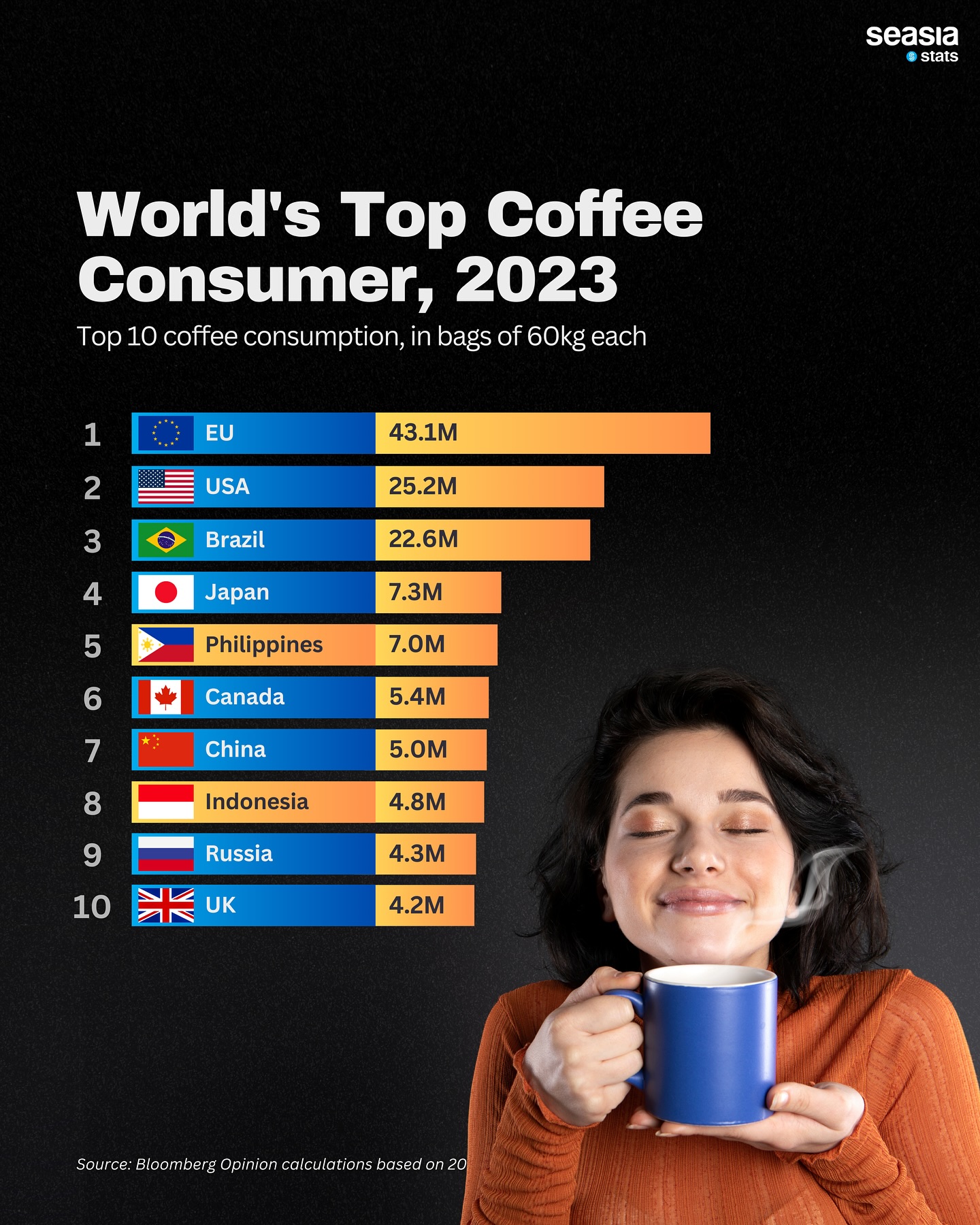
In 2023, the Philippines and Indonesia have entered the ranks of the world’s top coffee consumers, highlighting Southeast Asia's growing love for coffee. According to data compiled by Bloomberg Opinion, using calculations based on 2023 USDA data, the Philippines ranks 5th in global coffee consumption, with a total of 7.0 million bags (each weighing 60 kilograms). Indonesia follows closely at 8th place, consuming 4.3 million bags of coffee.
This data sheds light on the increasing demand for coffee in Southeast Asia, a region where coffee culture is thriving. While traditionally dominated by countries like the United States and Brazil, Southeast Asia’s presence in the top 10 marks a significant shift in global coffee consumption patterns.
Coffee Culture in the Philippines and Indonesia
The rise in coffee consumption in the Philippines can be attributed to the country's evolving coffee culture. From trendy cafés in Manila to local coffee shops in smaller cities, coffee has become a staple in Filipino daily life. Many Filipinos have embraced coffee as both a morning necessity and a social beverage, leading to increased domestic demand for various coffee types, from instant coffee to specialty brews.
Similarly, Indonesia, one of the world’s largest coffee producers, has seen a growing domestic appetite for coffee. With its rich coffee heritage, including renowned varieties like Sumatra and Java, Indonesia's local consumption has been steadily rising. The popularity of kopi, or traditional Indonesian coffee, along with modern coffee shops, has made coffee an essential part of Indonesian culture.
Southeast Asia’s Growing Coffee Market
The inclusion of both the Philippines and Indonesia in the global top 10 highlights Southeast Asia’s burgeoning coffee market. This growth is driven by rising incomes, urbanization, and the increasing influence of Western coffee culture in the region. Younger generations, in particular, are contributing to this trend as they adopt coffee as part of their lifestyle, often enjoying it in social settings or as part of their daily routines.
Furthermore, the expansion of international coffee chains and the rise of local specialty cafés have made coffee more accessible to a wider population. These factors have contributed to the steady increase in coffee consumption across Southeast Asia, making it an emerging market for the global coffee industry.
Global Coffee Consumption Rankings
The top spots in the global coffee consumption rankings are dominated by the European Union, the United States, and Brazil, with the EU leading the pack at 43.1 million bags of coffee consumed annually. The Philippines, with its 7.0 million bags, now ranks 5th, followed by countries like Japan, Canada, China, and Indonesia.
This shift in coffee consumption patterns reflects not only the growing popularity of coffee in Southeast Asia but also the region's increasing role in the global coffee market. As Southeast Asian nations continue to embrace coffee culture, their influence on the industry is likely to expand, driving demand for both locally produced and imported coffee.
Conclusion
The rise of the Philippines and Indonesia in global coffee consumption rankings underscores Southeast Asia's growing importance in the global coffee landscape. With coffee becoming an integral part of everyday life in these countries, the region is emerging as a key player in the industry. As coffee culture continues to evolve and expand in Southeast Asia, it will be interesting to see how this trend influences global consumption patterns in the coming years.


