

Brunei Darussalam
The Land of Unexpected Treasures
Search
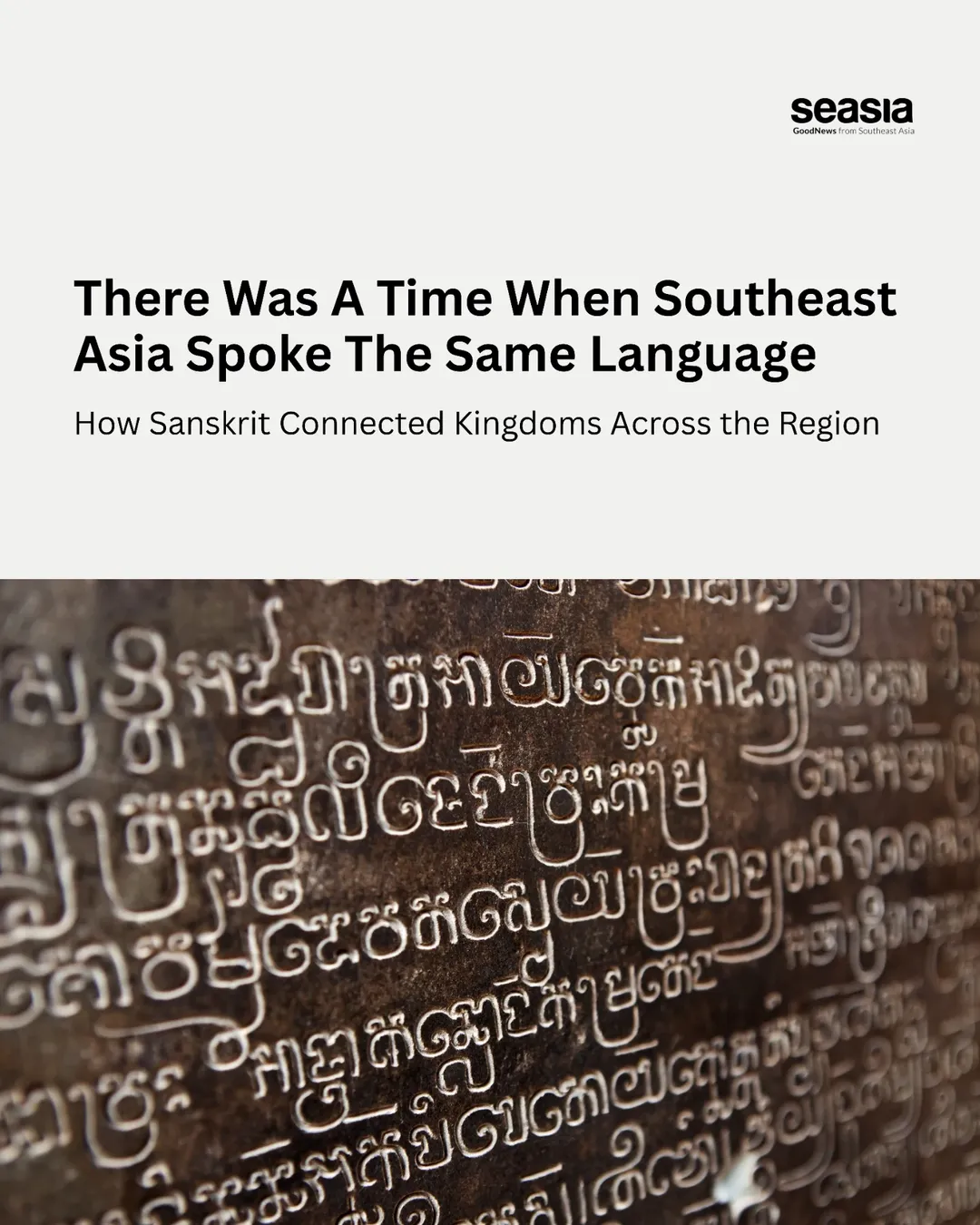
Centuries before English became the world’s dominant language, Southeast Asia was already connected by a shared intellectual system. From the Mekong River valley to Java and Bali, elites across the region communicated ideas of power, law, and culture through Sanskrit. This phenomenon is known as the Sanskrit Cosmopolis.
The term was popularized by historian Sheldon Pollock to describe how Sanskrit spread between the 4th and 14th centuries. Unlike European colonial languages, Sanskrit did not expand through migration or military conquest. It spread through what Pollock calls “cultural conquest,” adopted voluntarily by local rulers and scholars who saw it as the highest medium of thought.
Kingdoms such as the Khmer Empire, Champa, Ayutthaya, Srivijaya, and Majapahit used Sanskrit to legitimize authority. Royal inscriptions, genealogies, and political concepts were written in the same refined language, creating a shared political vocabulary across Southeast Asia. Ideas like Cakravartin and Mandala shaped how power was understood from Cambodia to Indonesia.
Sanskrit also formed a transregional intellectual sphere. Monks, poets, and scholars could debate philosophy, law, and cosmology across vast distances without language barriers. Legal texts like the Manava Dharmasastra influenced governance, while literary traditions such as Java’s kakawin and Thailand’s Ramakien adapted Indian epics into local cultures.
Although Sanskrit gradually declined with the rise of Islam and Western colonialism, its legacy remains deeply embedded. Modern languages like Indonesian and Thai still rely on Sanskrit-derived terms for statecraft, philosophy, and knowledge.


The Land of Unexpected Treasures

Land of the Khmer

The Emerald of the Equator

The Land of a Million Elephant

Land of Indigenous Malay

The Land of the Golden Pagoda

Pearl of the Orient Seas

The Lion City

Southeast Asia Region

The Land of Smiles

A Nation of the 21st Century

The Land of Blue Dragon

Beyond Southeast Asia