Southeast Asia’s banking history is as colorful and dynamic as the region itself. From humble beginnings during colonial times to becoming modern digital powerhouses, the oldest banks in Southeast Asia have grown, adapted, and innovated in ways that mirror the region’s rapid economic transformation.
Whether you’re a young professional curious about the roots of modern finance or simply eager to understand how traditional institutions evolve in the digital age, these stories offer inspiring insights into resilience and innovation.
In this article, we explore seven of the oldest banks in Southeast Asia. We’ll uncover their origins, how they navigated historical challenges, and the digital transformation efforts that keep them relevant for today’s tech-savvy generation.
1. Bank of the Philippine Islands (BPI)

Bank of the Philippines Island | Wikimedia Commons
Founded in 1851 during the Spanish colonial period, BPI is widely recognized as one of the oldest banks in Southeast Asia. Originally established under the name “El Banco Español-Filipino de Isabel II”, BPI played a critical role in the early economic system by not only extending credit to the colonial treasury but also by issuing the early Philippine peso.
Its early operations laid the groundwork for a modern financial system in the Philippines.
As history marched on through the American colonial era and the turbulent post–World War II reconstruction period, BPI transformed from a government-backed institution into a full-service universal bank.
Over time, it evolved its product offerings to meet the changing needs of its customers—from traditional deposit and loan services to cutting-edge digital solutions.
Today, BPI is at the forefront of digital banking innovation in the Philippines. With 24/7 ATMs, a robust mobile banking platform, and extensive online services, the bank has successfully combined its storied legacy with modern technology.
2. Bank Rakyat Indonesia (BRI)

Bank Rakyat Indonesia di tahun 1947 | Wikimedia Commons/Taillie
Established in 1895 under Dutch colonial rule, Bank Rakyat Indonesia (BRI) started as a modest institution aimed at serving native Indonesians with basic savings and credit services.
Designed specifically to address the financial needs of the local community, BRI’s early focus was on providing support to rural populations and small businesses—a mission that remains central to its identity.
Throughout its evolution, BRI expanded its services to empower micro, small, and medium enterprises (MSMEs), which form the backbone of Indonesia’s economy.
The bank’s extensive branch network in remote areas ensured that even the most underserved communities could access reliable financial services. This commitment to inclusivity has solidified its reputation as a trusted partner for everyday Indonesians.
In today’s digital era, BRI is embracing technological innovations to further its mission. The bank is rolling out mobile apps, online loan platforms, and other fintech solutions to enhance customer convenience and financial inclusion.
3. Hong Leong Bank
Hong Leong Bank began its journey in 1905 in Sarawak, Malaysia, originally operating as the Kwong Lee Mortgage & Remittance Company.
At a time when financing for export commodities like pepper and rubber was vital, the bank provided critical loan and remittance services for local businesses. Its early focus on supporting commodity traders set the stage for its later transformation into a full-service bank.
Over the decades, strategic mergers and integration into the larger Hong Leong Group helped Hong Leong Bank grow significantly. The institution expanded its branch network across Malaysia, modernized its service offerings, and evolved from a regional remittance provider into a comprehensive financial institution that caters to a diverse customer base.
Today, Hong Leong Bank continues to innovate by offering digital banking solutions that appeal to young customers. With online services, mobile apps, and customer-centric products, the bank has successfully merged its long history with modern financial technology.
This blend of tradition and innovation makes Hong Leong Bank a compelling example of sustainable growth in Southeast Asia’s dynamic financial landscape.
4. Siam Commercial Bank (SCB)

Siam Commercial Bank in 1908 | Wikimedia Commons
Siam Commercial Bank (SCB) was established in 1906 in Thailand as the nation’s first bank. Created to support a rapidly modernizing economy, SCB helped finance trade, industry, and infrastructure projects during a time when Thailand was opening up to the global market.
Its establishment marked a significant turning point in the nation’s financial history, laying the foundation for modern banking practices in the region.
Throughout the 20th century, SCB played a pivotal role in driving economic development. The bank provided critical financial support during times of political and economic change, and its services helped foster entrepreneurship and commerce across Thailand.
Its ability to adapt to the shifting economic landscape made it a trusted institution for generations of Thai businesses and consumers.
Today, SCB is a leader in digital banking in Thailand. With innovative mobile apps, online banking services, and digital payment systems, the bank continues to evolve while staying true to its heritage.
5. Chinabank

China Bank Building | Wikimedia Commons/zarate123
Founded in 1920 by visionary Filipino–Chinese entrepreneurs, Chinabank broke new ground by blending traditional trust-based practices (or "xìnyong") with Western banking models.
In an era when many banks were reluctant to extend credit to local entrepreneurs, Chinabank built its reputation on personal trust and a commitment to supporting small businesses and individual customers.
After World War II, Chinabank played a significant role in the Philippines’ economic recovery. It not only helped finance the reconstruction of key industries but also pioneered digital innovations.
The bank was among the first in the region to launch online banking, ATMs, and telephone banking services, setting a benchmark for technological adoption in finance.
Today, Chinabank remains dedicated to innovation. Its ongoing digital transformation—aimed at simplifying transactions and enhancing customer experience—ensures that even a bank with nearly a century of history stays at the cutting edge of financial technology. This commitment to modernization resonates well with today’s digitally native youth.
6. Oversea-Chinese Banking Corporation (OCBC Bank)

OCBC Building in Ipoh | Wikimedia Commons/Travelpleb
OCBC Bank’s modern identity was born in 1932 from the merger of three local banks in Singapore with roots stretching back to 1912. This strategic consolidation helped create one of the strongest and most resilient banks in Southeast Asia.
By pooling resources and expertise, OCBC was able to weather economic storms and build a robust financial institution.
Throughout the decades, OCBC expanded its operations both locally and internationally. It developed an extensive branch network across Singapore and the region, and later embraced digital banking solutions that have become essential in today’s fast-paced world.
With initiatives in green finance and technological innovation, OCBC continues to lead in sustainability and digital transformation.
Its journey from a merger in the early 20th century to a leader in digital banking underscores the importance of adaptability and forward-thinking strategies in the evolving world of finance.
7. United Overseas Bank (UOB)
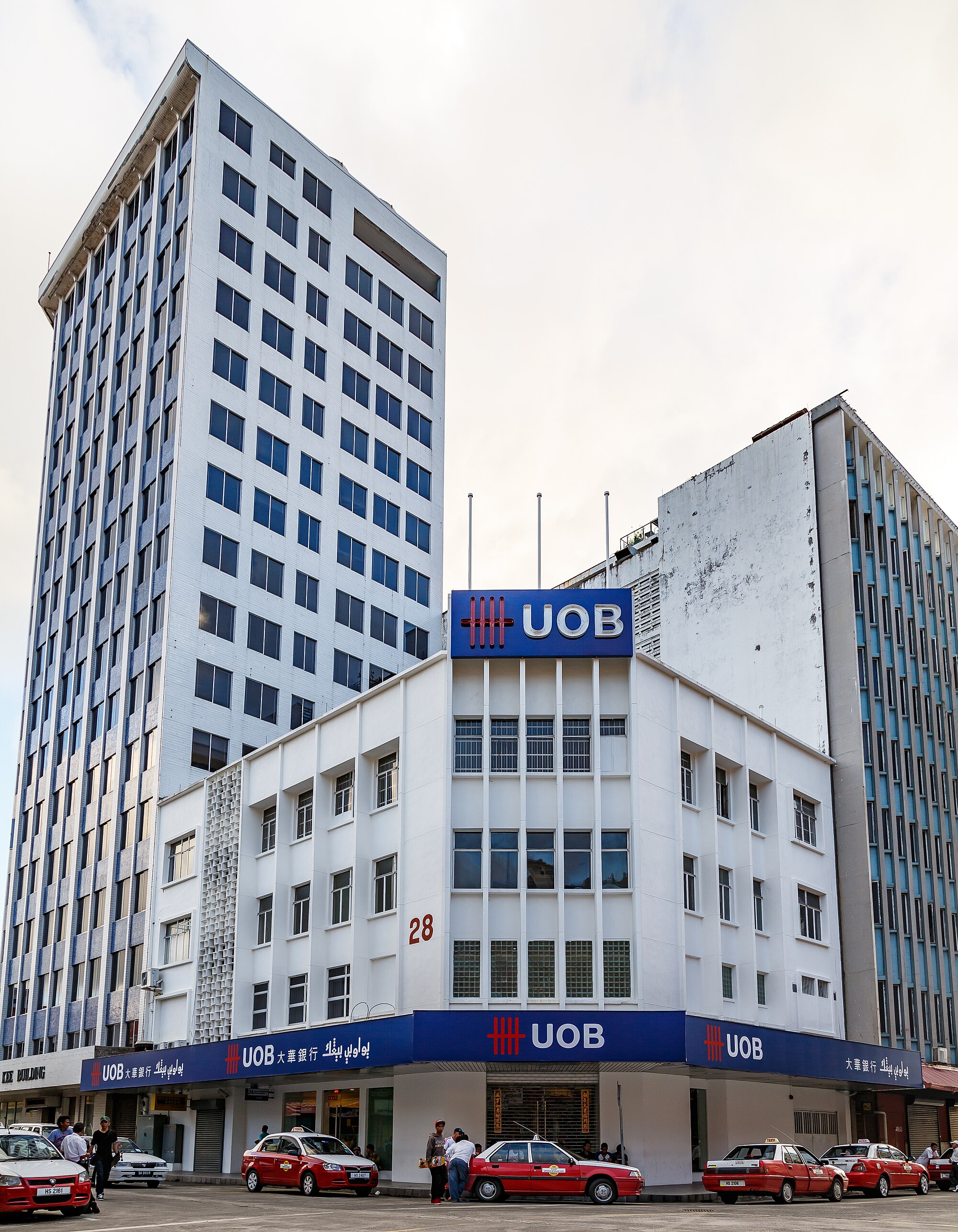
UOB Building in Sabah | Wikimedia Commons/Uwe Aranas
Established in 1935 as United Chinese Bank, United Overseas Bank (UOB) originally catered to Singapore’s Chinese business community. With a strong foundation built on prudent financial practices and a deep commitment to customer service, UOB steadily expanded its operations across Asia. Over the years, it evolved into one of the region’s leading full-service banks.
UOB’s growth is marked by its ability to balance tradition with modernity. While the bank’s early years were defined by careful management and community focus, its later years saw significant investments in technology and digital platforms.
This blend of conservative risk management and bold innovation has made UOB a trusted name among a new generation of digitally savvy customers. Today, UOB continues to push boundaries by offering cutting-edge digital banking services alongside traditional financial products.
This article was created by Seasians in accordance with the writing rules on Seasia. The content of this article is entirely the responsibility of the author.