


In the grand theater of Southeast Asian legends, few figures command the spotlight quite like Hang Tuah—the fearless admiral, loyal servant, and philosophical icon of the Malay world. Revered in Malaysia and remembered with pride in parts of Indonesia—especially Sumatra and the Riau Archipelago—Hang Tuah’s story blurs the line between fact and folklore, serving equal parts historical intrigue and epic drama.
Is he a real-life hero or just the Malay world’s answer to King Arthur? Either way, one thing's for sure: this guy has staying power.
The Saga of the Laksamana
If Southeast Asia had a cinematic universe, Hikayat Hang Tuah and the Sejarah Melayu would be its blockbusters. Both texts, written in the style of literary epics, place Hang Tuah in the glorious 15th-century Malacca Sultanate—a buzzing maritime empire and a melting pot of cultures and politics.
Born (so they say) in Kampung Sungai Duyung, Malacca, Hang Tuah was a prodigy—sharp in battle, wise in court, and handy with a keris before most kids mastered walking. He didn’t ride solo, though. He rolled with four other legends: Hang Jebat, Hang Kasturi, Hang Lekir, and Hang Lekiu—the OG squad known as the Lima Bersaudara, or Five Brothers-in-Arms.
Thanks to their unmatched martial prowess, they caught the eye of the Bendahara (think: prime minister) and soon, the Sultan himself. Hang Tuah’s rise was meteoric. Loyal, strategic, and deadly with a blade, he became the Laksamana (Admiral) of Malacca—a war general, royal envoy, and walking symbol of Malay glory.
His highlight reel includes:
-
Clearing pirates from the Strait of Malacca, securing the spice routes like a true action hero.
-
Serving as royal ambassador to powerful courts in Majapahit and Siam—with enough diplomatic swag to represent the Sultan without losing his cool.
-
Winning the legendary Taming Sari, a magical keris said to make its wielder invincible—because what’s a good Southeast Asian epic without a mythical weapon?
Loyalty vs. Justice: When Brothers Collide
Hang Tuah was falsely accused of messing around with a royal concubine (classic palace gossip). The Sultan, without even checking the receipts, ordered his execution. But the wise Bendahara, sensing something fishy, faked the execution and kept Tuah hidden.
Enter Hang Jebat. Furious over what he believed was his best friend’s unjust death, Jebat did what no one dared—he went full rebellion mode. He stormed the palace, kicked out the royal guards, and declared that a ruler who kills a loyal servant doesn’t deserve the throne. In short, he was all about justice over blind loyalty.
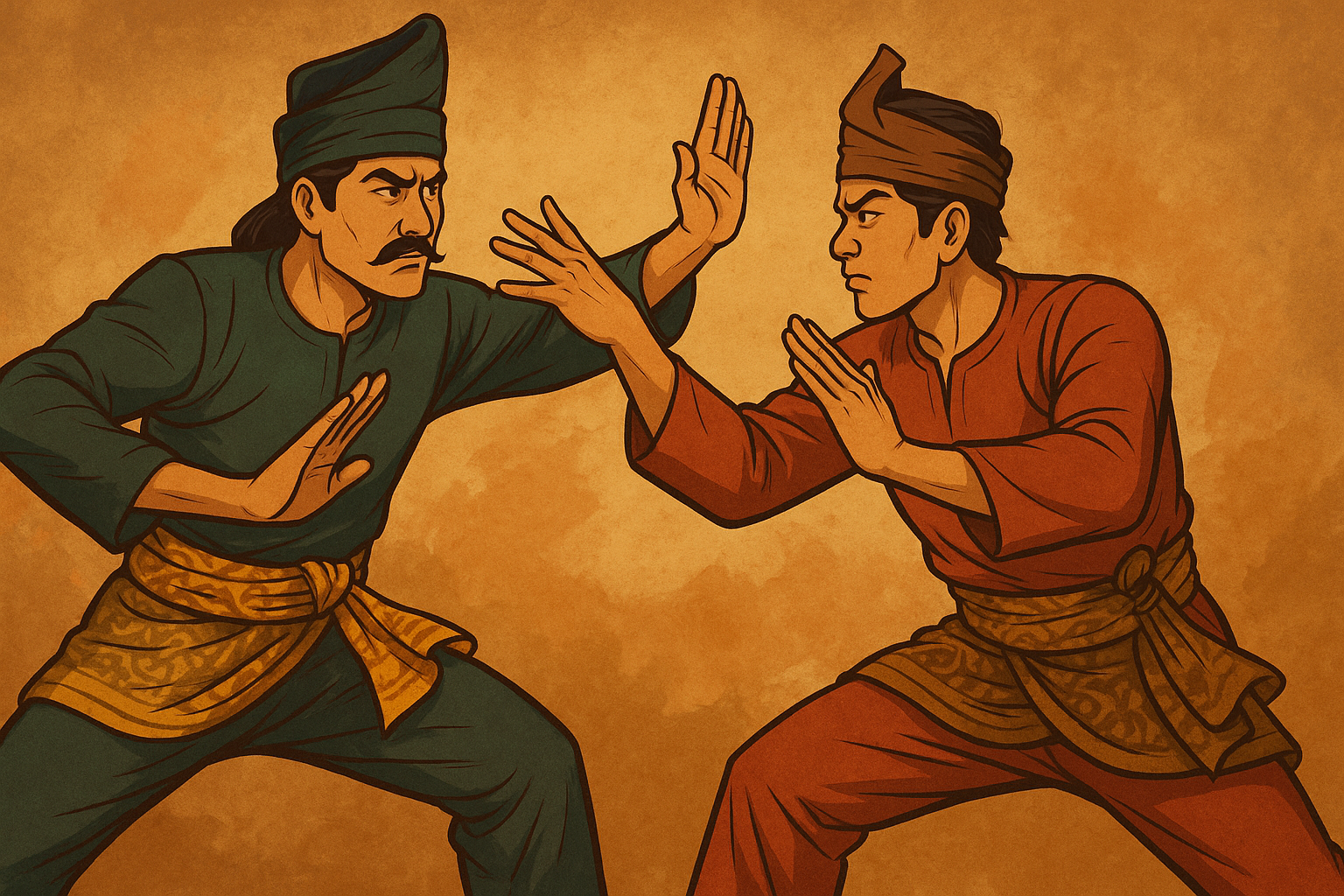
No one could stop Jebat—until the Sultan realized, oops, Tuah’s alive. The Sultan begged him to take down his old bestie. Heartbreaking? Yes. But Tuah, always the loyal soldier, accepted.
The two former blood brothers fought an epic, soul-crushing duel. Tuah, armed with the Taming Sari, eventually dealt the fatal blow. The moment was tragic, messy, and morally murky. And it still fuels debates to this day.
"Raja adil raja disembah, raja zalim raja disanggah"
(A just king is to be revered; a cruel king is to be opposed.)
This quote is often attributed to Hang Tuah—but ironically, his actions leaned toward the opposite. He chose duty over conscience, structure over justice, leaving many to wonder: Was he right?
Real Hero or Legendary Construct?
So... was Hang Tuah a real person? Or just a mythical mash-up of different warriors and court tales?
The skeptic’s side:
There’s no concrete 15th-century record naming him. Most stories come from literary works written decades (or centuries) later. Plus, the magical bits—like the invincible keris—definitely smell of legend.
The believers’ angle:
The Malacca Sultanate was very real, as were its political roles—Laksamana, Bendahara, etc. The court culture, diplomatic missions, and palace intrigue match the era. Some say Hang Tuah could’ve been a real courtier whose feats were epic-fied over generations.
But honestly? Whether he lived or not, he lives on.
One Hero, Two Nations
In Malaysia:
Hang Tuah is a national icon. His name is everywhere—schools, navy ships, highways. Kids learn about him in textbooks; scholars debate the Tuah-vs-Jebat dilemma in coffee shops. He represents loyalty, tradition, and the ideal Malay spirit.

In Indonesia:
Especially in Sumatra and the Riau Islands, Hang Tuah is celebrated as part of the shared Malay heritage—a legacy that predates modern borders. He’s not quite on the same pedestal as in Malaysia, but he’s a familiar and respected figure in cultural memory and folklore.

This shared ownership is actually pretty beautiful—it reminds us that Malay identity transcends flags and maps.
The Legacy Lives On
From stage plays to silat tournaments, TV dramas to high school debates, Hang Tuah’s story still gets retold. His legacy isn’t just about glory and adventure—it’s about values. Loyalty, yes, but also hard questions: What do we do when loyalty clashes with justice? How far should we go for our rulers? When do we say “enough”?
Hang Jebat didn’t go down without a fight—and in many ways, he didn’t lose. Today, he’s the conscience to Tuah’s sword. Together, they form a powerful duo: one upholding order, the other demanding fairness.


