


Who Would Have Thought? Our Breath Could Be the Key to Our Identity
We’ve long known fingerprints and DNA as the most distinctive markers of individual identity. But it turns out there's another deeply personal trait: our breathing pattern.
Yes, the way we breathe—from inhalation to the pauses between breaths—can form a unique "breathprint" for each person.
A study published in Current Biology by researchers from the Weizmann Institute of Science revealed that a person's breathing pattern can be used to identify them with up to 96.8% accuracy. Not only that, these patterns are also closely linked to a person’s physical and mental state.
Simple Technology, Surprising Discovery
To test their hypothesis, the researchers developed a lightweight wearable device worn just below the nostrils. This device, equipped with a flexible tube, continuously monitored airflow for a full 24 hours, unlike conventional breath tests that typically last only a few minutes.
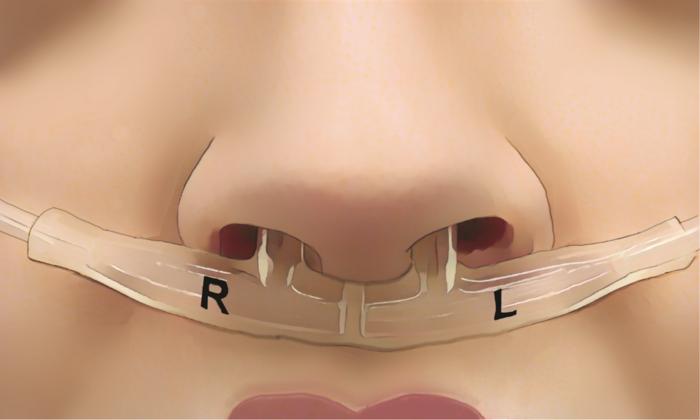
One hundred healthy young adults were asked to wear the device while going about their daily routines. The results were astounding: even with just one hour of data, the system could recognize individuals with moderate accuracy. But with a full 24-hour dataset, each person’s identity became clearly distinguishable based on breath alone.
Breathing: More Than a Bodily Reflex
According to lead researcher Noam Sobel, what they initially considered a “tired” or “overstudied” topic—breathing—turned out to hold hidden surprises. “Yet we stumbled upon a completely new way to look at respiration. We consider this as a brain readout,” he explained.
It turns out that breathing is closely tied to neural activity in the brain, especially since the brain processes smells as we inhale. From this, the team speculated: if each brain is unique, could a person’s breathing pattern reflect that uniqueness too? The answer: yes.
This research shows that breathing is not just a mechanical reflex but the product of complex neural networks influenced by physical activity and emotional states.
Breath Can Reveal Emotional and Physical States
More than just an identifier, this “breathprint” also carries valuable information about a person’s physical and mental health. The analyzed breathing patterns—measured through 24 different parameters—were found to be associated with body mass index, sleep cycles, and even levels of anxiety and depression.
For example, participants with higher levels of anxiety (as indicated by questionnaire responses) exhibited shorter inhalations and more irregular pauses between breaths during sleep. This was observed even though they did not meet the clinical diagnostic criteria for mental disorders.
Interestingly, the researchers also raised the possibility that the relationship between breath and emotion may be bidirectional. “We intuitively assume that how depressed or anxious you are changes the way you breathe,” said Sobel.
If true, retraining our breathing patterns could become a promising method for addressing emotional disorders.
The Future of Breathprints
Although the findings are impressive, the current device still poses some practical challenges. The nasal-tube design resembles medical equipment, making it less comfortable for everyday use. Additionally, it cannot track mouth breathing and may shift during sleep.
However, the research team has already developed a more compact and comfortable version intended for long-term wear. They are also exploring the potential for training individuals to imitate “healthy” breathing patterns to improve their mental well-being.
Through Breath, We Learn More About Ourselves
This research leads to a fascinating conclusion: the way we breathe can not only identify who we are, but also offer insights into how we feel and how healthy we are. As technology continues to advance, breath monitoring may one day become a reliable and non-invasive diagnostic tool, alerting us to problems before we even realize they exist.
Imagine being able to detect anxiety, disrupted sleep, or emotional instability simply by monitoring someone's breath, without blood tests or psychological interviews.


