


Severe floods and landslides that struck Aceh, North Sumatra, and West Sumatra have resulted in an extraordinary loss of life. As of Monday, December 8, 2025, the National Disaster Mitigation Agency (BNPB) recorded 961 fatalities, while the National Search and Rescue Agency (Basarnas) reported 974 deaths on the same day.
More than one million people have been displaced, hundreds remain missing, and over 50 regencies and cities have been effectively paralyzed. Despite the scale of the devastation, the central government has yet to designate the disaster as a national disaster.
The decision has sparked widespread public questioning: why has national disaster status not been declared, even as legal indicators and on-the-ground conditions suggest that the crisis has exceeded the response capacity of local governments?
Rising Death Toll, Hundreds Still Missing
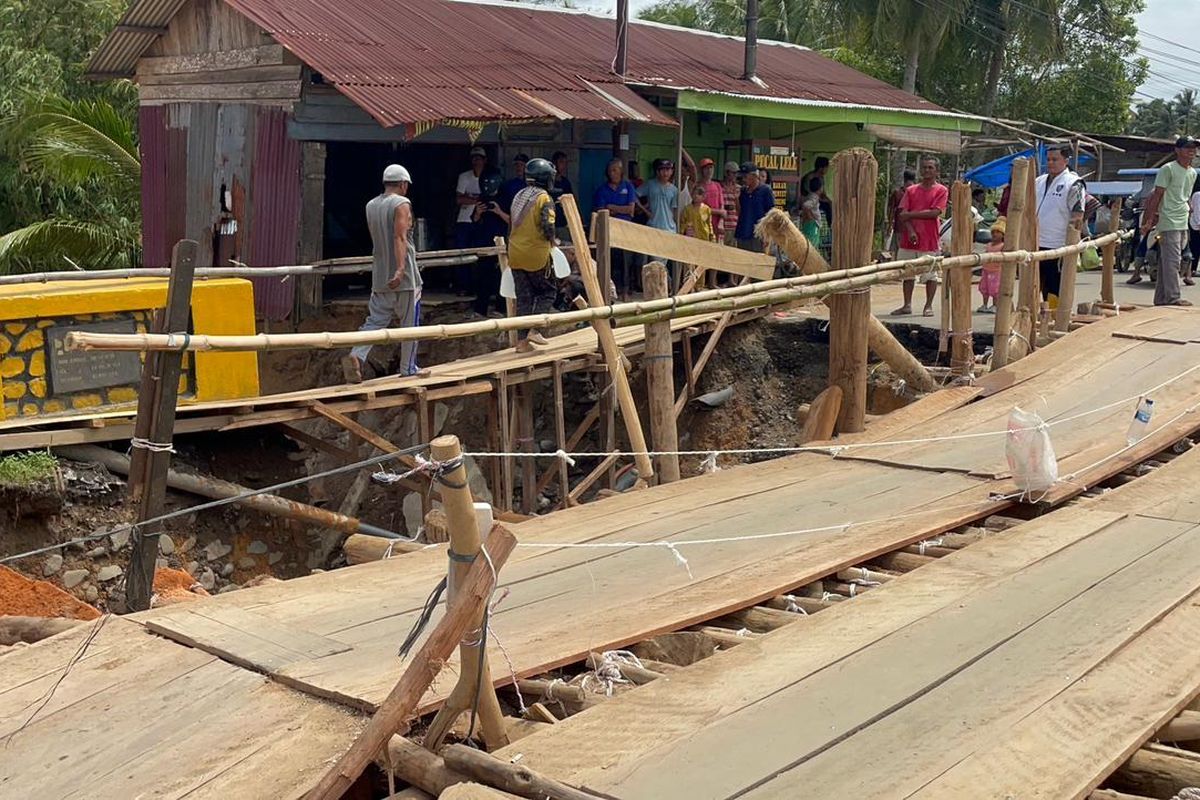
BNPB reported an additional 40 deaths on December 8, bringing the provisional total to 961. Aceh recorded the highest number of fatalities, with 389 deaths, followed by North Sumatra with 338 deaths and West Sumatra with 234. Around 293 people remain missing across the three provinces.
Basarnas reported higher figures due to differences in data collection mechanisms. The agency recorded 974 deaths, 298 missing persons, 10,957 people rescued, and 9,983 survivors.
Basarnas head Mohammad Syafii said the data were compiled from reports submitted by Search and Rescue Mission Coordinators in Aceh, Medan, Nias, and Padang, adding that the figures from both agencies would be synchronized.
Local Governments Admit They Can No Longer Cope
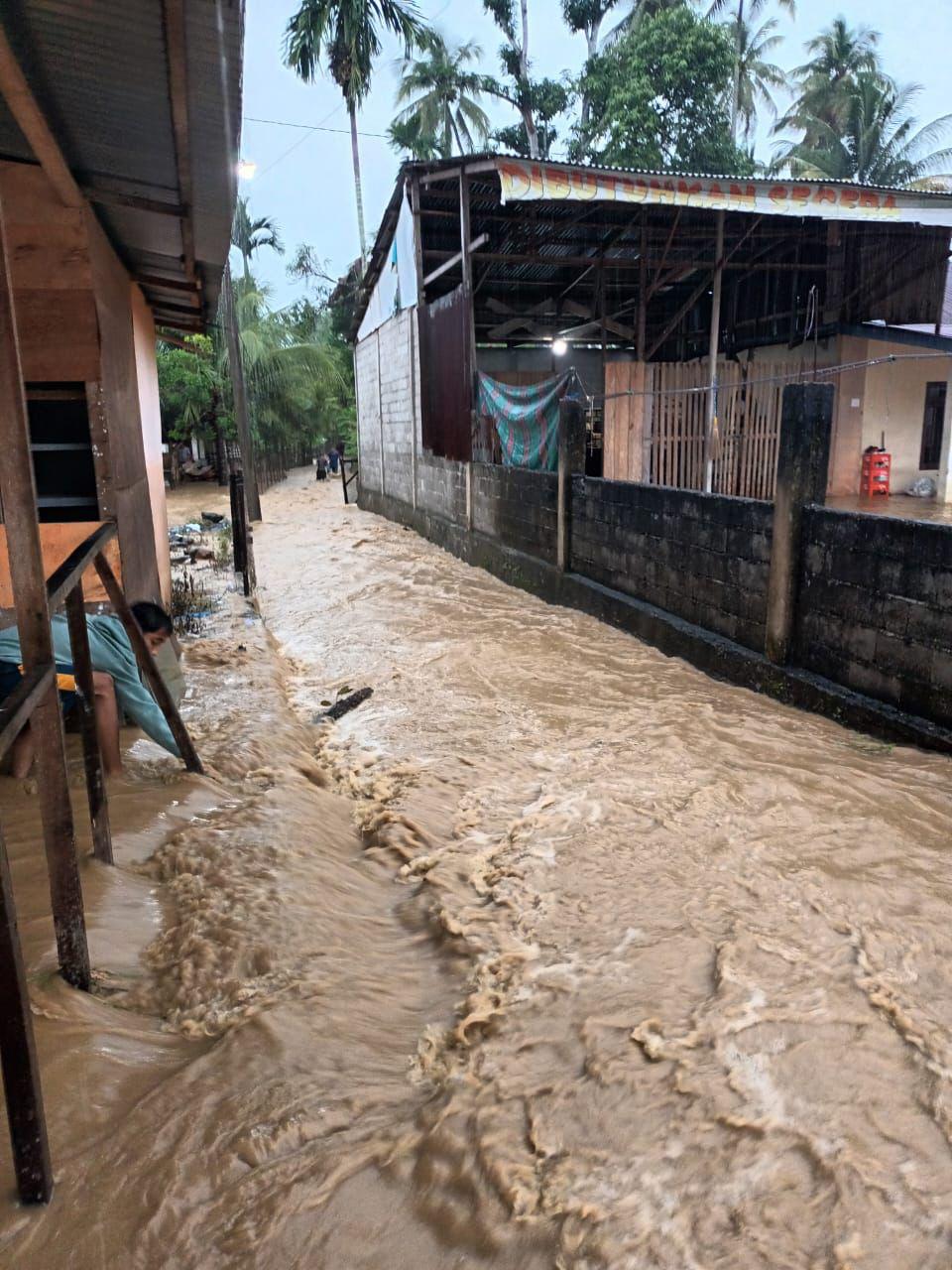
Calls for the disaster to be declared a national emergency have intensified after several regional leaders acknowledged that they are no longer able to manage the situation. Four regents in Aceh, such as North Aceh, South Aceh, Central Aceh, and Pidie Jaya, have publicly appealed directly to President Prabowo Subianto for assistance.
In a letter to the president dated December 2, 2025, the Regent of North Aceh wrote: "We declare our inability to continue emergency disaster response efforts and respectfully request Mr. President to assist in handling the floods in North Aceh Regency."
On the ground, access roads have been cut off, electricity and clean water supplies have been disrupted, and the distribution of logistics has been severely hampered. Food shortages have begun to emerge, and in several locations residents have resorted to looting minimarkets in order to survive.
Legal Requirements for Declaring a National Disaster
Under Law No. 24 of 2007, an event may be designated as a national disaster if it meets five key indicators: the number of casualties, material losses, damage to infrastructure and facilities, geographic scope, and socio-economic impact.
Government Regulation No. 21 of 2008 further stipulates that the authority to declare national disaster status rests with the President.
Guidelines issued by the National Disaster Mitigation Agency (BNPB) in 2016 add that national disaster status should be declared when provincial governments are no longer able to carry out emergency response measures, including initial evacuation, field command, and the provision of basic necessities.
Based on these provisions, the floods in Sumatra meet all the legal indicators required for a national disaster designation.
Why Has the Indonesian Government Not Declared It?
The central government has stated that the disaster is being treated as a national priority rather than formally designated as a national disaster. This explanation was delivered by Coordinating Minister for Human Development and Culture Pratikno (December 3) at Halim Perdanakusuma Air Force Base in Jakarta.
"The President has instructed that this situation be treated as a national priority, including assurances that national funding and logistics are made fully available, in total," he said.
To date, however, there has been no official statement indicating that national disaster status will be enacted.
Meanwhile, BNPB head Suharyanto emphasized in a BNPB media briefing aired on YouTube (November 28), that national disaster status has been applied only in very rare cases in Indonesia.
"The national disaster status that has ever been declared in Indonesia has only been for COVID-19 and the 2004 tsunami. Only those two were designated as national disasters," he said.
He added that although many large-scale disasters have occurred since then, national disaster status was not used because response efforts were considered manageable without invoking that instrument.
Consequences of Not Declaring a National Disaster
Analyses from UGM’s Center for Legal Studies and BNPB guidelines show that national disaster designation carries significant consequences. Such status provides a legal basis for the central government to assume full command authority, unlock large-scale funding from the state budget, accelerate cross-ministerial deployment, and enable international assistance without bureaucratic hurdles.
National disaster status also strengthens the government’s legal standing to conduct environmental audits and pursue law enforcement against parties suspected of contributing to ecological damage in upstream area, often cited as a key factor behind major flooding in Sumatra.
Without a national disaster designation, legal processes and systemic recovery measures become more difficult to implement, as authority remains fragmented across regional governments and multiple institutions.
Environmental Degradation Behind Sumatra’s Disaster
Beyond extreme weather, the disaster has exposed long-standing structural problems, including deforestation, degradation of river basin ecosystems, development that violates spatial planning regulations, and weak enforcement of environmental laws. Many river buffer zones have been converted into residential areas, while land clearing in upstream regions has significantly heightened flood risks.
Several ministries involved in the development of flood control infrastructure and disaster mitigation have faced budget cuts in recent years. Meanwhile, local governments highly dependent on central government transfers are constrained by limited fiscal capacity, which further undermines their ability to respond effectively to large-scale disasters.
Conclusion: Large-Scale Disaster, Status Yet to Be Declared
With fatalities approaching one thousand, millions displaced, vast areas affected, and local response capacity effectively overwhelmed, the floods and landslides in Sumatra meet the legal criteria for designation as a national disaster. Nevertheless, the government has opted to frame the crisis as a “national priority” rather than formally declaring a “national disaster.”
The decision to confer national disaster status now rests entirely with the President. Meanwhile, communities in affected regions continue to face an ongoing emergency that requires swift, coordinated, and fully resourced intervention.


