A giant wave struck suddenly, accompanied by shocks from an earthquake that threw everything into chaos.
“The wave took away everything in sight.”
This was the Indian Ocean Tsunami that occurred on December 26, 2004, caused by an earthquake measuring 9.1 on the Richter scale with the epicenter located at a depth of 30 kilometers off the west coast of Sumatra, Indonesia.
Not only Indonesia was affected, but the 9.1 magnitude earthquake also produced huge waves that crashed into the coastline of Aceh, Indonesia, and swept across Sri Lanka, India, Thailand, and nine other countries in the Indian Ocean region.
The tsunami of the early 21st century is recorded as one of the most horrific natural disasters, with at least 14 countries, mainly in Southeast Asia, affected, claiming an estimated 230,000 lives.
The hardest hit area was the Indonesian province of Aceh, where 130,000 people died.
The Indian Ocean tsunami was one of the darkest moments in global tsunami history. A 50-meter-high wave traveling at more than 800 kilometers per hour (500 mph) crashed 5 kilometers inland near Meulaboh.
According to records, this disaster produced a massive wave that released energy equivalent to 23,000 Hiroshima atomic bombs, resulting in damage on a massive scale.
The Impacts Aren’t Only Occurring in Indonesia
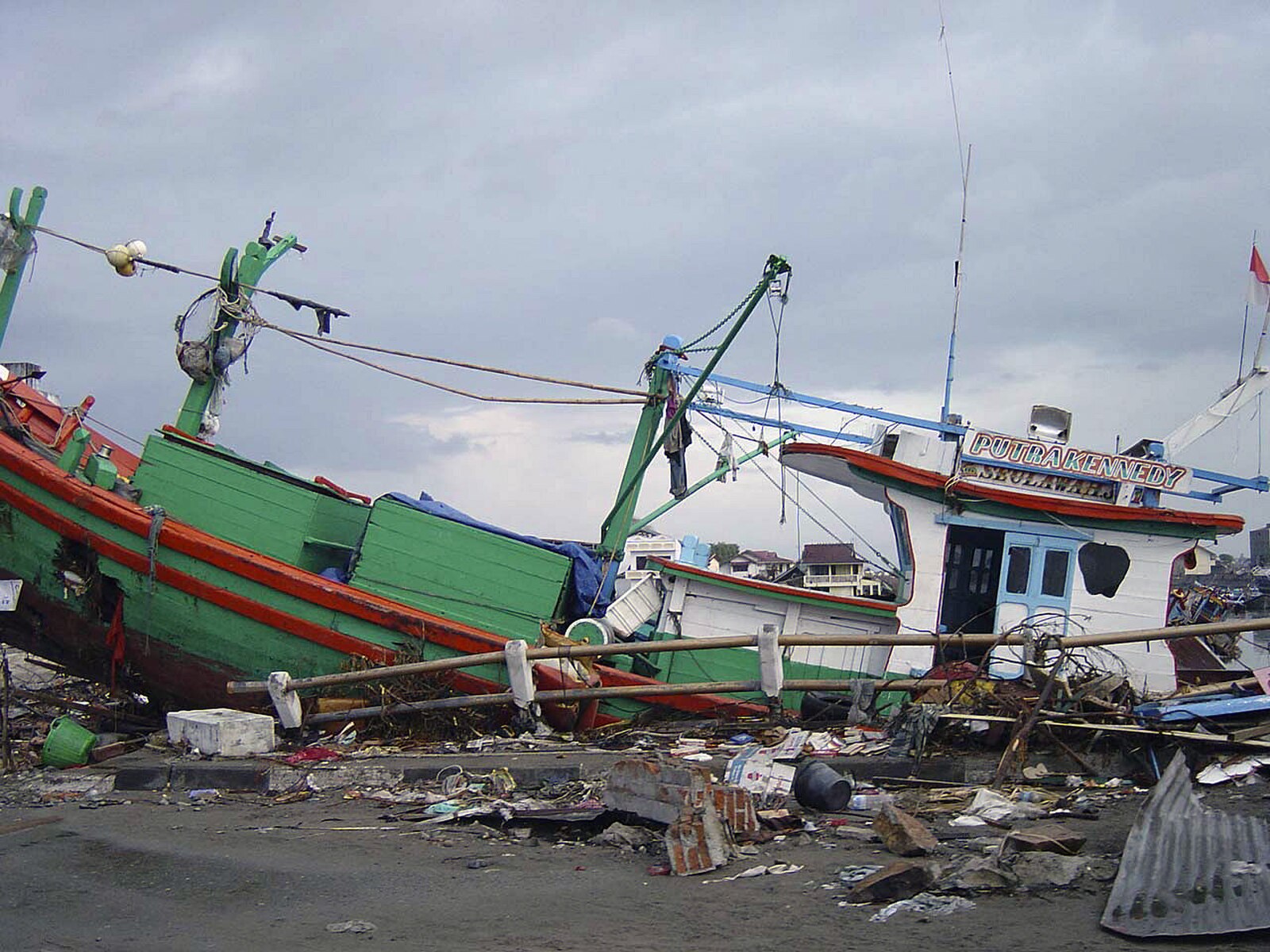
Based on EM-DAT data cited from DW, large waves hit countries surrounded by the Indian Ocean, such as Sri Lanka with more than 35,000 dead, India which lost 16,389 lives, Thailand which recorded 8,345 deaths, and nearly 300 people in Somalia.
In addition, the Maldives was also affected with more than 100 deaths, as well as dozens in Malaysia and Myanmar.
Attracting Global Attention
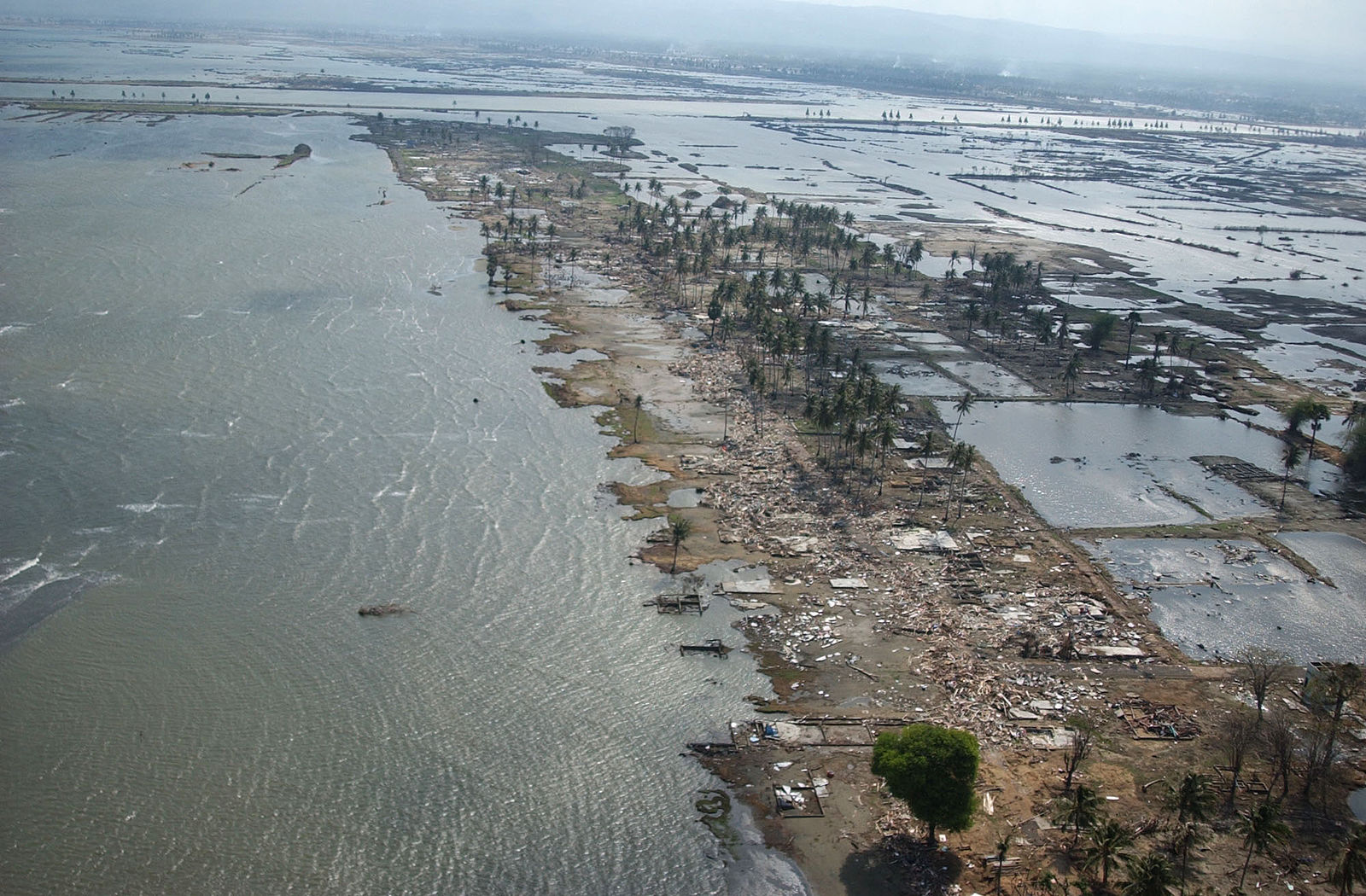
On December 26, 2004 at 07:59 local time, just hours after the earthquake, tsunami waves also made their way to Africa, causing total devastation throughout the affected region.
The UN called the tsunami in Aceh the worst and largest humanitarian disaster in history.
International aid was immediately sent to the disaster site, particularly in Aceh, Khao Lak in Thailand, and parts of Sri Lanka.
Global assistance is beginning to appear, including:
- Germany sent a military aircraft as an emergency clinic to the disaster area and assigned 380 Bundeswehr military personnel to provide care to 3,000 victims in Indonesia.
- The German government also provided 5,000 million euros in aid for humanitarian assistance and rehabilitation of the affected areas, while the German public raised 670 million euros in tsunami-related donations.
- The United States deployed helicopters and the aircraft carrier “USS Abraham Lincoln” to the waters off Sumatra to support victim evacuation and aid distribution.
- The international community pledged US$2 billion in aid.
- In Europe, many major cities expressed their deepest condolences through a moment of silence as well as in parliamentary sessions when news of the tsunami spread.
Read also: Lake Toba, Indonesia: The Beautiful Remnant of a Horrific, Near–Apocalyptic Disaster
Post Tsunami Rebuilding
According to information from DW, on March 14, 2005, Indonesia cooperated with Germany to create a tsunami warning system.
This technical tool, a German aid worth 40 million euros, was known as GITEWS (German Indonesia Tsunami Early Warning System).
In 2008, the GITEWS system was updated to InaTews (Indonesian Tsunami Early Warning System).
After years of dealing with tsunamis, especially in Indonesia which is a disaster prone area, one of the steps to move the region forward is through disaster mitigation training, drill training, construction of evacuation buildings and preparation of evacuation hill sites.
Post-tsunami recovery, especially in Aceh, is a long journey that involves many commitments from many parties.
Cooperation and a focus on sustainable development is one of the ways in which Aceh and other affected countries can recover from the devastation.
Read also: Unite Against Disaster: How ASEAN Banded Together to Help Victims of Typhoon Haiyan
While there are many hurdles in infrastructure development, economic recovery, and repairing psychological or mental trauma, the continued development of early warning systems can be one of the means to be better prepared and stronger when natural disasters occur again.
These incidents not only leave a deep impact on history, but also require recovery efforts that cannot be completed in a short period of time.
This article was created by Seasians in accordance with the writing rules on Seasia. The content of this article is entirely the responsibility of the author.