Perhaps not many people are aware that Thailand is one of Southeast Asia’s best spots for bird watching. While the country is famously known for its stunning beaches and mountains, its exotic birdlife isn’t talked about enough. With more than 1,000 species, Thailand is a habitat for all kinds of birds, from birds of prey to small birds.
Among the diverse bird types scattered across Thailand, in this article we will talk about the most birds of Thailand compiled from Bird Watching Hq, Thaibirding.com and Thinglish Lifestyle.
Top 12 Common Birds You Can Find in Thailand
1. Common Myna (Acridotheres tristis)
As its name suggests, the Common Myna can be seen frequently almost everywhere in the country, from cities, parks, villages, to farmlands. According to Hua Hin Today, the Myna, Indian Myna or Shepherd’s Starling (Acridotheres tristis) is an Asian songbird belonging to the starling family. Average Common Mynas are usually 23–25 cm long, weighing 110 grams with a wingspan of 140 mm. They have a yellow beak and strong thick legs with a brown body and glossy black plumage on top of their heads.
What’s impressive about this bird species is that it can make a range of noises, including mimicking human voices. They can also devour almost anything, such as chicks, worms, flies, lizards, fruits, and even other birds' eggs. However, this can potentially make them outcompete the number of other native species.
2. Asian Openbill (Anastomus oscitans)
The name Asian Openbill is literally derived from the bird’s main unique features—specifically the way it twists its beak. This twisting beak technique is used to break open snail shells, which is their primary food source.
Some other characteristics that distinguished the Asian Openbill is its 82-cm height, white color on the body and head, shiny black feathers with a hint of green or purple on the wings and tail, long pair of pink legs, and a grayish yellow beak. As explained in the Thai National Parks page, their typical food hunting areas are inland wetlands, such as in seasonal marches, agricultural landscapes, irrigation canals, and birds forage in crop fields.
3. Little Cormorant (Microcarbo niger)
The Little Cormorant is a small, extremely common bird widespread throughout Thailand. They tend to be seen along highways near urban areas like Bangkok. Unlike the larger Indian Cormorant, the Little Cormorant flies in scattered groups and has a more flappy and erratic flight pattern, which makes them often mistaken for a duck. Although they are small in size, Little Cormorant birds have great adaptability to roadside wetlands.
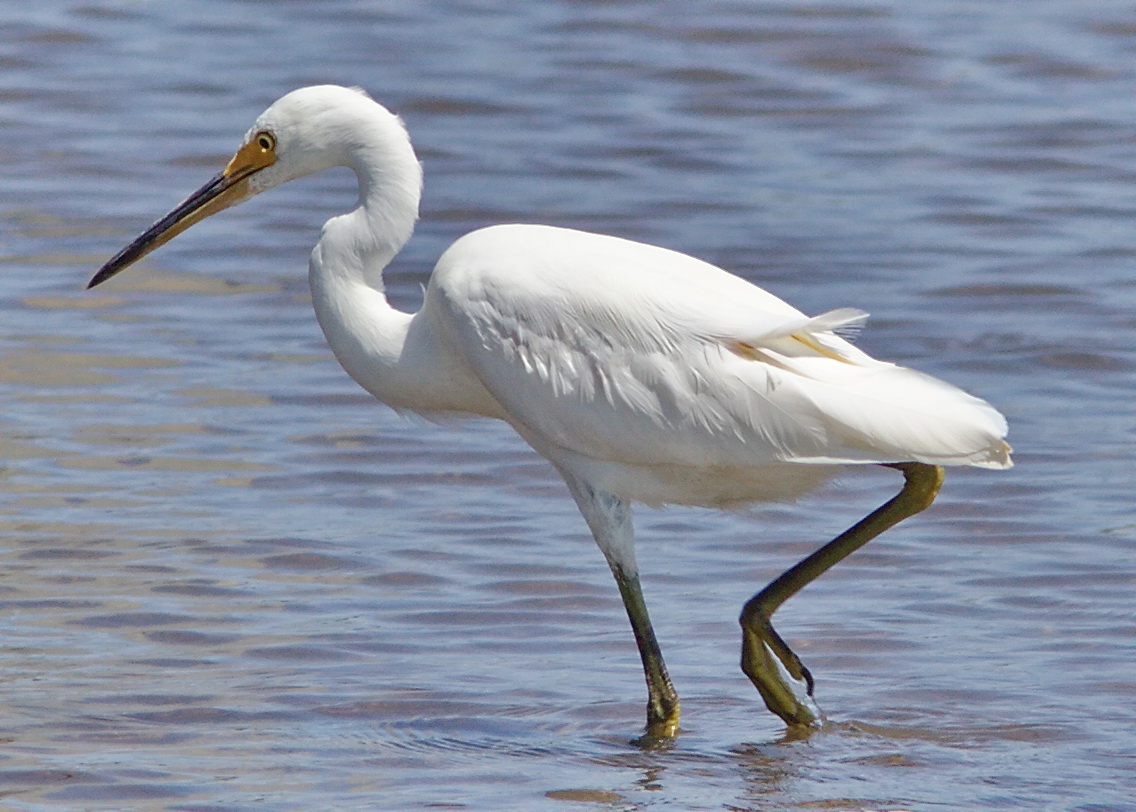
4. Little Egret (Egretta garzetta)
The Little Egret is a medium sized white bird with black bills and legs, yellow eyes and feet, and a signature “S”-shaped neck and head tuft, commonly spotted near lakes, rivers, and coastlines in Thailand. Adult Little Egrets are 55–65 cm long with a wingspan about 88–106 cm.
Even though these sociable birds usually gather in small flocks, they can be fiercely territorial when it comes to competing for ideal fishing spots in shallow waters. Their persistence and adaptability in aquatic habitats are their key strengths. While their competition for food can occasionally result in aggressive behavior among flocks.
5. Eurasian Tree Sparrow (Passer montanus)
While the Eurasian Tree Sparrow population declines in Europe, they’re surprisingly thriving in Thailand and Southeast Asia, particularly around gardens, cultivated areas, open woodlands, and human settlements. It spread throughout Thailand mainly due to its tolerance to urban settings and capacity to nest in cavities in buildings, which is less prevalent in Europe. Notable for their reddish-brown back and wings, black and white striped head, and sly demeanor, these sparrows often steal food like leftover rice.
6. Large-billed Crow (Corvus macrorhynchos)
The Large-bill crow, or the Jungle Crow is identified as a huge, thick-billed, glossy black bird with a wingspan of 80–90 cm and 45–50 cm in length. They’re frequently seen in many different environments, including grasslands, woods, and urban areas in Thailand.
With high adaptability and intelligence, the Large-bill crow consumes a variety of foods—from fruits to insects and carrions. While these birds are valued for its ecological importance in keeping pests under control, its loud, crop damaging, and nesting in building habits can be a nuisance for some people.
7. White-throated Kingfisher (Halcyon smyrnensis)
Given its vibrant blue wings, the White-throated Kingfisher is the most common and recognizable Kingfisher species in Thailand, usually spotted perched on roadside posts and hanging cables in dry open and well-watered areas. Hence why you can easily see these birds soaring from your car window. But from a distance, its blue flash may look deceiving.
The White-throated Kingfishers favorite meals are insects and lizards, though sometimes they also feed on fish, crabs, and young birds.
8. Zebra Dove (Geopelia striata)
Known for its distinctive black and white striped pattern, this petite plump feathery fellow called the Zebra Dove resides in urban and suburban environments as well as in tropical and subtropical forests across Southeast Asia. Due to its good adapting skills, the Zebra Dove is categorized as a non-endangered species and spread widely in places like parks, gardens, and chicken runs. However, its dependance on human-altered habitats may make them vulnerable to significant changes in the environment.
9. Oriental Magpie Robin (Copsychus saularis)
In Thailand, you can easily find this charming medium-sized bird named the Oriental Magpie Robin. Its 19–25 cm long with a striking black and white plumage, graceful long tail, black-colored throat for males and white throat for females. Beside their stunning color, the Oriental Magpie Robin is also well-known for its melodic chirps and sociable nature. They’re a farmer and gardeners best buddy since they help in seed dispersal and keeping insect population in check. With a stable population, this species is commonly found in gardens, forests, and urban areas.
10. Brahminy Kite (Haliastur indus)
With a reddish-brown body, contrasting white head, and sharply forked tail that creates a bewitching silhouette when flying, the Brahminy Kite predator bird can instantly be recognized in one glance. They’re an expert hunter and scavenger that can be seen in woodlands, cities, and coastal shorelines. Like other raptors, the Brahminy Kite assists in managing the number of small animals and pests like rats. Konpludthin Fishing Park is one of the best place in Thailand to see this hunter in action.
11. Jungle-fowl (Gallus gallus)
Next on the list of common birds you can find in Thailand is the Jungle-fowl. This bird is identified as the domesticated chicken’s ancestor, identified by its bright mix of red, orange, and blue plumage for males and modest brown color for females. With around 60–70 cm in length, they’re one of the key players in maintaining the ecosystem’s health and are often seen in tropical and subtropical forests. Sadly, this species is at risk because of all the pollution, hunting, and habitat destruction.
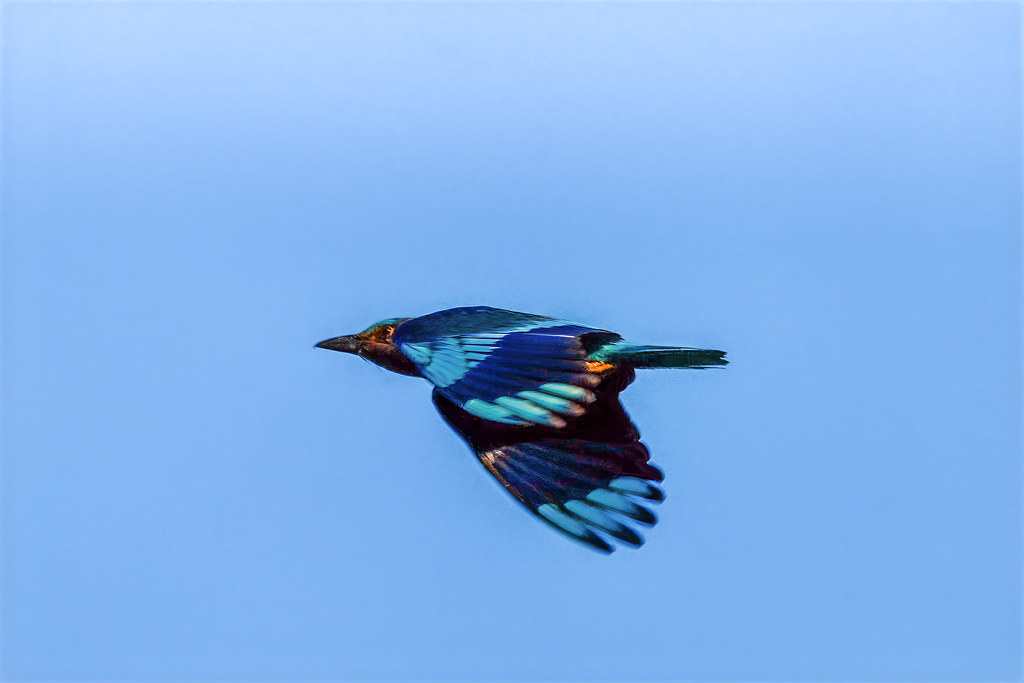
12. Indochinese Roller (Coracias affinis)
Last but not least in the series of Thailand’s most common birds is the colorful Indochinese Roller. It has a length of 30–34 cm, with an exquisite violet, turquoise and navy blue shade on its wings combined with a blue crown and olive body. It's not that hard to find this species since it frequently passes by plantations, rice fields, open pastures, and even crowded areas.
Their incredible agility and acrobatic flight makes this beauty more entertaining to watch. Even so, their extremely territorial and bold behavior can lead to conflict with humans.
Other Common Thailand Birds
Aside from the species of birds mentioned above, there are still a numerous variety of birds that exist out there in Thailand. Here’s a list of other native and non-native common Thailand birds according to Animal Spot:
| Native Birds | Non-native Birds |
| • Ashy Woodswallow | • African Sacred Ibis |
| • Asian Koel | • House Crow |
| • Asian Green Bee-eater | • Javan Myna |
| • Baer's Pochard | • Java Sparrow |
| • Barn Swallow | • Milky Stork |
| • Black-crowned Night Heron | • Rose-ringed Parakeet |
| • Black Kite | • Sarus Crane |
| • Black Drongo | |
| • Blue Pitta | |
| • Black-naped Oriole | |
| • Black-winged Stilt | |
| • Blue-winged Leafbird | |
| • Brown Shrike | |
| • Chinese Blackbird | |
| • Collared Kingfisher | |
| • Common Flameback | |
| • Crested Serpent Eagle | |
| • Coral-billed Ground Cuckoo | |
| • Daurian Redstart | |
| • Eared Pitta | |
| • Eastern Cattle Egret | |
| • Eastern Jungle Crow | |
| • Giant Nuthatch | |
| • Giant Pitta | |
| • Gray Heron | |
| • Greater Coucal | |
| • Great Hornbill | |
| • Green Peafowl | |
| • Gurney's Pitta | |
| • Gray Peacock-pheasant | |
| • Hill Myna | |
| • Himalayan Vulture | |
| • Indian Peafowl | |
| • Indian Roller | |
| • Javan Pond Heron | |
| • Jerdon's Bush Chat | |
| • Lesser Adjutant | |
| • Light-vented Bulbul | |
| • Long-tailed Minivet | |
| • Long-tailed Broadbill | |
| • Mangrove Pitta | |
| • Mrs. Hume's Pheasant | |
| • Nordmann's Greenshank | |
| • Ochraceous Bulbul | |
| • Olive-backed Sunbird | |
| • Oriental Pied Hornbill | |
| • Plain-pouched Hornbill | |
| • Puff-throated Bulbul | |
| • Purple Cochoa | |
| • Purple Heron | |
| • Rail-babbler | |
| • Ratchet-tailed Treepie | |
| • Red Jungle-fowl | |
| • Red-vented Bulbul | |
| • Red-wattled Lapwing | |
| • Rufous-collared Kingfisher | |
| • Scarlet-backed Flowerpecker | |
| • Siamese Fireback | |
| • Silver Pheasant | |
| • Slaty-backed Forktail | |
| • Spoon-billed Sandpiper | |
| • Spotted Dove | |
| • Streaked Weaver | |
| • Tickell's Brown Hornbill | |
| • White-bellied Sea Eagle | |
| • Wide-eyed River Martin | |
| • White-faced Plover | |
| • White-fronted Scops Owl | |
| • White-rumped Shama | |
| • White-vented Myna | |
| • White Wagtail | |
| • Yellow-cheeked tit |
Thailand isn’t just all about tropical beaches and mountains, more than that, it offers an abundant birdlife, with many common species easily spotted even in populated areas. Whether you’re a casual observer or a dedicated birdwatcher, these feathered friends give a fascinating glimpse into the country’s diverse nature.