


Throughout history, borders have shifted due to war, colonization, and political upheaval. While many boundaries have been formalized through treaties and negotiations, some regions remain in dispute to this day.
These territorial conflicts are often rooted in history, national identity, resource competition, or strategic interests. Below are some of the most prominent disputed territories around the world, each a focal point of diplomatic tension and, in some cases, armed conflict.
Western Sahara

Western Sahara is one of the longest-standing unresolved territorial disputes. Located in North Africa, it was a Spanish colony until 1975, when Spain withdrew.
Morocco quickly claimed sovereignty over the territory, but the indigenous Sahrawi people, represented by the Polisario Front, declared independence as the Sahrawi Arab Democratic Republic.
This led to armed conflict that ended in a 1991 ceasefire brokered by the United Nations, which promised a referendum on independence, a vote that has yet to occur.
Morocco controls the majority of the region today, while the Polisario Front governs parts of the interior. Despite international efforts, the dispute remains unresolved and continues to affect relations between Morocco, Algeria, and other African nations.
Kashmir

The Kashmir conflict is a long-standing territorial dispute between India and Pakistan, with roots dating back to the partition of British India in 1947.
When the princely state of Jammu and Kashmir was given the option to join either nation, its ruler chose India, triggering a war with Pakistan.
Since then, Kashmir has been divided between Indian-administered Jammu and Kashmir, Pakistani-administered Azad Kashmir and Gilgit-Baltistan, and a small portion controlled by China. The region has seen multiple wars and ongoing skirmishes.
While both India and Pakistan claim the entire territory, neither side is willing to concede ground. With a heavy military presence and ongoing unrest, Kashmir remains one of the most militarized and volatile regions in the world.
Crimea
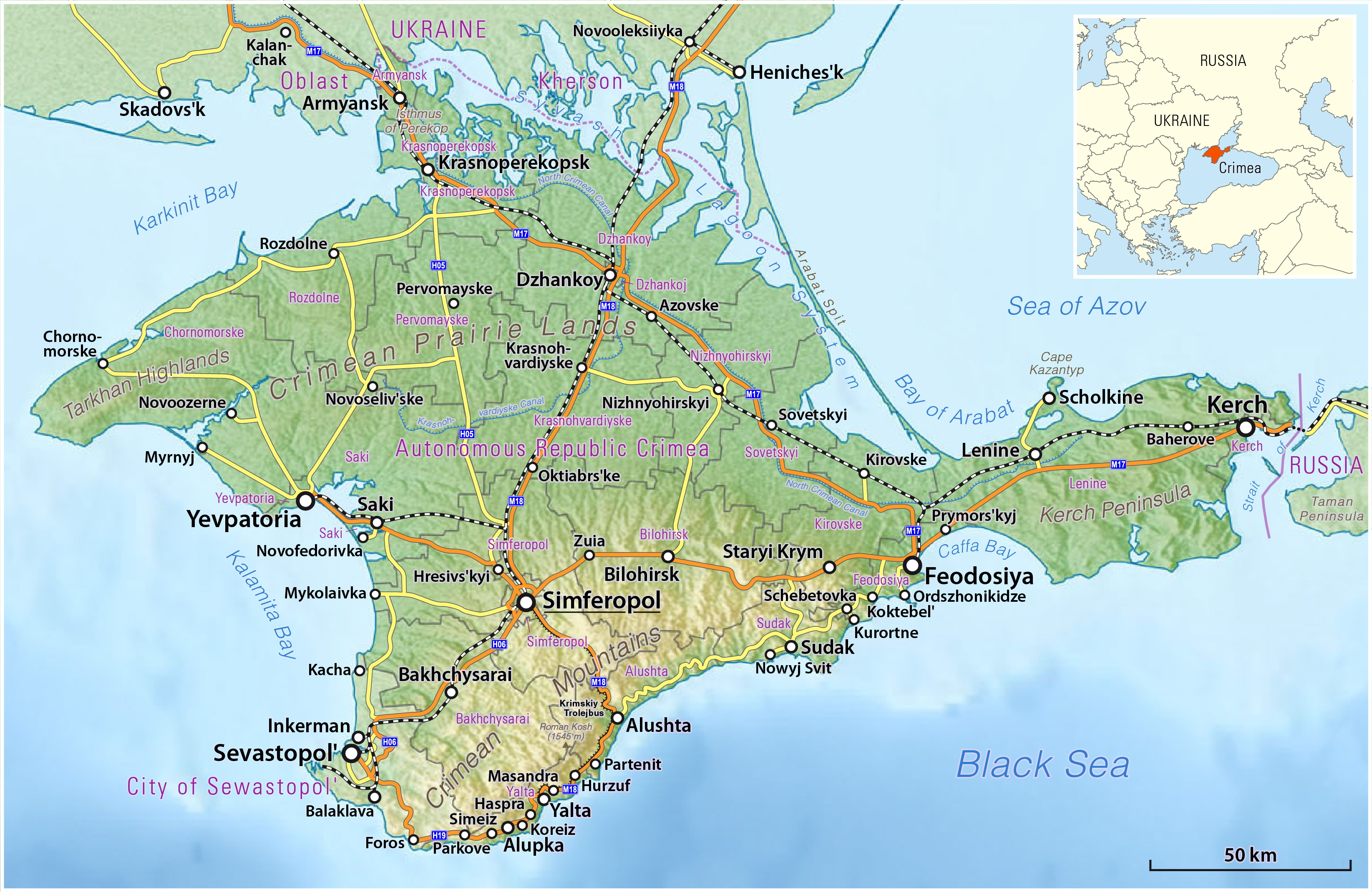
The Crimean Peninsula, located on the northern coast of the Black Sea, has been at the center of a major international dispute since 2014. That year, Russia annexed Crimea following a disputed referendum held shortly after the ousting of Ukraine’s pro-Russian president.
Most Western nations, along with Ukraine, view the annexation as illegal and continue to recognize Crimea as part of Ukraine. Russia, however, considers the region part of its sovereign territory.
The annexation has led to sanctions against Russia, heightened tensions with NATO, and a continuing conflict in Eastern Ukraine. Crimea remains a major point of contention in East-West relations.
Taiwan

Taiwan is one of the most diplomatically sensitive territorial disputes. Officially known as the Republic of China (ROC), Taiwan has functioned as an independent government since 1949, when the Chinese Nationalist Party retreated there after losing the Chinese Civil War.
However, the People’s Republic of China (PRC) considers Taiwan a breakaway province and has vowed to reunify it with the mainland, by force if necessary.
Most countries, including the United States, do not formally recognize Taiwan as a sovereign nation, but maintain unofficial relations.
Taiwan, for its part, sees itself as a separate country with its own democratic government and vibrant economy. The issue remains a geopolitical flashpoint, especially as China increases military pressure on the island.
Nagorno-Karabakh

Nagorno-Karabakh is a mountainous region in the South Caucasus that has long been contested between Armenia and Azerbaijan.
Although located within Azerbaijan’s internationally recognized borders, the region is mostly populated by ethnic Armenians who sought independence or unification with Armenia.
Following the collapse of the Soviet Union, war broke out in the early 1990s, leaving the region under the control of Armenian-backed forces. In 2020, Azerbaijan recaptured significant territory during a short but intense war, leading to a Russian-brokered ceasefire.
Despite these developments, the status of Nagorno-Karabakh remains in flux, with periodic violence and deep ethnic tensions continuing to plague the region.
The Kuril Islands

The Kuril Islands are a chain of volcanic islands stretching from Japan’s Hokkaido to Russia’s Kamchatka Peninsula. The southernmost islands are at the center of a territorial dispute between Russia and Japan.
At the end of World War II, the Soviet Union occupied the islands, and they have been administered by Russia ever since. However, Japan claims the four southernmost islands, known in Japan as the Northern Territories.
The dispute has prevented the two countries from signing a formal peace treaty to end World War II hostilities. Efforts at negotiation have seen limited progress, and the islands remain under Russian control.


