


Imagine a massive lake that grows to six times its size every year. Even more astonishing, this lake has a river that reverses its flow—twice a year. This rare natural phenomenon happens in only one place on Earth: Tonle Sap Lake, the beating heart of Cambodia.
A Magical Cycle That Sustains Life
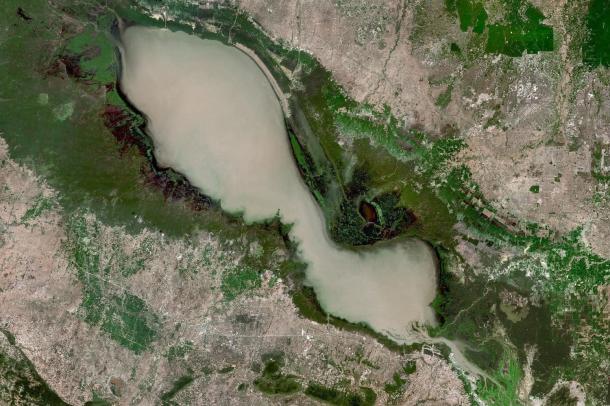
Tonle Sap is no ordinary lake. As the largest freshwater lake in Southeast Asia, it functions like a heart, pulsing in rhythm with the seasons. Around May, when the monsoon arrives, the swollen Mekong River pushes water into the Tonle Sap River.
Miraculously, the river reverses its flow, carrying water, nutrients, and millions of fish into the lake. The lake’s volume rises dramatically—its depth increases from about one meter to nine meters, and its surface area expands from approximately 2,700 km² to over 16,000 km²—nearly six times larger than during the dry season.
As the water rises, surrounding forests and farmlands become submerged. But this is precisely the magic: the floodwaters create a fertile breeding ground for fish such as catfish and carp.
For local communities, this moment marks a golden harvest season. Millions of fish seem to arrive as if by gift, offering sustenance and life.
When the rains subside around November, the lake begins to “exhale.” Water retreats, the Tonle Sap River resumes its usual flow toward the Mekong, and thousands of floating houses return to rest on dry ground.
From Cradle of Civilization to Ecological Crisis
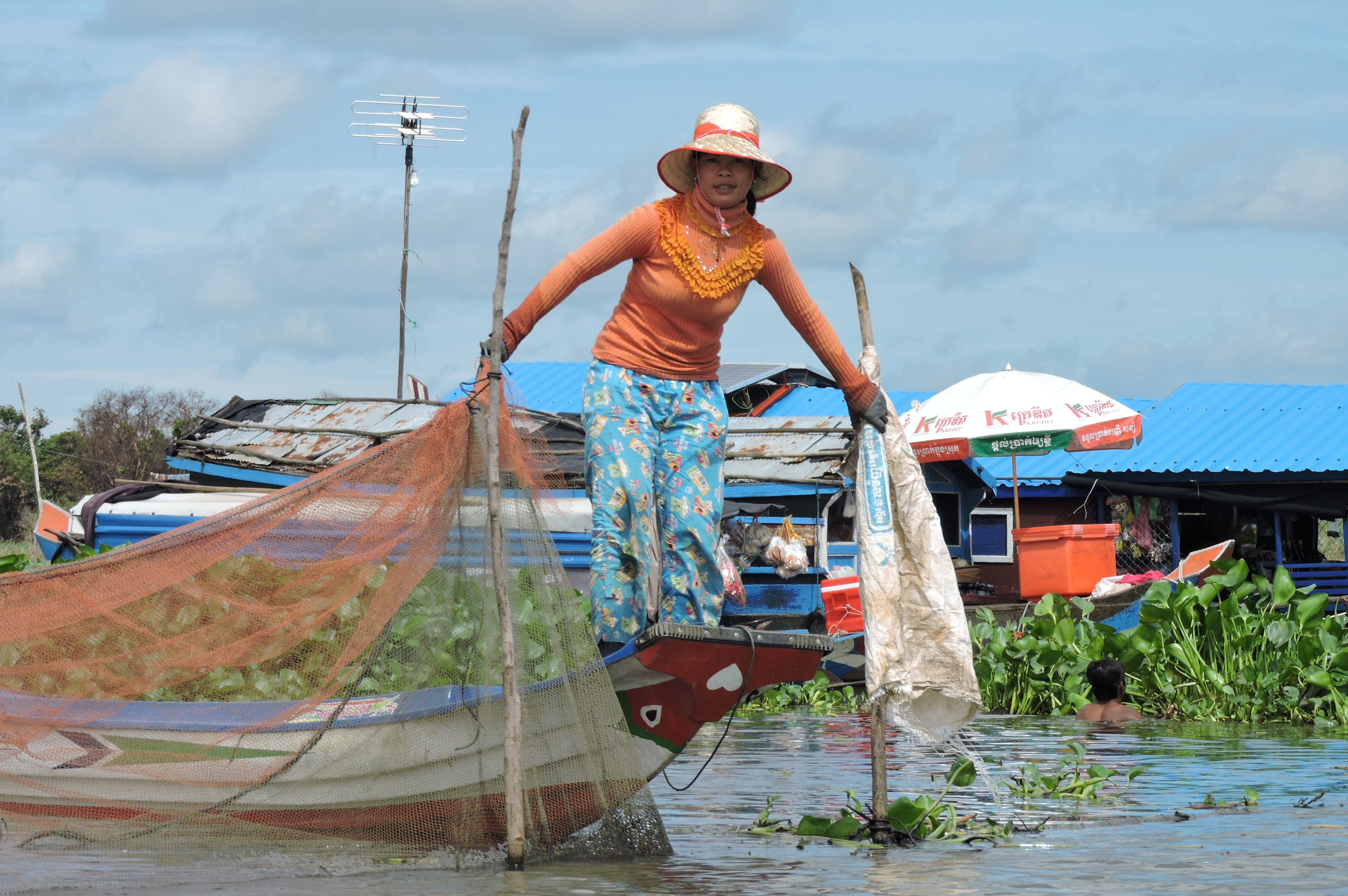
This natural phenomenon is not only spectacular—it is essential to the survival of millions in Cambodia. Around three million people directly rely on the lake, and 80% of the population depends on fish as their primary source of protein. Tonle Sap contributes over 75% of the country's freshwater fish catch.
This dependency goes back centuries to the Angkor era. Temple carvings depict fish markets, while food remnants found in ancient tombs reveal a long-standing culture of fish preservation—salting, grilling, making soups, and fermenting into prahok, a staple of Cambodian cuisine.
But today, this “heartbeat” is weakening. Over the past decade, climate change and dam construction upstream along the Mekong have disrupted Tonle Sap’s water cycle. Less water is flowing in, the reversal period is shortening, and in some years it doesn’t happen at all—like in 2020.
In September, normally the peak of the rainy season, the water never arrived. The Tonle Sap River, which should have surged with water from the Mekong, remained still. Yet this very cycle has, for thousands of years, made the lake one of the most productive freshwater fisheries in the world.
The Dam Dilemma and a Fishery in Crisis
What’s driving this crisis? One major factor is the rapid construction of dams along the Mekong River—known as the Lancang River in China—stretching from its upper reaches in China to downstream countries like Laos, Thailand, and Vietnam.
These dams hold back trillions of liters of water, block fish migration routes, and reduce the flow of nutrients into Tonle Sap.
At the same time, overfishing has made matters worse. Although the government has designated conservation zones, weak enforcement and illegal practices have raised questions about their effectiveness.
Many small-scale fishers are forced to use banned fishing gear—such as undersized nets or traps made from protected hardwoods—simply to survive. For them, it’s not about breaking the law; it’s about feeding their families.
When the Past Was Richer Than the Present
For the people of Tonle Sap, nostalgia is bittersweet. Many still remember a time when the lake teemed with life, when fish would practically leap into their boats. Even rare species like the giant Mekong catfish could still be found.
Today, however, fish populations continue to decline. And if no meaningful action is taken, the natural riches of Tonle Sap may soon exist only in memory.


