Raden Saleh was a 19th century Indonesian painter who had the opportunity to expand his knowledge of painting in Europe.
The artworks produced by Raden Saleh have unique and distinctive themes and styles, such as hunting scenes, symbolic scenes, and dramatic moments that made him recognized as an artist in the Romantic school.
The romanticism created by Raden Saleh was not only in the visual elements and themes, but also served as a representation of his views and ideas on life.
The influence of romanticism that can be seen from his ideas and views becomes a description of the greatness of nature, exoticism, orientalism, individual freedom, and political struggles manifested in his paintings.
Curious to discover more about Raden Saleh's life journey and his world-renowned paintings?
Read more, Seasians!
Raden Saleh's Childhood
Raden Saleh, also known as Raden Saleh Syarif Bustaman, was an Indonesian painter. His father was Sayid Hoesen bin Alwi bin Awal, who was of Arabic descent, while his mother was Mas Adjeng Sarip Hoesen, a Javanese noble ‘Ningrat’ from Semarang.
Since he was ten years old, Raden Saleh had been entrusted to his uncle who served as Regent of Semarang at that time, so Raden Saleh had the opportunity to get acquainted with the Dutch people who were his uncle's superiors in Batavia.
Raden Saleh and the Beginning of His Painting Journey
Raden Saleh began his basic education by enrolling in a Volks-School. His painting skills were first noticed by Belgian artist A.A.J. Payen. Although the painting styles of both artists were different, Raden Saleh learned a lot of basic painting knowledge from Payen.
Furthermore, Raden Saleh received an opportunity from the Governor General, Gobert van der Capellen, known as the ‘Viceroy of the Indies’, to improve his skills by studying painting in the Netherlands directly.
In the Netherlands, Raden Saleh not only pursued painting, but he also served as a clerk in the finance department's inspection office, which required him to teach the Dutch finance inspector, de Linge, about Javanese customs and traditions, as well as the Javanese and Malay languages.
In the Netherlands, Raden Saleh was also appointed as a student of Cornelis Kruseman, who taught him portrait painting techniques, and Andriesa Schelfhout who also taught him to paint landscapes.
After being considered finished with his studies, Raden Saleh was asked to return to the Dutch East Indies, but he felt that there were still many things to learn, so he decided to extend his stay in the Netherlands.
Raden Saleh's painting skills grew until the Dutch East Indies government decided to send him to France, anticipating the potential that he might become a pioneer of movements and rebellions.
Raden Saleh's name as a ‘Painter’ soared thanks to his commitment to painting the faces of famous ‘Important Figures’ in the Netherlands without expecting any reward, until his ever-improving skills made his name shine even more in England, France, and East Germany.
Read also: The Uncrowned King of Java: The Life and Legacy of Indonesia’s H.O.S. Tjokroaminoto
Pioneers of Indonesian Modern Art
In 1851, Raden Saleh returned to Java as a renowned romanticist painter, where the peak of his career was marked by giving a 3x4 meter painting entitled ‘Boschbrand’ or ‘Forest Fire’ to King Willem III as a farewell gesture.
In the land of his birth, Raden Saleh continued to develop his art by investigating various references from the world of fauna and fossils, including ancient creatures such as mastodons and megalodons.
In 1857, Raden Saleh created a painting that he named ‘Penangkapan Pangeran Diponegoro’.
'Diponegoro' as the inspiration for his painting was a figure who was a pioneer of the anti-colonialism movement in Indonesia and played an important role in the Java War before being defeated by the Dutch East Indies.
Raden Saleh's painting style and techniques adopted a different approach from the Dutch East Indies' taste at the time, earning him the title of ‘Pioneer of Modern Art Indonesia’.
Raden Saleh's World Famous Paintings
Raden Saleh's famous and meaningful works have made him globally recognized. Here are five paintings by Raden Saleh that have gained global recognition:
Penangkapan Pangeran Diponegoro or Prince Diponegoro's Arrest (1857)
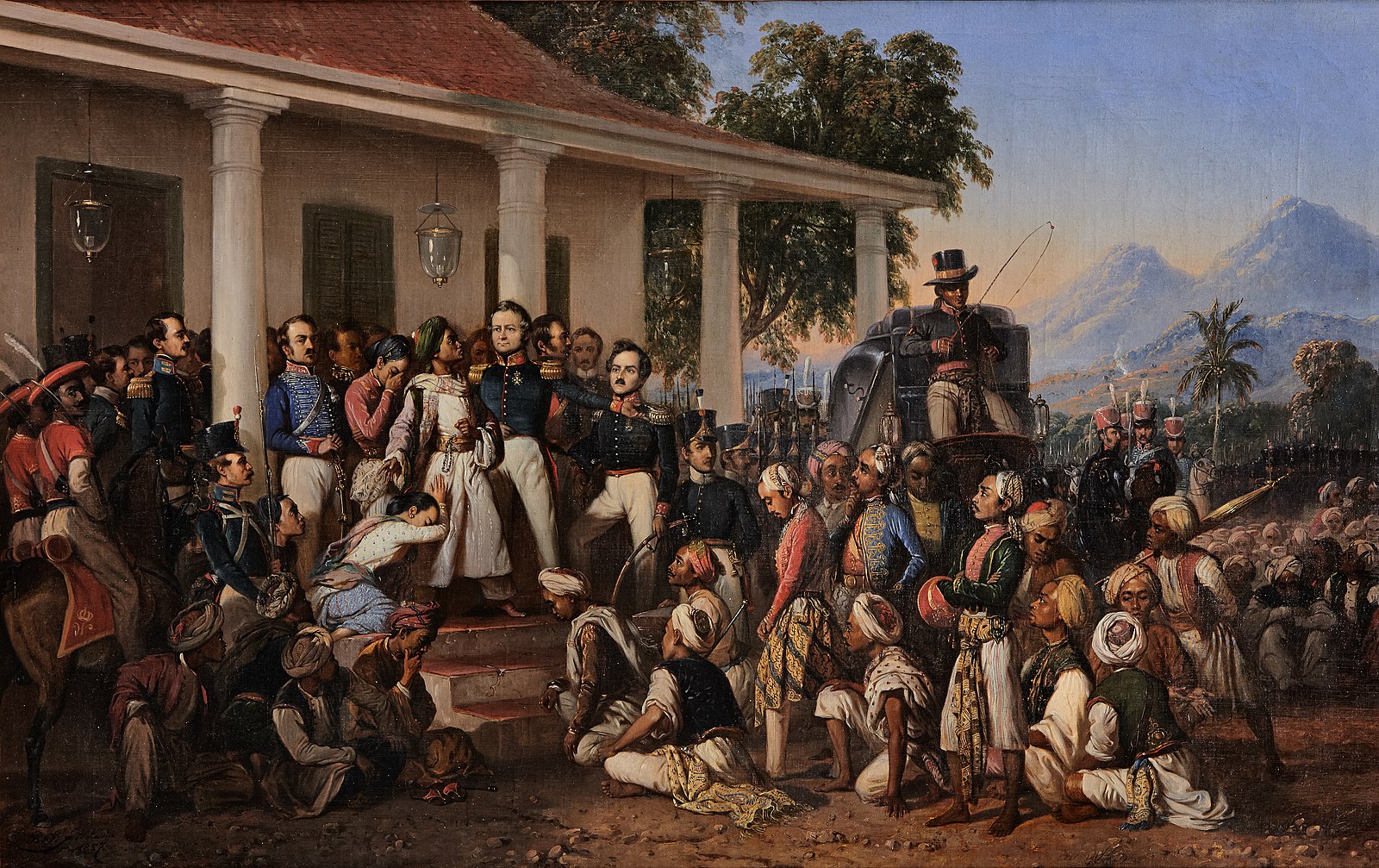
This artwork became one of the most talked about paintings and led to discussions about Raden Saleh's political views, questioning whether this painting contained a message against colonialism because the visualization of this painting depicted Prince Diponegoro's arrest.
Although quite controversial, the painting on display at the State Palace today falls into the category of paintings that raise the theme of historical events.
The Deer Hunt or ‘Perburuan Rusa’ (1846)
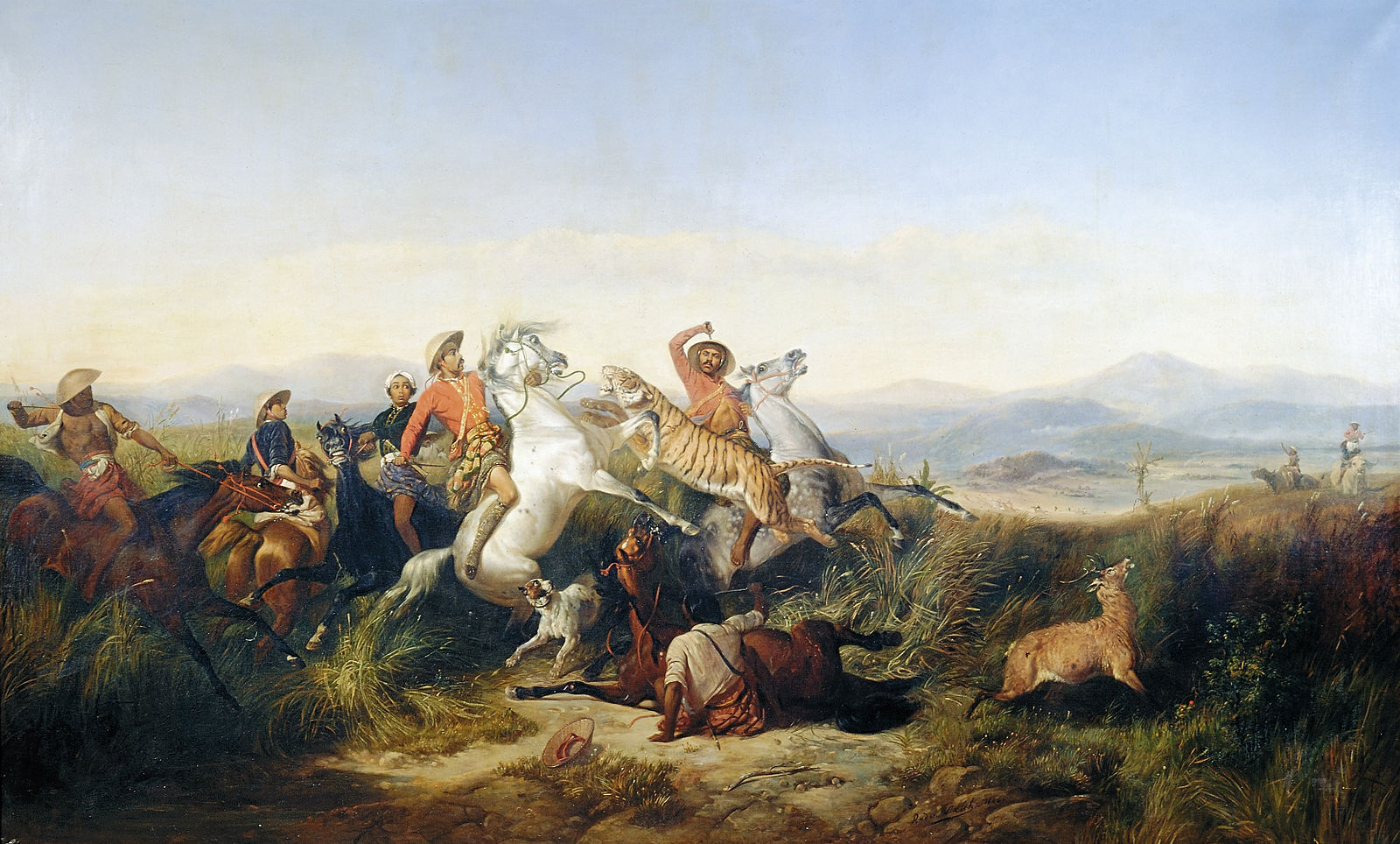
This painting of ‘The Deer Hunt’ is a realist work of art that carries a romantic style.
The story is filled with the dramatic nature of a wild animal fight where Raden Saleh depicts an individual on a horse struggling to save himself from a tiger attack while hunting deer.
This animal-inspired artwork is symbolic of survival and rich in deep meaning.
La Chasse au Taureau Sauvage or ‘Perburuan Banteng’ (1855)
This artwork on the theme of hunting features a dramatic conflict between humans and wild animals, with Raden Saleh depicting himself on a graceful brown horse.
Cited from the Jakarta Post, the artwork valued at €7.2 million (IDR 119.9 billion or US$8.8 million), was sold in Vannes, France on January 27, 2018 to an Indonesian collector whose identity was not disclosed.
With this incredible price for Raden Saleh's artwork, he has become one of the most expensive Indonesian artists at auction, which is not surprising considering that Raden Saleh is one of the most important figures in the art world, especially in Indonesia.
The Lion Hunt or ‘Perburuan Singa’ (1840 and 1841)
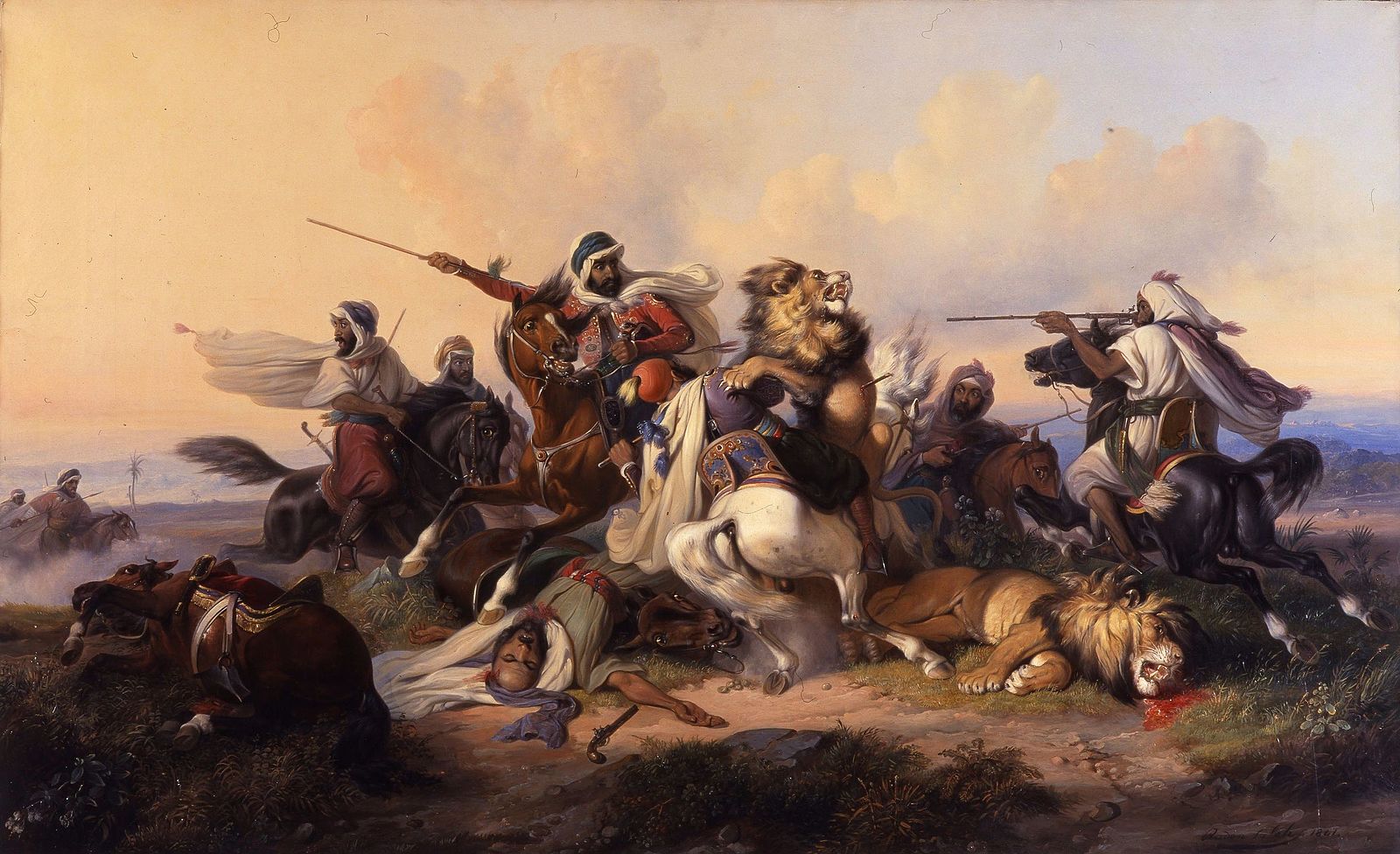
This is one of Raden Saleh's most famous works and there are two versions of this painting.
The first version was created in 1840, and the second version in 1841 with a more mature composition.
This lion hunt became one of the first paintings depicting a hunting scene created by Raden Saleh, attracting the attention of art lovers in Germany at that time who were interested in the East.
Boschbrand or Forest Fire (1849)
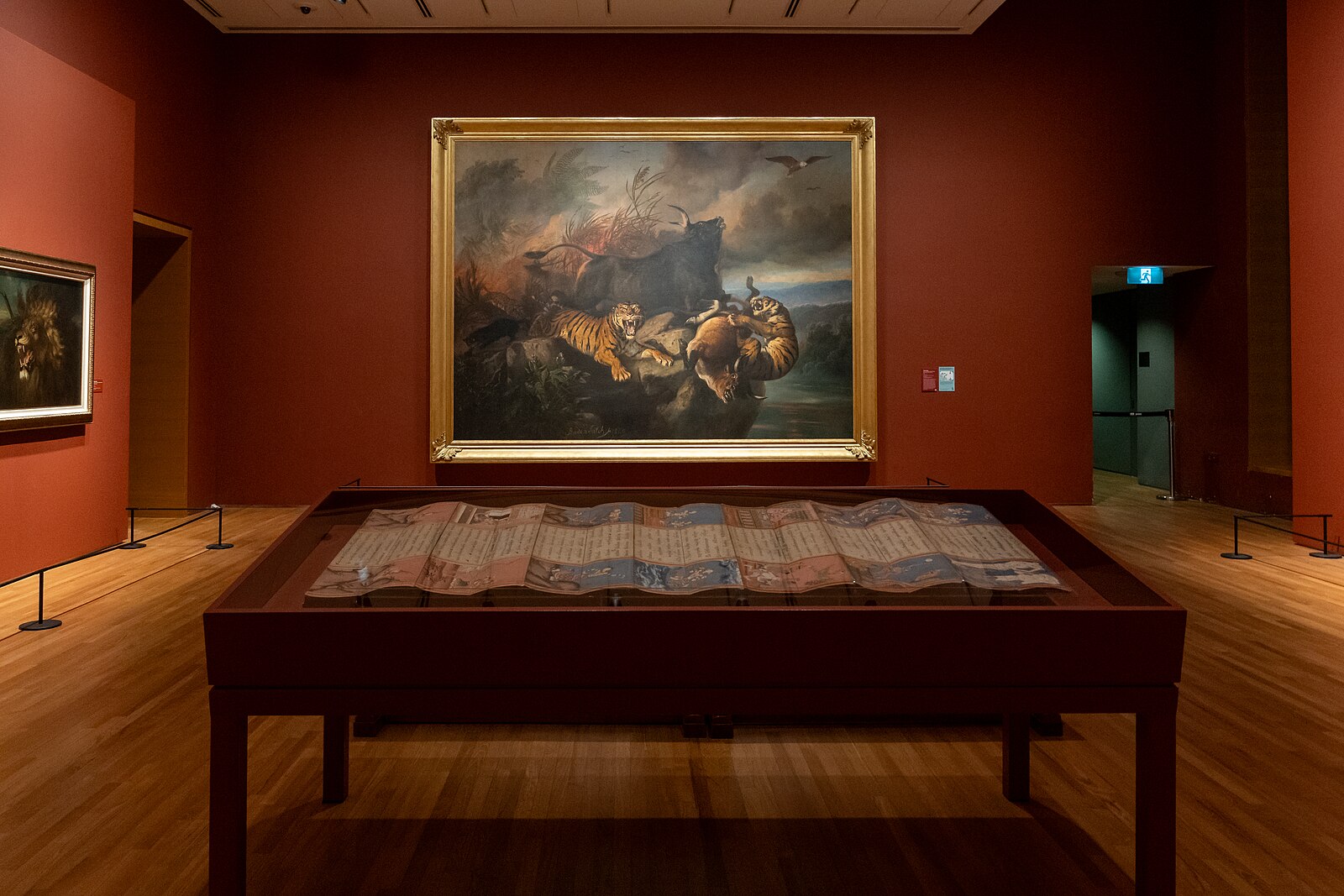
This painting, created by Raden Saleh, depicts a forest fire through an interesting composition, painted on canvas with oil paint and is one of the major artworks produced by Raden Saleh.
The narrative in this painting depicts the cycles of life and death and how nature becomes a stage for the wild animals around it.
This artwork can be seen at the National Gallery Singapore (NGS), located at 1 St. Andrew's Road Singapore 178957.
Read also: Maria Ressa: Southeast Asia’s Nobel-Winning Voice for Press Freedom
That's the journey of Raden Saleh and his world-famous works, which are full of deep meaning and history.
Raden Saleh is also a symbol of a globally recognized Javanese artist who has made a huge impact on visual arts in Indonesia and Southeast Asia.
Through his artworks, it will also become an important element of the cultural and historical heritage of the region as well as Southeast Asia.
Raden Saleh’s legacy reminds us that visual art has the power to preserve identity, provoke thought, and connect cultures. His brush was more than a tool, it was a voice.
This article was created by Seasians in accordance with the writing rules on Seasia. The content of this article is entirely the responsibility of the author.