


When discussing European colonialism, the spotlight often falls on the major imperial powers such as Britain, France, Spain, and Portugal. However, several other nations and entities also engaged in colonial enterprises, albeit on a smaller or less enduring scale.
Among these lesser-known colonizers are Denmark, Italy, the United States, and the Polish–Lithuanian Commonwealth. Each of these nations pursued overseas expansion or imperial ambitions, leaving behind complex and often overlooked legacies.
Denmark

Despite its modest size, Denmark maintained colonial possessions for over three centuries. The Danish colonial empire began in the early 17th century and included territories in the Americas, Africa, and Asia.
In the Caribbean, Denmark established colonies on the islands of St. Thomas, St. John, and St. Croix, which collectively became known as the Danish West Indies.
These islands were major producers of sugar, and like other colonial powers, Denmark relied heavily on enslaved labor brought from Africa to work the plantations.
In Africa, Denmark held forts along the Gold Coast, in present-day Ghana, where they participated in the transatlantic slave trade.
Their presence included forts such as Christiansborg Castle, which was a key node in the shipping of enslaved Africans to the Americas.
In India, Denmark controlled the trading post of Tranquebar (Tharangambadi) in Tamil Nadu and Serampore in Bengal. These were modest compared to the British and French empires in India, but they played a role in the spice and textile trades.
Denmark’s colonial holdings dwindled over time, with the West Indies being sold to the United States in 1917, becoming the U.S. Virgin Islands.
Despite being less expansive than other colonial powers, Denmark’s role in the slave trade and global commerce was significant and has recently received more historical scrutiny.
Italy
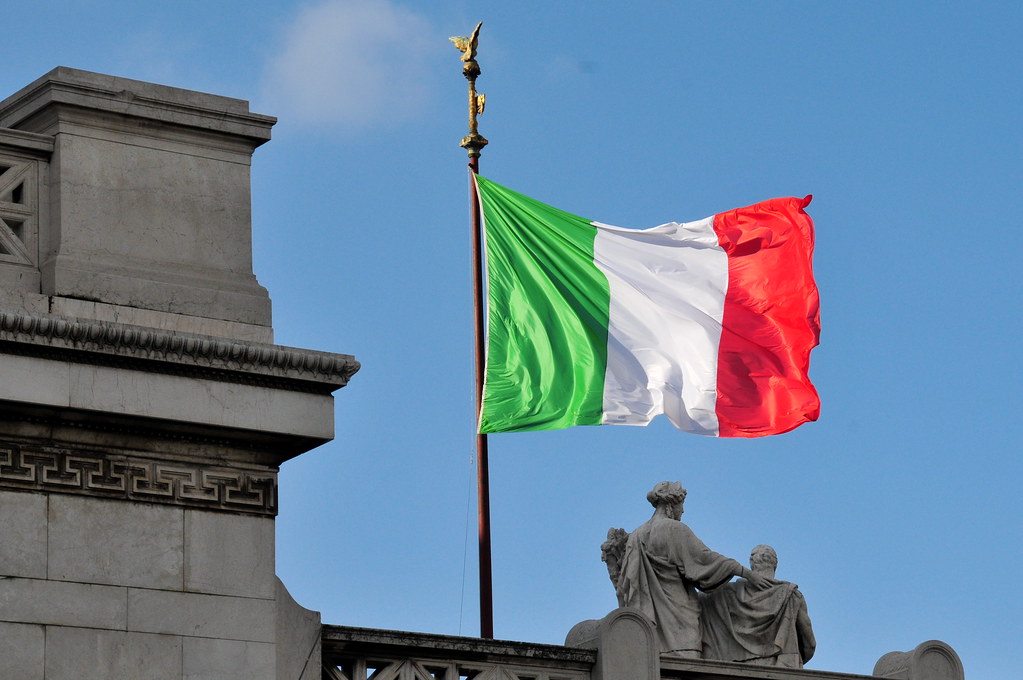
Italy entered the colonial race late, primarily due to its unification in the 19th century. By the time Italy became a unified nation in 1861, much of the world had already been claimed by older empires. Nevertheless, Italy pursued its own colonial ambitions, focusing on Africa.
Italy’s first major colonial endeavor was in Eritrea, which became an Italian colony in the 1880s. This was followed by the conquest of Italian Somaliland (now part of modern Somalia) and, most ambitiously, the invasion of Libya in 1911, wresting it from the Ottoman Empire.
Italy’s African empire expanded briefly during World War II to include Ethiopia, which Mussolini’s fascist regime invaded in 1935–36, establishing the short-lived colony of Italian East Africa.
In addition to Africa, Italy briefly held the Dodecanese Islands off the coast of Turkey and attempted colonization efforts in the Balkans during World War II.
Italy’s colonial rule was often marked by repression and violence, particularly in Ethiopia, where war crimes including the use of chemical weapons were committed.
Italy’s empire was short-lived, collapsing after World War II, but its legacy continues to affect diplomatic and migration dynamics between Italy and its former colonies.
The United States

Although not traditionally included in discussions of European-style colonialism, the United States has a clear colonial history, especially from the late 19th century onward.
American expansionism began domestically with the displacement of Indigenous peoples across the continent.
However, overseas ambitions became evident with the annexation of territories such as Puerto Rico, Guam, and the Philippines following the Spanish–American War in 1898.
The Philippines was perhaps the most prominent U.S. colony. Though the U.S. claimed it would prepare the country for self-rule, the colonization involved brutal suppression of Filipino independence movements, resulting in a bloody and prolonged conflict.
Puerto Rico remains a U.S. territory to this day, with limited political rights for its residents. Similarly, Guam remains under U.S. control, while American Samoa and the Northern Mariana Islands are also U.S. territories.
The annexation of Hawaii in 1898, following the overthrow of its monarchy, is another example of U.S. imperialism.
Though it became a state in 1959, the history of how Hawaii came under American control is increasingly seen as a colonial act, particularly from the perspective of Native Hawaiians.
Polish-Lithuanian Commonwealth
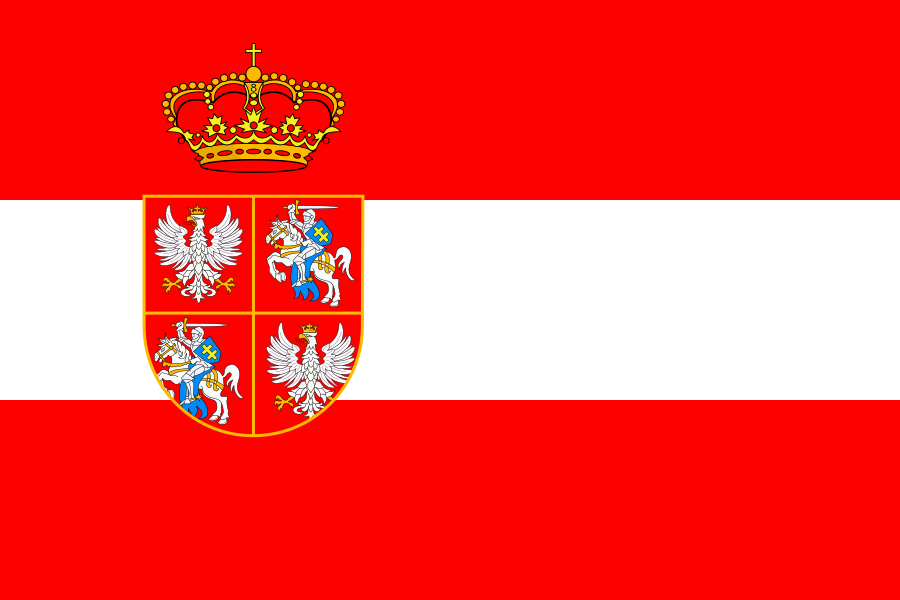
Unlike the others mentioned, the Polish–Lithuanian Commonwealth (1569–1795) was not a maritime empire and did not possess overseas colonies.
However, it functioned as a major land empire in Eastern Europe and exerted influence over large swaths of territory, including parts of modern-day Ukraine, Belarus, Latvia, and Russia.
The Commonwealth was one of the largest and most populous states in 17th-century Europe, and it practiced a form of colonization that involved settling nobles and colonists into conquered territories, particularly in the Ukrainian steppes.
This internal colonization often led to tensions with local populations, including Cossacks, Tatars, and peasants. The Commonwealth promoted the spread of Catholicism and Polish culture into areas with Orthodox Christian and diverse ethnic backgrounds.
Though it lacked overseas possessions, its imperial structure and policies bore similarities to colonialism, especially in how it managed ethnic and religious minorities and administered borderlands.
The Commonwealth eventually declined due to internal divisions and external pressures, being partitioned by neighboring powers at the end of the 18th century.
Nevertheless, its history as a multi-ethnic empire contributes to broader understandings of colonization as not solely an overseas phenomenon.


