


For decades, cockroaches have enjoyed a strange kind of celebrity status—as the unkillable survivors of a nuclear doomsday. From late-night jokes to post-apocalyptic movies, they’ve been crowned the ultimate symbol of biological resilience. But science, as it often does, tells a more surprising story.
In reality, cockroaches are not the most radiation-resistant creatures on Earth. That title may actually belong to a microscopic parasitic wasp: Trichogramma. According to recent studies, this insect can survive radiation levels 15 times higher than cockroaches, and a staggering 300 times more than humans. And unlike tardigrades, which must shut down their metabolism to endure extreme conditions, Trichogramma remains biologically active—eating, mating, and thriving even in environments hostile to almost all other life.
Microscopic Marvels of Survival
Trichogramma belongs to a genus of tiny parasitic wasps, measuring just 0.2 mm long. Despite their minuscule size, they play a major role in pest control by parasitizing the eggs of agricultural pests. But their resilience under extreme radiation levels is what has truly stunned researchers.
In a study published in Radiation and Environmental Biophysics, the larvae of Trichogramma pretiosum survived exposure to 150,000 rad (1,500 gray/Gy) of ionizing radiation—a dose that would obliterate most known life forms. For comparison, humans generally die from radiation doses of 500–1,000 rad (5–10 Gy), and cockroaches can only handle about 10,000 rad (100 Gy). Trichogramma, in other words, is a nuclear superhero disguised as a speck of dust.
Why Are They So Tough?
Scientists believe Trichogramma’s extreme durability is due to a combination of biological advantages: tiny body size, short life cycles, and low metabolic activity. Their cells also seem to be unusually efficient at repairing radiation-induced DNA damage. Moreover, much of their life cycle occurs inside host insect eggs, providing natural shielding from harmful radiation.
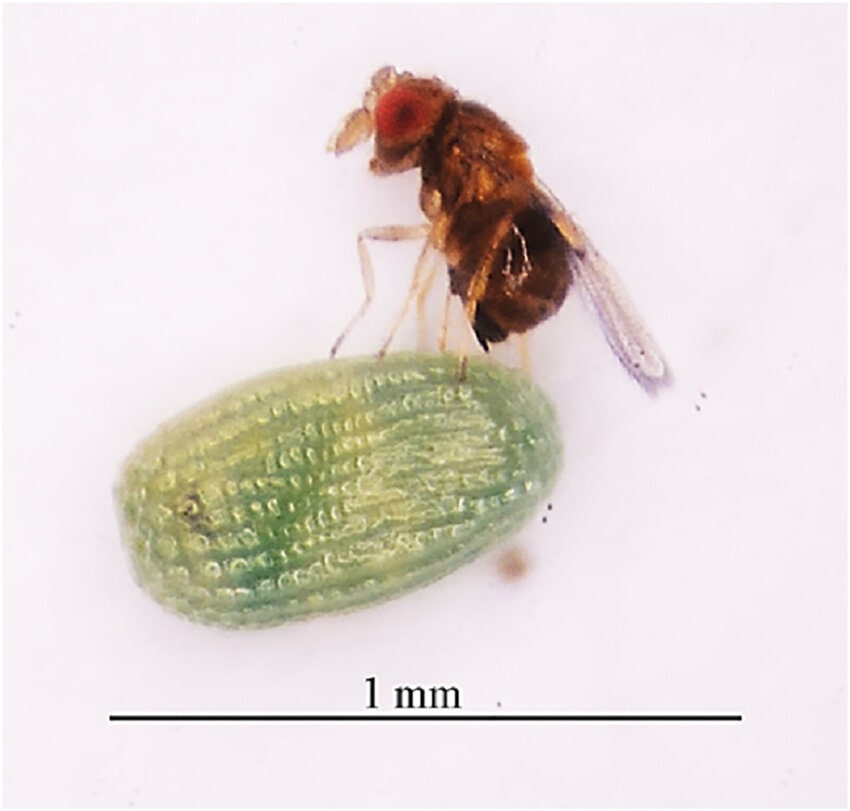
The U.S. Environmental Protection Agency (EPA) has long noted that invertebrates tend to be more radiation-tolerant than vertebrates. But what sets Trichogramma apart is not just its ability to survive—it thrives. Even under heavy radiation, it continues to reproduce and act as a natural pest control agent, making it an ecological asset even in compromised environments.
Move Over, Cockroaches (And Even Tardigrades)
Cockroaches still deserve some credit. They can survive for weeks without food, and some species can live for days without their heads. But their legendary status as the last survivors of a nuclear war is now being challenged by new evidence. Studies show that various microorganisms, tardigrades, and parasitoid insects like Trichogramma far outperform them when it comes to radiation endurance.
Take tardigrades, for instance—these microscopic “water bears” are famous for withstanding space vacuums, intense heat, and cosmic radiation. But they only do so by entering a dormant state called tun, essentially hitting pause on all biological activity. Trichogramma, on the other hand, doesn’t need to pause anything. It keeps going—living, mating, parasitizing—in conditions that would instantly kill most life forms.
Real-World Applications in an Unstable Future
This isn’t just a fascinating piece of trivia. Trichogramma’s resilience opens exciting opportunities across multiple fields—from biotechnology to ecological restoration and even space exploration. For agriculture, for example, the UN’s Food and Agriculture Organization (FAO) has highlighted Trichogramma as a reliable biological control agent, even in heavily polluted environments with high UV radiation or pesticide residue.
In a 2024 study published in Florida Entomologist, researchers in Brazil documented Trichogramma pretiosum parasitizing moth eggs on eucalyptus leaves—functioning perfectly as a biological control agent despite challenging field conditions. These tiny wasps could help sustain crop production in disaster zones, post-nuclear areas, or heavily industrialized regions.
Additionally, understanding how Trichogramma repairs its DNA under extreme stress might offer valuable insights for radiation therapy, genetic engineering, and medical resilience research.
Tiny Creatures, Giant Lessons
The real kicker? These wasps may even help humanity build life-supporting ecosystems beyond Earth. Their high tolerance to radiation and toxic environments makes them ideal candidates for extraterrestrial agriculture, particularly on planets or moons with harsh conditions. In future Martian greenhouses or lunar farms, Trichogramma could be the silent guardians of food security.
So the next time someone jokes about cockroaches inheriting the Earth, you might want to correct them. There’s a new contender for the title of Earth’s toughest lifeform—and it has wings, a stinger, and a job to do.


