


Beneath the dark, acidic, and challenging waters of Southeast Asia’s peat swamp forests lies a tiny creature that might just leave you in awe. Its name is Paedocypris progenetica, and it’s no ordinary fish—it holds the title of the world’s smallest known vertebrate. Its size? Just about 7.9 millimeters! That’s even smaller than many insects we encounter every day.
Officially discovered in 2006 by an international team of scientists, this miniature fish not only broke records but also opened the eyes of the scientific world to the extreme limits of vertebrate evolution.
Tiny, Transparent, and Almost Invisible
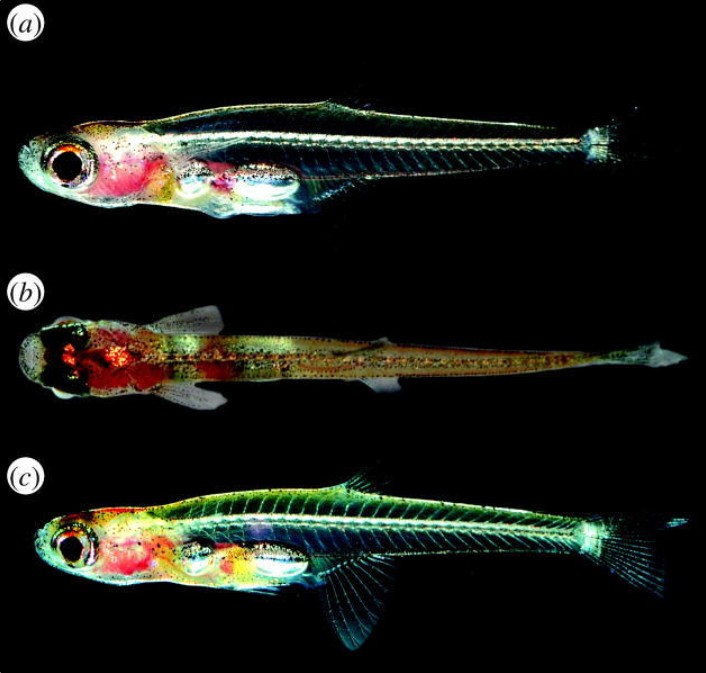
What makes Paedocypris progenetica so extraordinary is its nearly transparent body. Most of its internal organs can be seen clearly from the outside, including its brain! The fish’s body is mostly translucent, with faint pink hues around the gills and heart, and tiny black specks from pigment cells.
Despite its tiny size, the fish retains the general structural blueprint of the carp family (Cyprinidae), albeit drastically miniaturized. Most of its skeleton never fully ossifies—instead, it remains made of flexible cartilage.
Its skull is even partially open, exposing the brain directly, something almost unheard of in other vertebrate species. Its fins are extremely simple, and many anatomical features found in its larger relatives are either missing or radically modified.
An Extreme Habitat Rich in Life
This fish is found exclusively in the tropical peat swamp forests of Southeast Asia, primarily in Sumatra, Borneo, and parts of Peninsular Malaysia. Its habitat is far from hospitable: the water is highly acidic (with a pH as low as 3.0—similar to household vinegar), oxygen-poor, and dark brown due to tannins from decomposing leaves.
Yet beneath this seemingly hostile environment lies a world teeming with biodiversity. Paedocypris typically inhabits shallow pools—sometimes only a few centimeters deep—filled with fallen leaves and submerged plants.
Even during the dry season, when water levels drop dramatically, they can survive in small puddles or burrow into damp soil. And here’s the twist, their minuscule size is actually an advantage: they require very little space or oxygen to survive.
Mini Survival Strategy: Maturing Early
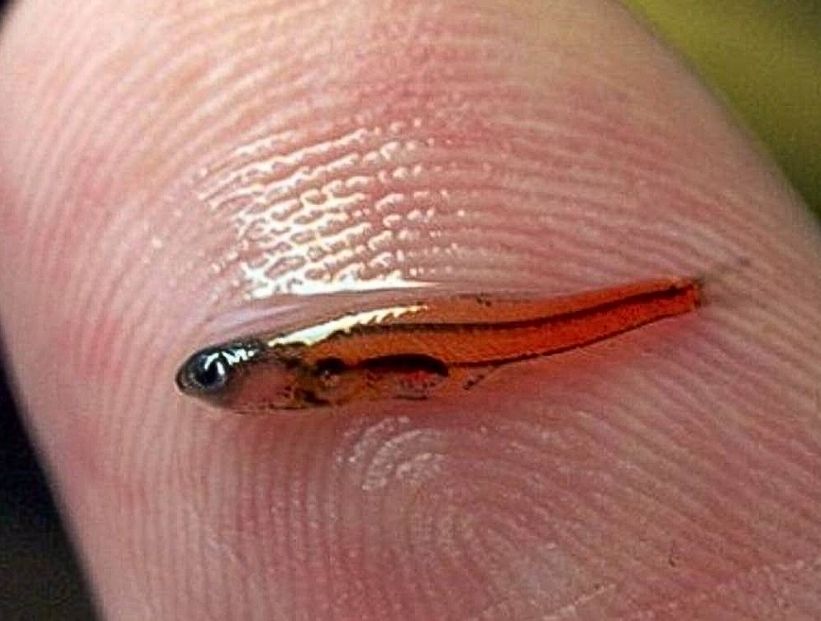
The uniqueness of Paedocypris goes beyond its tiny form. Its evolution includes a phenomenon known as progenesis, a process in which an animal reaches sexual maturity while still retaining larval characteristics.
By becoming reproductively mature at such a young and small stage, they can breed in highly limited environments. Not only do they mature quickly, but they can also exploit microhabitats inaccessible to larger fish. This is an extraordinary adaptation that gives them an evolutionary advantage.
Anatomically, many parts of their body are simplified. Certain bones are absent, others are fused, and complex organs are compressed to the bare minimum. Interestingly, amid all this reduction, some body parts are highly specialized—for example, the male’s uniquely shaped pelvic fin, which is believed to aid in mating.
Agile Micro-Predators
Despite their minuscule and transparent bodies, Paedocypris are not just passive prey in the food chain. They are active predators, equipped with jaws specially evolved to catch tiny organisms like plankton and microcrustaceans. Their upward-facing mouths help them feed on microscopic life at the water’s surface.
Their transparency also acts as a hunting tool: prey often fails to detect them until it’s too late. Even their digestive system is simplified, saving both space and energy. These adaptations allow them to thrive in environments that appear “poor” but are actually full of food—if you're small enough.
Rapid Reproduction in Unstable Habitats
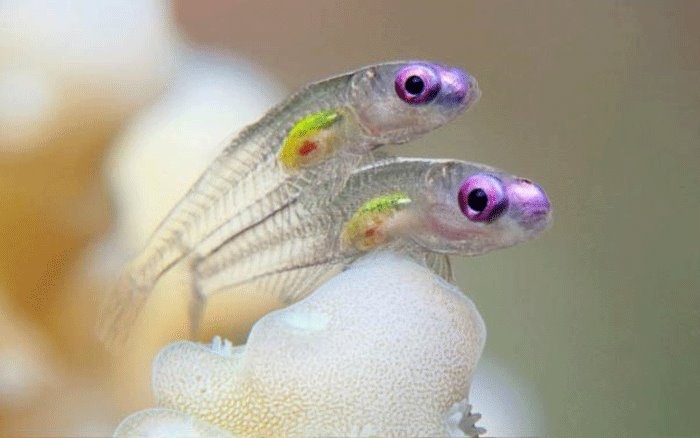
Paedocypris females can begin laying eggs even before reaching 8 millimeters in length. While they may not produce as many eggs as larger fish, they can spawn more frequently—a clever strategy to sustain populations in habitats that are prone to drying out or changing rapidly.
Researchers have also found that males possess specialized fin structures used to grasp females during mating, similar to those found in other miniature species. Every aspect of their reproduction seems finely tuned to a fast-paced life in an unpredictable environment.
A Serious Threat: Disappearing Peat Swamps
Unfortunately, the Paedocypris’s habitat is under severe threat. Southeast Asia’s peat swamps are among the fastest-disappearing ecosystems on the planet. These wetlands are being drained, burned, and converted into agricultural land, mainly for oil palm plantations. In Sumatra and Borneo, over 80% of their native habitat has been lost or degraded.
On top of that, climate change is worsening the situation. Shifts in rainfall patterns disrupt the delicate water systems of peat swamps. And because this species is highly habitat-specific, it cannot simply migrate elsewhere.
Agricultural runoff and mining-related pollution further degrade water quality. Although not all Paedocypris species have been officially assessed for conservation status, scientists widely agree they are at high risk of extinction.


