Have you ever heard of a place where desert meets sea, and mountains and hidden wonders are just waiting to be explored?
Welcome to Nui Chua, Viet Nam, a destination that will change the way you view its natural beauty and diverse biodiversity.
Nui Chua is known as the 'Island of life', this area is one of the natural areas preserved to maintain its rich biodiversity, including various types of flora and fauna in Viet Nam.
The origin of Nui Chua is the Phan Rang Dry Forest, which has now been transformed into a nature reserve.
In April 1998, the area was designated as the Nui Chua Conservation Area, and in 2003, it was upgraded to National Park status.
The area's popularity as a biosphere reserve was recognized by UNESCO in 2022.
The National Park is located in two districts of Ninh Thuan Province, namely Thuan Bac and Ninh Hai in Viet Nam.
Nui Chua also has a series of mountains and seas integrated with green hillsides and stunning streams, making it one of the most beautiful National Parks with varied ecosystems in it.
The Biodiversity of National Park Nui Chua in Viet Nam
According to UNESCO, Nui Chua covers an area of 106,646 hectares, with 99,294 hectares of land and 7,352 hectares of sea.
A diverse range of ecosystems and protected areas means that Nui Chua is divided into three specific zones, including locations focused on ecological restoration and the development of the tourism industry.
In addition to its stunning natural charm, Nui Chua also has a diversity of flora and fauna that is included in Viet Nam's red list and global red data.
Plant diversity in Nui Chua includes more than 1,500 species, with the Orchidaceae family being the most dominant with a distribution of 96.64% and a total diversity of 1,237 species.
Meanwhile, the fauna found in Nui Chua consists of 330 vertebrate species including 84 mammals, 163 birds, and 83 amphibians and reptiles.
Some endangered species such as the black-footed couc langur, red-faced pheasant, Viet Nam's distinctive tree frog, pygmy loris, and Asian black bear, are also found in Nui Chua.
Nui Chua National Park is one of the key ecological sites and habitats for endemic species, contributing to the conservation and promotion of the tourism value of this complex ecosystem.
The Other Side of Nui Chua
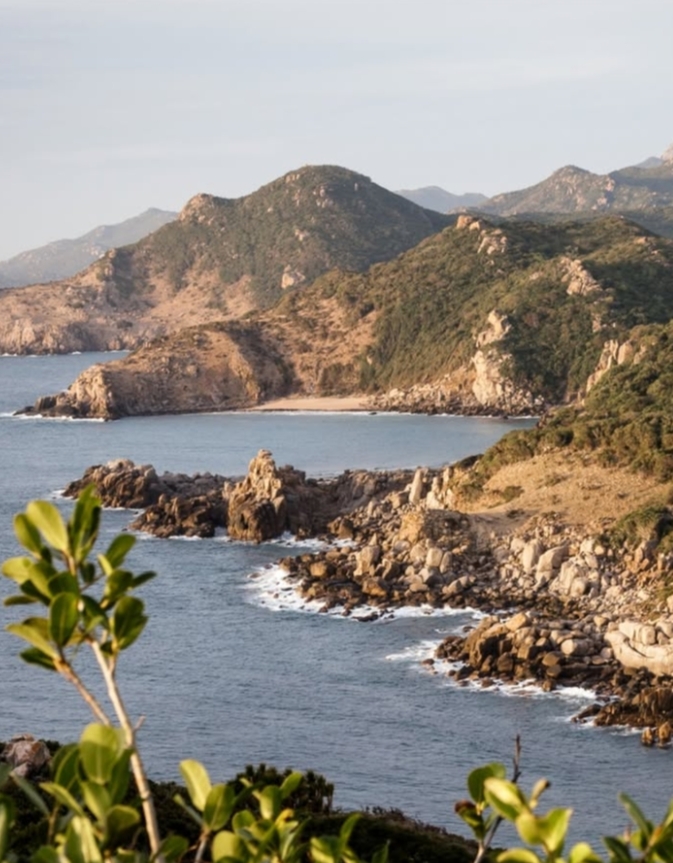
For the landscape and marine ecosystems within Nui Chua National Park, this biosphere reserve plays an important role in biodiversity.
With a dry climate, the variety of plants that grow well in this area is quite limited and the majority of plants found here are typically found in desert, marine and mountainous areas.
On the other side of the tracks, the biosphere reserve also boasts a stunning panorama of Rai Cave, which consists of ancient rock formations stacked on top of each other to form many small caves that are home to otters.
One of the big challenges for Nui Chua is forest degradation, so the Viet Nam government needs to direct their attention to sustainable protection efforts to maintain the key ecosystems.
Nui Chua is also one of the ideal locations for marine wildlife enthusiasts, where one of the typical marine species here are sea turtles that frequent the beaches around Nui Chua to lay their eggs.
Read also: Cruising the Underground River in Viet Nam’s Phong Nha–Kẻ Bàng National Park
Best Time to Visit Nui Chua
Every year, August and October are the best times to visit Nui Chua. This period offers pleasant weather conditions, especially in Ninh Thuan, which is not too hot and has cool and comfortable air for exploring Nui Chua National Park.
Trekking activities in this area are allowed with a limited number of participants, where hikers must register in advance with the park management to ensure safety during the activity.
The trekking trails in Nui Chua provide a memorable travel experience through high mountains, fast-flowing rivers, boulders, cliffs, and dense forests.
A popular hiking trail is from Hang Da Hamlet to O Liem River with a travel time of about three days.
The cultural uniqueness of the Nui Chua region is also evident in the traditions of the Raglai ethnic minority community who still uphold a very traditional way of life.
Cited from the UNESCO website, the population in this area reached 447,163 people in 2021, where the population consists not only of the Raglai tribe, but also other tribes such as Kinh, Cham, Ho, Tay, Nunh, and Muong.
Read also: Viet Nam: One of the World's Oldest Nations with a Legacy That Still Echoes
Nui Chua National Park is recognized as the 11th biosphere reserve by UNESCO, which has rare species of flora and fauna that are on the IUCN red list.
Nui Chua National Park is one of the hidden paradises, a biosphere reserve and an important area for biodiversity, with diverse ecosystems as the hallmark of Viet Nam.
With its biodiversity, Nui Chua not only serves as a place for conservation and tourism, but also represents Viet Nam with its stunning natural beauty that can be found in Southeast Asia.
In addition, Nui Chua also has the potential to become a global biosphere reserve with a sustainable ecotourism center to preserve its natural wealth and facilitate the economic growth of the people of Viet Nam.
From the summit of the mountains to the deep sea, Nui Chua is a hidden paradise for authentic adventurers.
If Seasians visit Nui Chua, don't forget to always keep it spotless and ethereal for the next generations to be more sustainable.
Ready to explore Nui Chua, Seasians?
This article was created by Seasians in accordance with the writing rules on Seasia. The content of this article is entirely the responsibility of the author.