Laos is a not-so-lucky Southeast Asian nation. Being a landlocked country – which means it does not have direct access to any coastlines, seas, or oceans – it is geographically isolated, with no potential for maritime trade. Reliant on the agricultural sector, Laos is also considered a least developed country by the United Nations.
In terms of its international relations, Laos is also quite vulnerable. Laos remains the most heavily bombed country in the world per capita due to the Vietnam War. Remaining UXOs (unexploded ordnance) – explosives left behind and still at risk of detonation – in Lao territory have hindered development. Furthermore, after the Soviet Union collapsed and cut off aid to Laos’ communist government in 1991, the country experienced a major financial crisis.
Yet, over the years, Laos has shown remarkable resilience, portraying a one-of-a-kind success story. From the shadows of its poverty, Laos has risen up as a force to be reckoned with in Southeast Asia through its tourism strategies.
The “Lao” Way: Culture and History
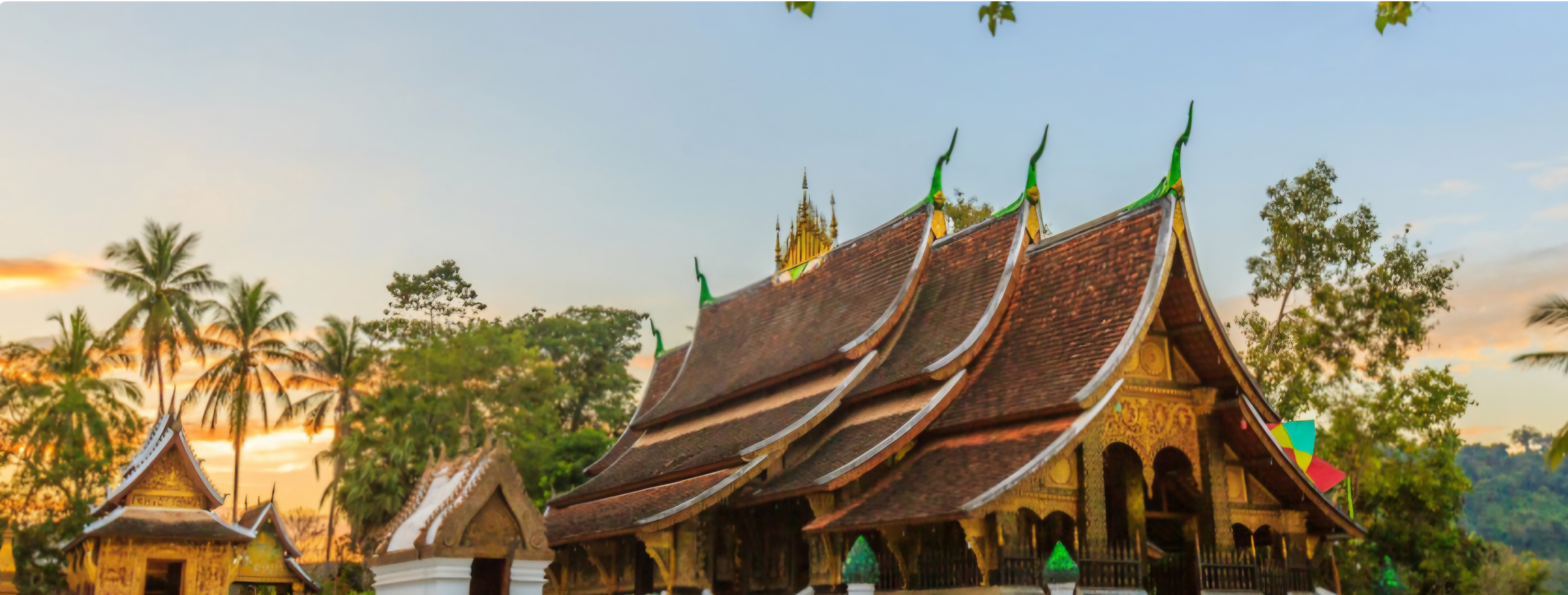
Since the late 1980s and early 1990s, the spectacular growth of tourism in Southeast Asia has largely affected the Lao economy. Laos opened itself to international tourists in 1989, and 6 years later, the Lao National Assembly declared tourism as a priority development area.
The Lao government promotes its tourism based on its national culture. A highly popular cultural tourism site is the ancient city of Luang Prabang, which was declared a world heritage site by UNESCO in 1995. As the main hub of Laotian Buddhism, Luang Prabang is known for its signature golden temples and pagodas known as wat. Situated by the Mekong, the city had also been the royal capital until communist forces seized power from the monarchy in 1975.
Tourists can take river cruises down the Mekong, admiring the view of mountains, floating markets, and bamboo houses while interacting with locals. Laos’ high ethnic diversity provides opportunities for tourists to enjoy traditional arts, such as music, weaving, and embroidery. A stroll or cruise down Laos’ major cities also lets tourists enjoy French colonial architecture, such as the Royal Palace, which creates a sweet blend of culture and history.
The Lao government has even promoted battle locations of the Vietnam War as tourism sites. An example of this is the COPE Visitor Center in Vientiane, a small museum exhibiting the history of UXOs in Laos. Another popular destination is the archaeological site known as the Plain of Jars in Xieng Khouang Province, dubbed the world's most heavily bombed place.
Main Strategies: Infrastructure and Connectivity
One of the Lao government's key policies in accelerating tourism was infrastructure development. There used to be only one commercial airport in Laos, and a small one at that: Wattay Airport in the capital city, Vientiane.
However, its runway was then extended in order to accommodate Boeing 747 aircrafts. The government also ordered the construction of more airports – today, there are 9 commercial airports in Laos.
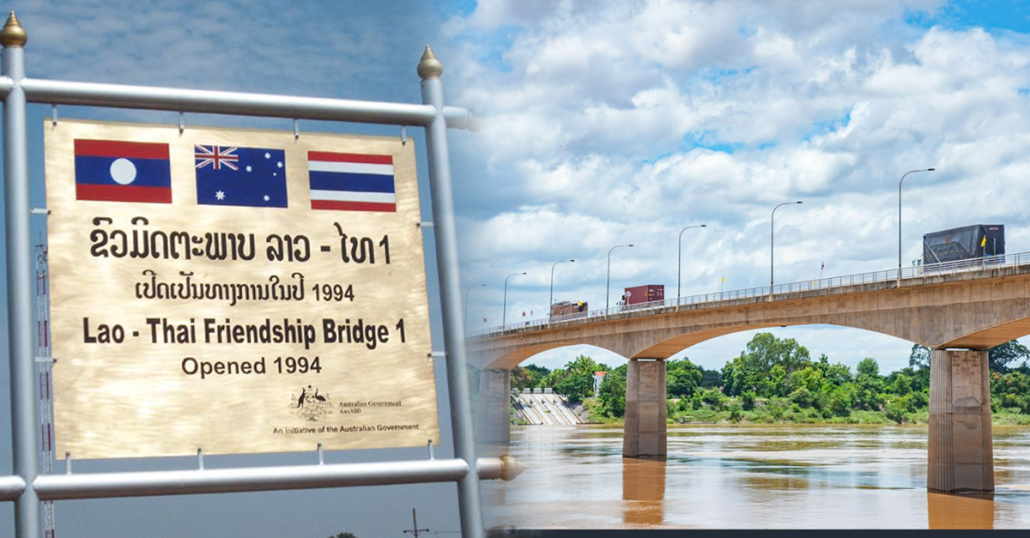
Road and bridge construction was also an important step in ensuring connectivity. In 1994, the First Thai-Lao Friendship Bridge, also known as Mittaphab Bridge, was built from Australian aid funds. At 1,1 km long, it is the first bridge crossing over the Lower Mekong, connecting Vientiane to the Thai city of Nong Khai. Up to 2025, four subsequent friendship bridges have been built, easing mobility and tourism between the two neighboring countries.
A supporting policy regarding connectivity was the relaxation of visa requirements. Efforts have been made to make the visa issuing process easier when done outside the country. The issuance of 15-day arrival visas have also been permitted at Wattay Airport and Mittaphab Bridge.
The Lao government has also allowed tourists from certain countries to stay in Laos visa-free. For example, Japanese tourists can stay up to 30 days in Laos without visas, while tourists from mainland China, Taiwan, Macau, and Hong Kong, can stay visa-free for a maximum of 15 days.
Campaigns and International Cooperation
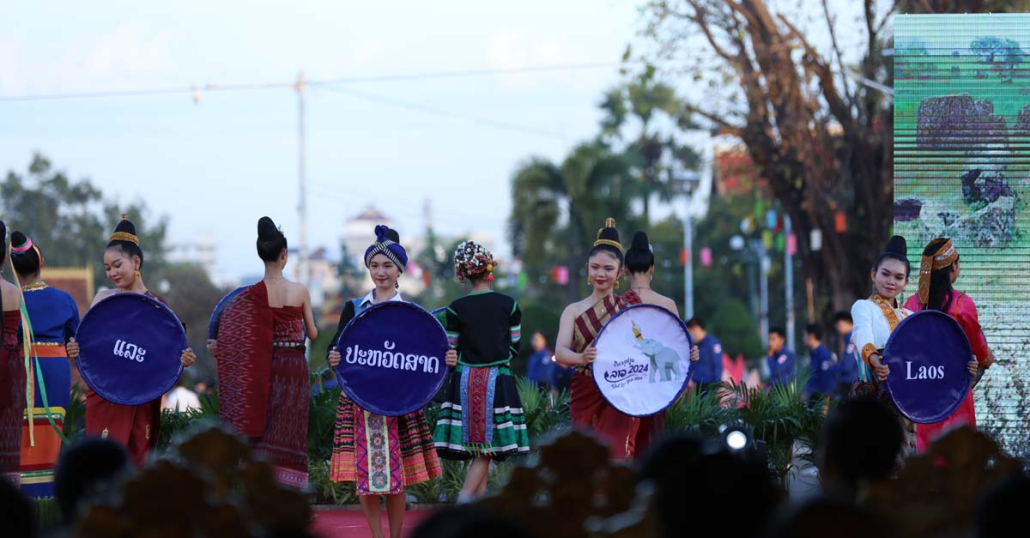
Besides promoting its cultural legacies and speeding up infrastructure development, the Lao government has also launched several tourism campaigns. A popular tourism campaign is the Visit Laos Year, launched four times in 1999–2000, 2012, 2018, and 2024. The campaign vouches for the construction of roads, telecommunication facilities, airports, hotels, and restaurants.
The Visit Laos Year campaign also proposes advertising strategies and provides training for service personnel. For example, tour guides are taught how to speak English. Maintenance of water, electricity, and telecommunications installations are also part of the campaign aimed to improve tourist experience.
Laos’ participation in international forums and bilateral ties also helped pave the way for better tourism. Laos is involved in the Mekong Forum on Tourism and ASEAN Tourism Forum, while also cooperating with Myanmar to promote tourism in the Golden Triangle. An example of an internationally-supported tourism effort is the Lao Thiao Lao, a digital marketing campaign launched in September 2020 with the support of the European Union.
Under the ASEAN Framework on Sustainable Tourism Development in the Post Covid-19 Era, Laos has also started to emphasize sustainability in tourism. This is done through the building of parks, biodiversity conservation areas, and waste management sites.
In cooperation with UNESCO, Laos has begun promoting ecotourism in the Nam Ha Protected Area in Luang Namtha Province. A similar endeavor is done in the Forespace ecotourism project in Nam Khan Protected Area.
Laos’ Tourism Policy: A Great Success
Data from the UN Department of Economic and Social Affairs reveals the huge success of Laos’ tourism strategies. Since 1991, tourism revenue has become a major export industry of Laos. In 1997, tourism activities earned $73,7 million, making them the third largest source of export revenue. In 2024, this number has rocketed up to $1,76 billion.
Through a mix of proper advertising strategies and efforts to improve infrastructure and human resource quality, Laos has proved itself as a worthy example of how even the “unlucky” nations can rebuild.
References
KPL – Lao News Agency Team. “Laos Tourism Boom Surpasses Expectations in 2024.” Lao News Agency. Published on February 5, 2025. Published on July 11, 2025. https://kpl.gov.la/EN/detail.aspx?id=89150.
Laotian Times. “Lao Thiao Lao Is Back!” Laotian Times. Published on September 20, 2022. Accessed on July 11, 2025. https://laotiantimes.com/2022/09/20/lao-thiao-lao-is-back/.
Yamauchi, Sayo and Donald Lee. “Tourism development in the Lao People's Democratic Republic.” UN DESA Discussion Paper No. 9 (1999).
This article was created by Seasians in accordance with the writing rules on Seasia. The content of this article is entirely the responsibility of the author.