Despite the diversity of countries in Southeast Asia, many have excelled in improving the welfare of the people, especially in the aspect of health.
The health index is one of the parameters to evaluate the state of health of a nation. This is reflected in the level of disease spread to average life expectancy and relates to the overall quality of the health system in a country.
In 2025, which country will have the best health index, especially in Southeast Asia?
Read on, Seasians!
Ranking of Countries in Southeast Asia With The Best Health Index in 2025
Based on data from CEOworld entitled Global Health Index: The Healthiest (and Unhealthiest) Country in the World 2025, which contains various health indicators from 197 countries in the world and includes data on health indices in the Southeast Asia region.
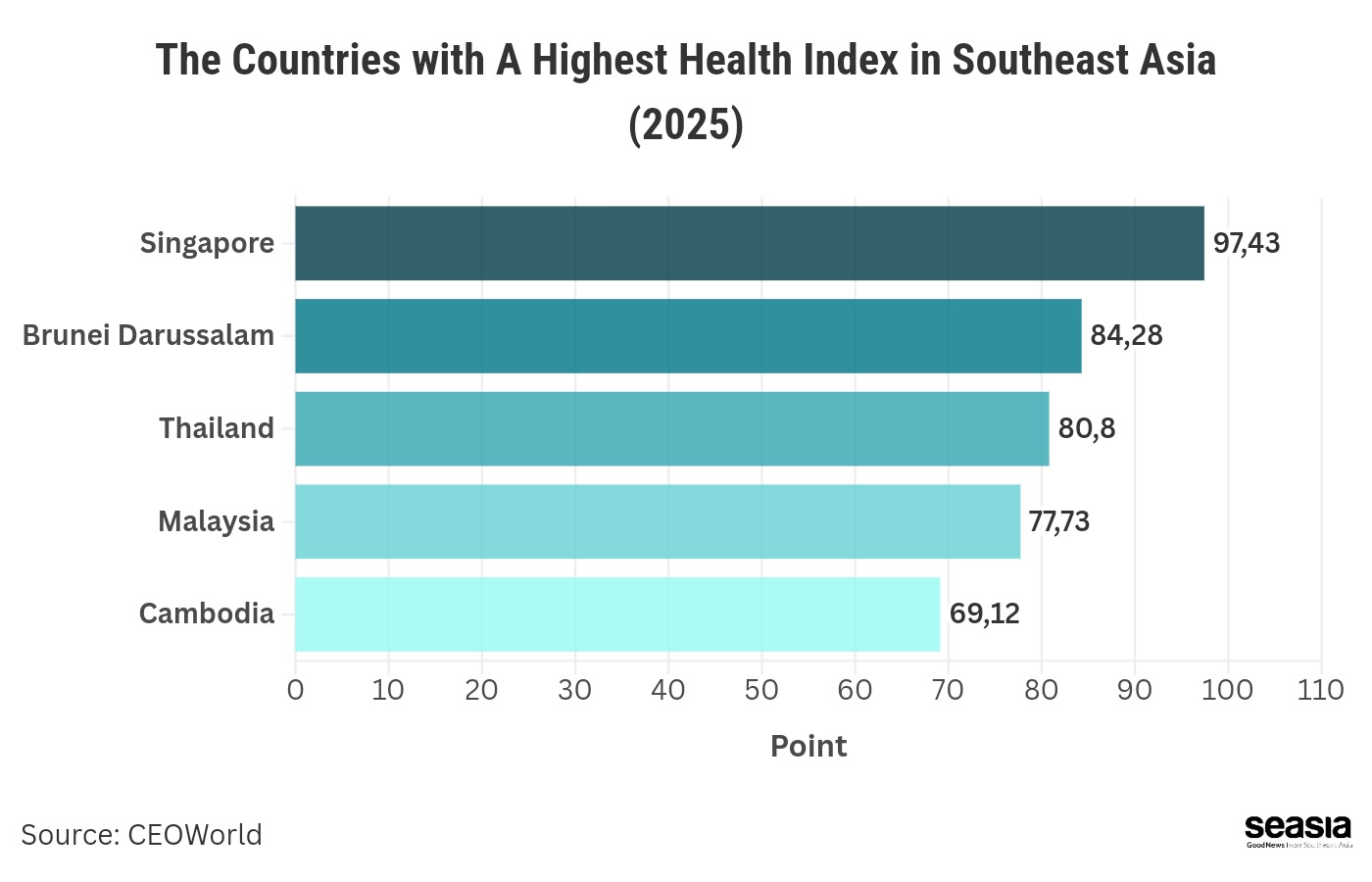
In 2025, Singapore was named the country with the best health index with a score of 97.43 in the Southeast Asia region.
With its innovative healthcare system and state-of-the-art medical infrastructure, Singapore truly deserves to be recognized as a key reference in Southeast Asia as the country with the top health index in the region.
Brunei Darussalam followed in second place with a health index score of 84.28. Furthermore, Thailand with a health index score of (80.8), followed by Malaysia (77.73), and Cambodia (69.12) are included in the top five highest health index in Southeast Asia in 2025.
Read also: Singapore Named World's Cleanest Tourist City — Here's Why It Deserves the Title
Healthcare System in Singapore
Singapore is an urbanized country with a population of 5.4 million consisting of various ethnic backgrounds, such as Chinese, Eurasians, Indians and Malays.
The country has been recognized for having the highest health-adjusted life expectancy and birth rate.
Based on data from The Lancet, life expectancy at birth is set to stabilize at (80.7 years) for men and (85.2 years) for women in 2022.
This success is due to a high-quality healthcare system that is accessible to all.
Another aspect of Singapore's healthcare system is its approach to social health, where the country prioritizes individual responsibility for health.
However, this should not override structural issues such as social welfare inequality and an aging population, which are two significant challenges that Singapore faces.
Read also: SG Ready 2025: Securing Singapore’s Energy Future
Singapore's Contributions to the Health Sector in ASEAN
Cited from The Lancet, Singapore acts as a leader in global health, with the following contributions:
- Handling infectious disease outbreaks after the 2023 serious acute respiratory syndrome incident.
- Overcoming dengue, chikungunya and Zika virus outbreaks by creating new technologies to regulate mosquito populations through Wolbachia bacteria and designing affordable and easy-to-use mosquito traps known as Gravitraps.
- Implementing mosquito eradication campaigns and warning systems for dengue to raise public awareness of the risks of the disease by engaging citizens.
- Singapore also plays an active role in global efforts to reduce tobacco consumption by implementing innovative policies, such as increasing prices or taxes on tobacco products, regulating tobacco packaging and labeling, and enforcing strict bans on tobacco promotion, advertising and sponsorship.
- In the area of sanitation, NEWater is pioneering technology in producing high-quality, clean, potable recycled water from treated wastewater.
The region continues to face health risks associated with communicable and non-communicable diseases, rapid population growth, and inadequate availability of clean water and sanitation. Therefore, cooperation is needed to address these threats.
As the country with the highest health index in Southeast Asia, Singapore should contribute to achieving the UN Sustainable Development Goals, especially in the health sector.
Singapore deserves to be recognized as the country with the highest health ranking in Southeast Asia, supported by highly innovative, relevant and indispensable advanced technologies, especially in the health sector.
“Singapore offers many facets of knowledge and innovation,” said Tikki Pang, cited from The Lancet (2023/8).
It is not simply a case of asking what can be achieved to improve health, but Singapore has become one of the pioneers in Southeast Asia and even globally in health development.
Besides being a dream destination, Singapore is at the forefront of health defense, especially in the Southeast Asian region. With superior health rankings, quality of life, and security, it is a hope for many, especially for a sustainable future.
A nation is only as strong as its people, and to make that people strong, we must take responsibility for our health. Would you agree, Seasians?
This article was created by Seasians in accordance with the writing rules on Seasia. The content of this article is entirely the responsibility of the author.