


Amid the dense forests of Papua’s Cyclops Mountains, a team of scientists made a stunning discovery: a new genus of shrimp that lives on land, even in trees!
During a challenging and dramatic scientific expedition in the mountains in 2023, the team made two extraordinary discoveries. The first was the rediscovery of a species previously thought to be extinct. The other, perhaps even more unexpectedly, was the world's first known tree-dwelling shrimp.
Two Major Surprises from the Cyclops Expedition
Led by Dr. James Kempton from the University of Oxford, the expedition aimed to document the biodiversity of the largely unexplored Cyclops mountain range. However, what the team ended up discovering far exceeded their expectations.
They managed to capture footage of Zaglossus attenboroughi—Attenborough’s long-beaked echidna, a rare mammal believed to have been extinct since the 1960s.
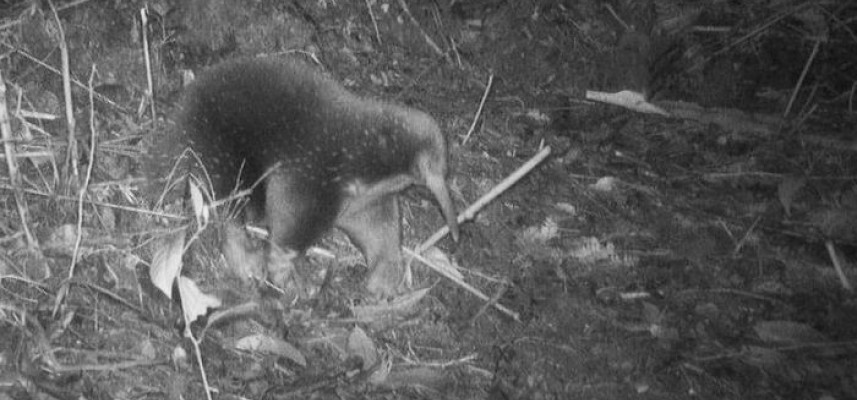
What made the moment even more dramatic was how it happened: the elusive animal was recorded by a camera trap on the very last day of the expedition, from the last memory card examined. “I'm not joking when I say it came down to the very last SD card that we looked at, from the very last camera that we collected, on the very last day of our expedition,” Dr. Kempton told BBC News.
But amid the buzz surrounding the rediscovered echidna, another mind-blowing finding initially went under the radar: the discovery of a completely new genus of terrestrial and arboreal shrimp.
Shrimp in Trees? Seriously?
Shrimp are typically known to inhabit aquatic environments, either in the ocean or freshwater. But the species found in the Cyclops Mountains defies that norm. Measuring only about 1.5 cm in length and reddish-brown in color, this shrimp was found living inside tree hollows, feeding on small insects and other microscopic organisms in its immediate surroundings.
Researchers named it Paratya cyclopensis, and it now holds the distinction of being the first-known shrimp species to live entirely on land, even in the middle of a tropical rainforest, far from any major water sources.
“We were quite shocked to discover this shrimp in the heart of the forest, because it is a remarkable departure from the typical seaside habitat for these animals,” said Dr. Leonidas-Romanos Davranoglou, an entomologist from the Oxford University Museum of Natural History, as quoted by IFL Science.
The Secret Life of the Terrestrial Shrimp
So how is it possible for this shrimp to survive without water, unlike most shrimp species? Scientists believe that the extremely high rainfall in the Cyclops Mountains creates an intensely humid environment that allows these creatures to breathe and live, even without being submerged in water.
Typically, shrimp use gills to extract oxygen from water. However, Paratya cyclopensis appears to have developed adaptive mechanisms that allow it to survive in open air, likely aided by the region’s high humidity and persistently moist conditions.
A High-Risk Expedition
Discovering two extraordinary species was a major victory for the team, especially after enduring a series of extreme challenges. They faced earthquakes, had to evacuate from caves, encountered venomous snakes and spiders, and battled serious illnesses.
Several team members suffered severe injuries, Dr. Davranoglou, for instance, fractured his arm in two places, while another team member contracted malaria. One even had a leech attached to his eye for a day and a half before it could be safely removed by hospital medical staff.
Despite the dangers, the scientists remain undeterred by the wilds of the Cyclops. “Though some might describe the Cyclops as a ‘Green Hell,’ I think the landscape is magical, at once enchanting and dangerous, like something out of a Tolkien book,” Kempton remarked.
He also spoke of the strong bond that formed among the team during the expedition, from helping each other through crises to peaceful moments sitting around a campfire, accompanied by the calls of forest frogs.
Lessons from Papua’s Wilderness
The discovery of Paratya cyclopensis opens a new chapter in our understanding of biodiversity and animal adaptation. Shrimp have long been considered exclusively aquatic creatures, but this discovery shows that they can evolve to survive in entirely different environments. This finding adds to the growing list of new species and highlights how much of Indonesia’s nature, especially in Papua, remains unexplored and full of secrets.
Who would have thought that such a wonder would be discovered in the stillness of a forest in a place long overlooked by the world?


