


In the digital age, where algorithms favor dance videos and feel-good memes, a group of journalists and Indigenous community members gathered in a quiet corner of eastern Indonesia to talk about something far less viral—but far more vital: climate justice.
The city of Sorong, perched on the western tip of Papua, is often known as the gateway to Raja Ampat, one of the world’s most breathtaking marine paradises. But this week, Sorong became the backdrop for a different kind of journey—one into the heart of local climate resilience, media engagement, and Indigenous leadership.
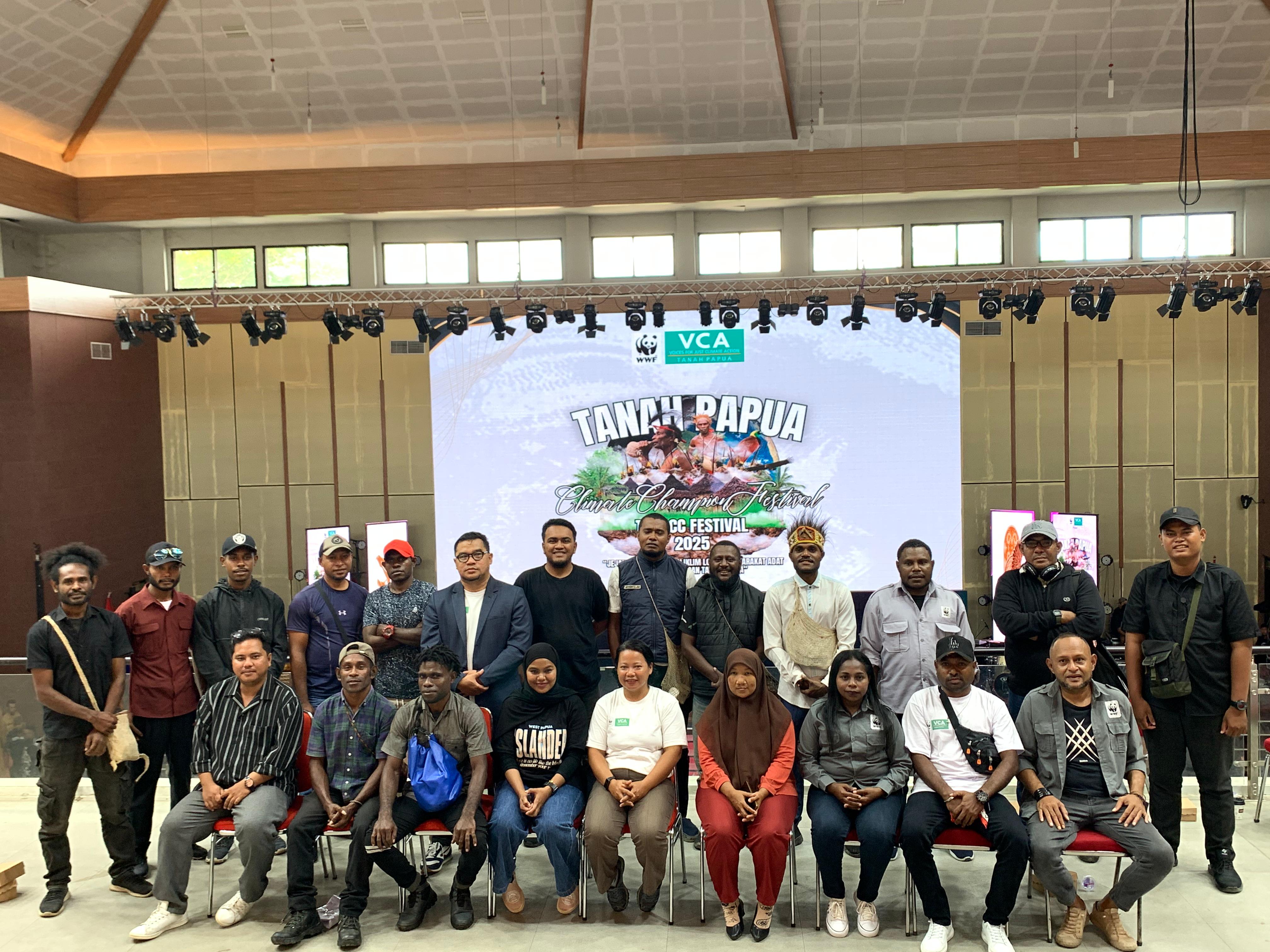
On Monday, July 21, 2025, twenty journalists from print, online, radio, TV, and citizen media came together for a thematic discussion titled Climate Justice Action in Papua, a dialogue aimed at building bridges between professional storytellers and traditional land guardians.
Challenging the Algorithm
“We’re shouting into the storm of the algorithm,” said Akhyari Hananto, founder of Good News From Indonesia and journalist at Mongabay Indonesia, opening his session with a reality check on today’s media landscape. Drawing from the Digital News Report 2023, he described how long-form reporting is losing ground to short videos, attention spans are shrinking, and climate issues are being buried beneath waves of entertainment content.
“In-depth articles lose to dance clips. Investigations sink behind memes and deepfakes,” Akhyari said. But he didn’t come to lament—he came to equip.
“We can’t just resist the tide—we have to ride it smartly,” he added. “Don’t chase attention. Attract it. Use visuals, harness emotion, be consistent.” He introduced participants to the Pyramid of Shareability, a framework for making content more likely to be shared: relatability, usefulness, emotion, and status.
Akhyari emphasized that social media platforms may downrank “negative” content like climate crises, but powerful stories can still break through—with the right language and format. “Your phone isn’t just for scrolling. It’s a megaphone. Use it wisely.”
Journalism with Roots
Safwa Ashari Raharusun, a journalist from Tribun Sorong and representative of the Alliance of Independent Journalists (AJI) Sorong chapter, reminded participants that journalism is also a tool for advocacy—especially when rooted in local realities.
“Governments need public pressure to create sustainable policies. That pressure starts with strong reporting—grounded in real stories from real people,” he said.
Safwa highlighted the importance of journalists working alongside civil society and Indigenous networks. “Communities hold the data. Journalists hold the pen. When they collaborate, real change can happen.”
From Community to Policy
Representing WWF Indonesia, Zacharias A. Inaury shared lessons from the five-year Voice for Climate Action (VCA) program in Papua, which focuses on empowering youth, women, and Indigenous leaders to document and disseminate local climate efforts.
“These people aren’t just experiencing the climate crisis. They’re already responding—protecting forests, adapting traditions, restoring ecosystems,” Zacharias explained. “But without media, these solutions remain invisible.”
Through VCA, local communities are trained in media literacy and citizen journalism. “We’re not only telling their stories—we’re helping them tell their own,” he said.
Where Climate Meets Culture
This thematic discussion was part of the Climate Champion Festival, a three-day event held from July 21–23 in Sorong. The festival was organized by the C4Ledger Alliance in collaboration with WWF Papua, aiming to strengthen synergy between the media, civil society, and Indigenous communities to elevate local climate action.
“It’s not about making climate issues go viral,” said Febrilia Ekawati, Executive Director of YKWS and moderator of the event. “It’s about making them relevant—something people feel, not just know.”
About VCA Indonesia
The Voice for Climate Action (VCA) program is part of the global Power of Voices initiative, supported by the Dutch Ministry of Foreign Affairs. In Indonesia, it is implemented by organizations like C4Ledger and WWF, with a focus on elevating underrepresented voices—particularly Indigenous and grassroots communities—in climate policy discourse.
Working in regions most vulnerable to climate impacts—such as Jakarta, East Nusa Tenggara, and Papua—VCA promotes locally driven knowledge, challenges technocratic dominance, and fosters inclusive climate solutions rooted in both science and tradition.
From Paradise, a Warning and a Way Forward
Raja Ampat may be a paradise on Earth, but its reefs, forests, and coastal villages are not immune to rising seas, shifting seasons, and ecological disruption. From Sorong—the edge of that paradise—something powerful is happening: stories are being written, alliances are being forged, and voices once unheard are now beginning to resonate far beyond the islands.
Because when journalists meet Indigenous communities,
those voices don’t just echo—they begin to transform.


