Blackpink's Lisa's first solo MV “Rockstar” gained millions of views within minutes of its release on June 28, 2024.
This created fanaticism around "Yaowarat" after the famous area in Bangkok's Chinatown appeared in the MV.
In Thailand, this Chinatown area is located in the center of Bangkok and is very conspicuous compared to other places.
Bangkok Chinatown is known for its bright red, gold-toned elements, and is often the place to celebrate various traditional festivals such as Chinese New Year, Cap Go Meh, lantern festivals, and lion dance performances.
Apart from being a place to live, this area also has a significant role in building the economy because many traders operate in this area.
Curious about what's in Yaowarat Area as Bangkok's Chinatown?
Let's see more, Seasians!
History of Bangkok's Chinatown
Cited from Asia King Travel, the history of Bangkok's Chinatown dates back to the late 18th century when Chinese immigrants came and settled in the area attracted by economic and trade opportunities.
The history of Bangkok's Chinatown dates back to the reign of King Rama I who founded the Chakri Dynasty and moved the center of government to Bangkok in 1782, which invited many Chinese merchants and people to immigrate to the city.
Yaowarat Road is 1,500 meters long, starting from the external drain (Khlong Rop Krung), opposite Mahacai Fort, and continuing to Charoen Krung Road.
For a long time, the Chinese community here has played a vital role in shaping Bangkok's business landscape, contributing significantly to the city's development as a major and important trading center, resulting in the area's continued growth into a vibrant and dynamic district.
The iconic fusion of Thai and Chinese culture in this area is strong and dominating, creating an environment where both cultures thrive along with the construction of temples, markets and shops catering to the local Thai community by Chinese immigrants.
Without consciously realizing it, the Chinese immigrants imposed their traditions and culture on Thailand. Chinatown is an area outside of China, Macau, Taiwan, and Hong Kong.
Yaowarat as Thailand's Chinatown is a vibrant and culturally rich area. Located in the center of Bangkok, Yaowarat is also one of the centers of commerce and the heart of the overseas Chinese community.
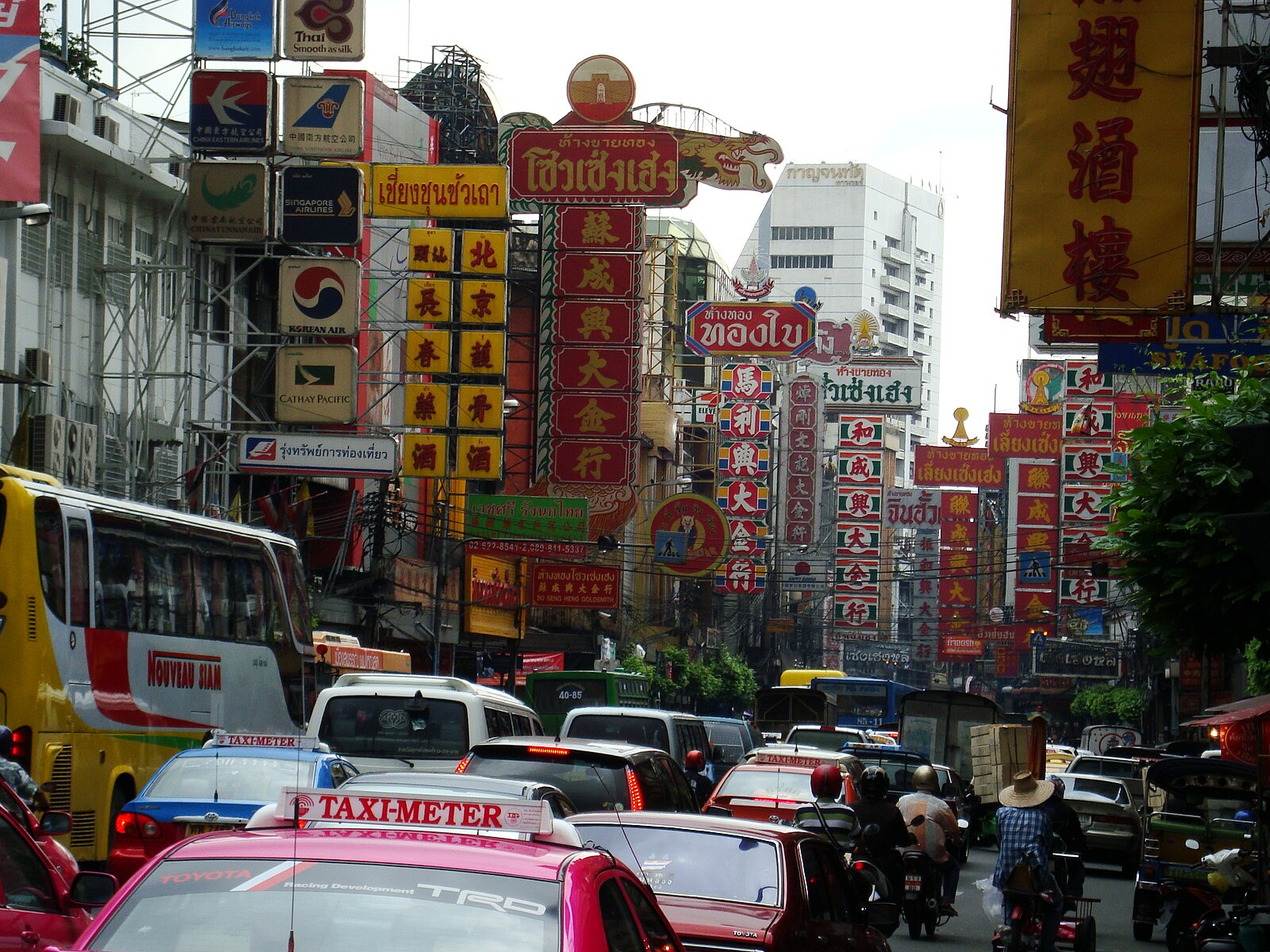
The area is also very iconic with its blend of traditional Chinese and Thai styles, coupled with narrow alleys decorated with colorful signboards that further enhance the atmosphere.
Particularly iconic in this area are the bustling streets, which represent the festive atmosphere of Chinatown.
For the traveler, Thailand's Chinatown is also known as a street food paradise with a variety of delicious, iconic dishes inspired by both Chinese and Thai cuisine.
Another tangible example of the area's cultural fusion can be seen in the temple architecture and celebration of various Chinese festivals such as Wat Mangkon Kamalawat or Wat Leng Noei Yi, which reflect the enduring Chinese influence as Bangkok's oldest and largest Chinese Buddhist temple.
Read also: The City of Angels: Urban Life in Thailand's Metropolis
Other Tourist Destinations Around Bangkok's Chinatown
Besides being popular for its authentic street food, local atmosphere, and interesting celebrations, the Chinatown area around Bangkok's Chinatown also holds a lot of history that is a must-visit for travelers, including:
- Wat Mangkon Kamalawat (Wat Leng Noei Yi), Bangkok's largest and oldest Chinese Buddhist temple, is adorned with intricate carvings and sculptural details, making it a cultural and religious site in Bangkok's Chinatown. Visitors can witness various traditional Chinese rituals and ceremonies here.
- Yaowarat Road, a haven for shoppers and foodies, is bustling during the day but really comes alive at night.
- Sampeng Market, located in the center of Bangkok's Chinatown district, offers a shopping experience with a local market feel.
- The Chinatown Gate (Odeon Circle) marks the entrance to the Chinatown area, is an iconic structure that incorporates elements of traditional Chinese architecture, and is perfect for taking selfies.
- Talad Noi is known as the art center of Bangkok's Chinatown, filled with murals, creative street art and trendy cafes.
- Charoen Krung Road, Bangkok's oldest street, runs through Chinatown with colonial-style buildings, art galleries and modern cafes that are worth exploring.
- The Thian Fah Foundation and Museum is known for highlighting traditional Sino-Thai culture and medicine, exhibiting historical artifacts and providing insight into the Chinese community's contribution to Thai society.
Best Time to Visit Bangkok's Chinatown
If Seasians want to experience Chinatown life outside of China, Chinese festivals such as Chinese New Year or vegetarian festivals in Bangkok are the best options to celebrate while enjoying the festive atmosphere.
The streets are decorated with colorful ornaments, cultural performances, parades, and traditional ceremonies during the festivals.
The period from November to February is the ideal time to explore Bangkok's Chinatown as the temperature is cool, in contrast to the hot and humid conditions that usually characterize Bangkok.
This cool and cozy atmosphere makes it a great time to stroll around and try out the various cuisines around Chinatown Bangkok.
On weekends, Bangkok's Chinatown will be packed with visitors, attracting locals and tourists alike, this is a good time of year to visit as the atmosphere is more lively.
Strategically situated in the center of Bangkok, the Chinatown area can be accessed via surrounding public transportation such as taxi, tuk-tuk, grab, or even on foot.
Read also: Thailand in July Weather: Travel Tips and Best Places to Visit
Although the area has experienced many changes in Bangkok's history, it has remained resilient to political challenges, economic shifts, and urbanization, maintaining its recognition as a cultural and commercial hub in the heart of the city.
As a result, Chinatown is now a vibrant, historic and iconic district. Not only does it attract locals and tourists alike, but its cultural diversity is so vibrant, and its street food so popular, that its architectural beauty and rich traditions are one of the cultural highlights that should be preserved.
Chinatown is not only a residential and economic center for tourism in Bangkok, but also a reflection of the history, culture, and noble values of the Chinese community in Thailand.
Experience the atmosphere of Yaowarat just like in Lisa BLACKPINK's MV, explore its cuisine, iconic architecture, and vibrant culture!
Ready to explore Bangkok's Chinatown in Southeast Asia, Seasians?
This article was created by Seasians in accordance with the writing rules on Seasia. The content of this article is entirely the responsibility of the author.