


Wars seem to be inseparable from human nature. While conflicts vary in cause and scope, some have stood out for their unprecedented scale of violence and loss of life.
These wars left deep scars on civilizations and altered the course of history. Here are ten of the deadliest wars ever recorded, measured primarily by total estimated deaths.
1. World War II (1939-1945)

The deadliest conflict in human history, World War II claimed an estimated 70 to 85 million lives, about 3% of the global population at the time.
It involved over 100 countries and saw horrific atrocities, including the Holocaust, atomic bombings of Hiroshima and Nagasaki, and large-scale civilian bombings.
The war resulted from rising fascism in Europe, expansionist ambitions of Nazi Germany, and militarism in Japan. It left Europe and much of Asia in ruins and redefined global power structures for decades.
2. The Taiping Rebellion (1850-1864)

One of the deadliest civil wars in history, the Taiping Rebellion caused an estimated 20 to 30 million deaths in China. Led by Hong Xiuquan, who claimed to be the brother of Jesus Christ, the rebellion sought to overthrow the Qing Dynasty and establish a new “Heavenly Kingdom.”
The conflict was marked by brutal fighting, famine, and mass executions. It weakened the Qing government and devastated large swaths of the Chinese countryside.
3. The An Lushan Rebellion (755-763)

This devastating rebellion during the Tang Dynasty in China is estimated to have caused between 13 to 36 million deaths, making it one of the deadliest conflicts per capita in history.
General An Lushan led a revolt against the Tang imperial court, plunging the country into chaos. The rebellion severely weakened the Tang Dynasty and caused widespread famine and population decline.
4. World War I (1914-1918)

Known as the “Great War,” World War I resulted in roughly 15 to 20 million deaths. Triggered by the assassination of Archduke Franz Ferdinand of Austria-Hungary, it involved trench warfare and the use of new technologies like machine guns and chemical weapons.
The war devastated much of Europe and contributed to the collapse of empires including the Austro-Hungarian, Ottoman, and Russian Empires. Its unresolved tensions laid the groundwork for World War II.
5. The Second Sino-Japanese War (1937-1945)

Often seen as the Asian front of World War II, the Second Sino-Japanese War caused at least 20 million deaths. Japan's invasion of China led to brutal occupation policies and atrocities such as the Nanjing Massacre.
The war weakened both Japanese and Chinese forces and contributed significantly to the fall of Imperial Japan and the eventual victory of the Chinese Communist Party in the Chinese Civil War.
6. The Russian Civil War (1917-1923)
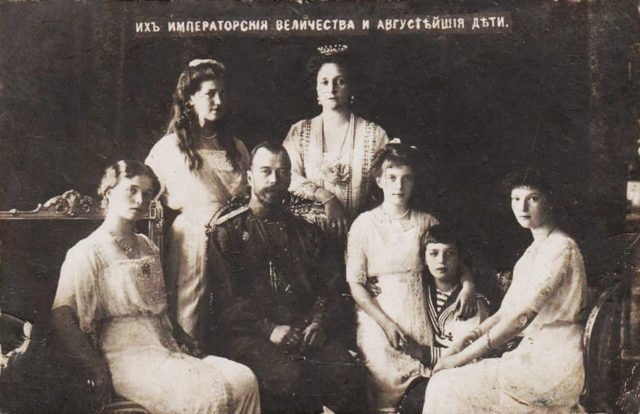
Following the Bolshevik Revolution, the Russian Civil War broke out between the Red Army (communists) and the White Army (a mix of monarchists, liberals, and foreign powers).
The war resulted in an estimated 7 to 12 million deaths, including both combat-related fatalities and civilian casualties from famine, disease, and executions.
The Bolshevik victory led to the formation of the Soviet Union and entrenched communist rule in Russia for much of the 20th century.
7. The Thirty Years’ War (1618-1648)

One of the most destructive wars in European history, the Thirty Years’ War killed an estimated 4.5 to 8 million people.
Initially a religious conflict between Catholics and Protestants in the Holy Roman Empire, it evolved into a broader political struggle involving most European powers.
The war devastated Central Europe, especially Germany, and ended with the Peace of Westphalia, which reshaped the continent's political landscape and established principles of state sovereignty.
8. The Napoleonic Wars (1803-1815)

These wars were a series of conflicts between Napoleonic France and various European coalitions. They resulted in approximately 3.5 to 6 million deaths. Napoleon Bonaparte’s campaigns reshaped Europe and exported revolutionary ideals across the continent.
The wars culminated in Napoleon’s defeat at Waterloo and led to major political changes in Europe, including the restoration of monarchies and the redrawing of national borders.
9. The Congo Wars (1996-2003)

Often referred to as “Africa’s World War,” the First and Second Congo Wars involved multiple African nations and militias. The wars caused the deaths of around 5.4 million people, primarily due to disease and starvation exacerbated by the conflict.
The fighting stemmed from the aftermath of the Rwandan Genocide and power struggles in the Democratic Republic of the Congo. The war destabilized Central Africa and left lasting humanitarian and political challenges.
10. The Korean War (1950-Technically Now)

This Cold War-era conflict between North and South Korea resulted in approximately 2.5 to 3 million deaths. North Korea, supported by China and the Soviet Union, invaded the South, which was backed by the United Nations, primarily the United States.
The war ended in an armistice, not a peace treaty, leaving the Korean War is technically still going on to this day. Massive civilian casualties and destruction marked the conflict, and its legacy continues to shape regional geopolitics.


