If you've been to Singapore, chances are you've laid eyes on the iconic Merlion statue or taken silly photos with the water spouting from its mouth. Standing in all its majesty in Merlion Park, close to the CBD (Central Business District), the Merlion is Singapore's national mascot.
Behind this legendary statue of an eccentric creature – with the head of a lion and the body of a fish – is a name you've probably never heard before: Lim Nang Seng. Lim was a pioneer in sculpture in Singapore, and the reason why the Merlion remains a renowned landmark of the island-state.
Early Artistic Endeavors
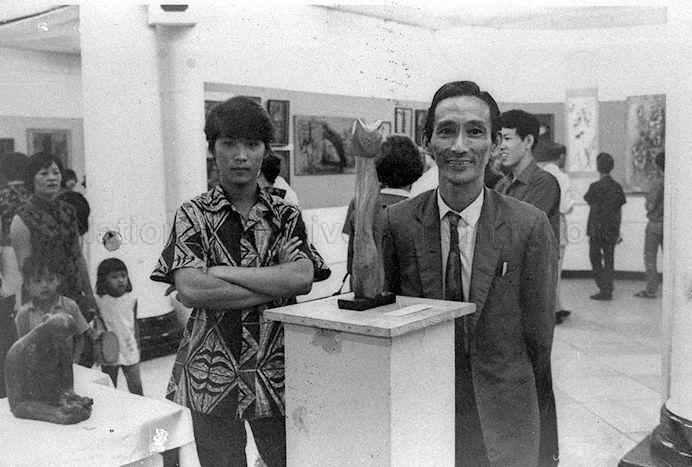
Born in Kuching, Sarawak in 1917, Lim was said to be an artistic prodigy. He initially worked as a schoolteacher and rose to fame as an artist in 1967 when he held Singapore's first sculpture exhibition, Sculpture ‘67.
His exceptional skills led him to become part of the committee that designed Singapore's first coin issue in the same year. In the committee, Lim helped make one-cent coins. He then proceeded to showcase his artistic prowess by exhibiting his works at local arts exhibitions, winning handicraft competitions, and hosting sculpting lessons for the general public.
At one point, his works were even recognized by S. Rajaratnam, Singapore's first Minister of Foreign Affairs. In 1975, Lim's works were exhibited in China alongside several other Singaporean artists.
One of Lim's most important achievements was winning prizes in the Singapore Handicraft and Design competition. It was held by the STPB (Singapore Tourist Promotion Board), the same organization that came up with the idea for the Merlion and later commissioned Lim to bring it to life.
Sculpting the Merlion
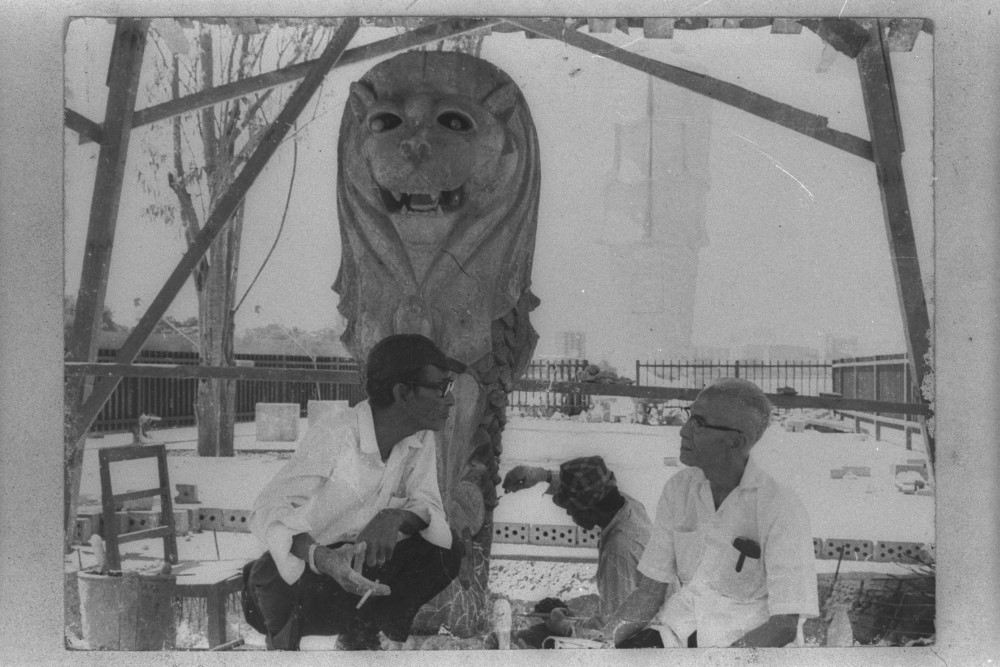
After being commissioned by the STPB, Lim began his work in November 1971. He composed the statue's torso from cement fondue and its skin (scales) from ceramic plates based on a blueprint by Kwan Sai Kheong, then Vice Chancellor of the University of Singapore.
Prior to this, the Merlion had been created in 1964 by British zoologist, Alec Fraser-Brunner, who was known for his expertise in aquatic life. The fish tail of the creature represents Singapore's maritime origins, a fishing village called Temasek (“sea” or “lake” in Malay).
Meanwhile, the lion head is a nod to the legend in the Malay Annals in which Prince Sang Nila Utama from the Sriwijaya Kingdom in Palembang reportedly saw lions on the shores of the island. Hence, he renamed Temasek to Singapura, which means “lion city”.
Keeping this legend in mind, Lim portrayed the grand Singaporean legend in the form of a statue standing at 8.6 meters tall and weighing 70 tons in total. He also made a smaller “Merlion cub”, which was 2 meters tall, near its "mother".
During the creation of the Merlion, Lim was helped by his 8 children, aged 11–23. The children would help him while they were not at school. The older ones climbed the scaffolding and did the eyes, while the younger ones did the tail, scales, and fins.
One of Lim's sons, Albert, as quoted in The New Paper (reported by the National Heritage Board), mentioned that to his father, the Merlion “was not just a sculpture for Singapore”. It was also “a lasting gift” for his family.
Other Works and Legacies
Lim completed the Merlion in August 1972. One month after its completion, the statue was erected in the mouth of the Singapore River, before it was relocated to One Fullerton in 2002 because its pump was corroded by seawater.
Standing majestically against the backdrop of the Fullerton Hotel and Raffles Place, the acclaimed piece of art has been made into miniatures and merchandise. There are 7 authorized Merlion statues across Singapore. There are even similar statues in other countries, such as the giant Merlion model in Hakodate, Hokkaido, Japan.
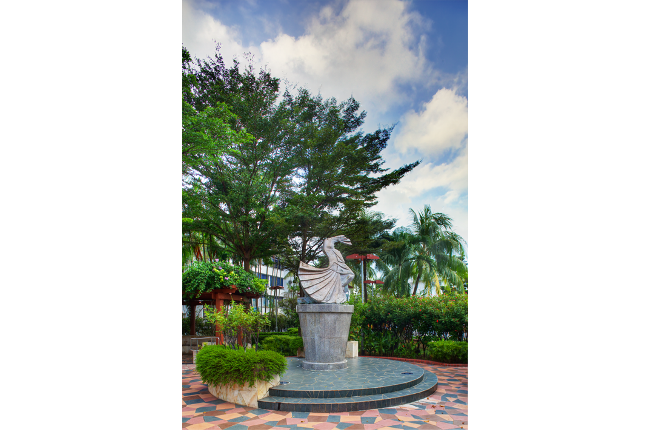
Besides the Merlion, Lim is also known as the person behind the Dancing Girl sculpture at Seng Poh Garden, Tiong Bahru. At 1,2 meters tall, the sculpture was the area's first ever piece of public art. Lim reportedly completed it in only 2 weeks in a carpark at Orchard Road.
The Dancing Girl features a girl doing some sort of harvest dance. Singapore's National Heritage Board recounts that nearby residents deemed the artwork too abstract and looked more like a swan than a girl. Lim was not upset by these demeaning comments, as swans were believed to bring prosperity.
Even though in other occasions, Lim was also frequently ridiculed for his art style, he never gave up on his passions. His works have even been offered at auctions multiple times, with one piece, a sculpture dubbed “Head of a Woman”, selling for the highest amount at $8,785.
Lim died at Singapore General Hospital in 1987. Though he reportedly did not make much money from his art, his works live on, bringing Singapore an everlasting sense of pride and joy.
References
- Singapore Tourism Board. “Celebrating 50 Years of the Merlion: Stories Behind the National Icon.” Roots: National Heritage Board. Accessed on July 14, 2025. https://www.roots.gov.sg/stories-landing/stories/celebrating-50-years-of-the-merlion-stories-behind-the-national-icon/story.
- “The Merlion Sculptor.” SGYF. Published on August 6, 2021. Accessed on July 14, 2025. https://sgyf.com/the-merlion-sculptor/.
- “Tiong Bahru Heritage Trail.” National Heritage Board. https://www.nhb.gov.sg/~/media/nhb/files/places/trails/tiong%20bahru/tiongbahru%20(1).pdf.
This article was created by Seasians in accordance with the writing rules on Seasia. The content of this article is entirely the responsibility of the author.