


When people think of independence movements, images of revolution, resistance, and mass mobilization often come to mind. From India’s nonviolent civil disobedience to the American Revolutionary War, the story of gaining independence is typically one of struggle and sacrifice.
Singapore, however, stands as a unique exception. Its road to nationhood was not paved with demands for self-rule or rebellion against colonial or foreign rule. Instead, it was marked by rejection, an ejection, even, from a political union it had joined just two years earlier.
Singapore was forced into independence in 1965, and that singular moment has shaped much of its national identity ever since.
From British Rule to Merger with Malaysia

For more than a century, Singapore was under British colonial rule, having become a crown colony in 1867. By the mid-20th century, decolonization movements were sweeping across Asia and Africa. In Singapore, too, there was growing sentiment for self-governance.
The British gradually devolved powers to local leaders, and by 1959, Singapore had achieved internal self-government with Lee Kuan Yew as its first Prime Minister.
But independence in the full sense wasn’t the immediate goal. Rather than seeking to stand alone, Singapore’s leaders believed the best future lay in joining the Federation of Malaysia, formed in 1963.
The merger was driven by pragmatic considerations: economic integration, political stability, and a shared struggle against communist influence. At the time, Singapore, with its small landmass and lack of natural resources, seemed ill-suited to survive on its own.
Tensions with the Federation
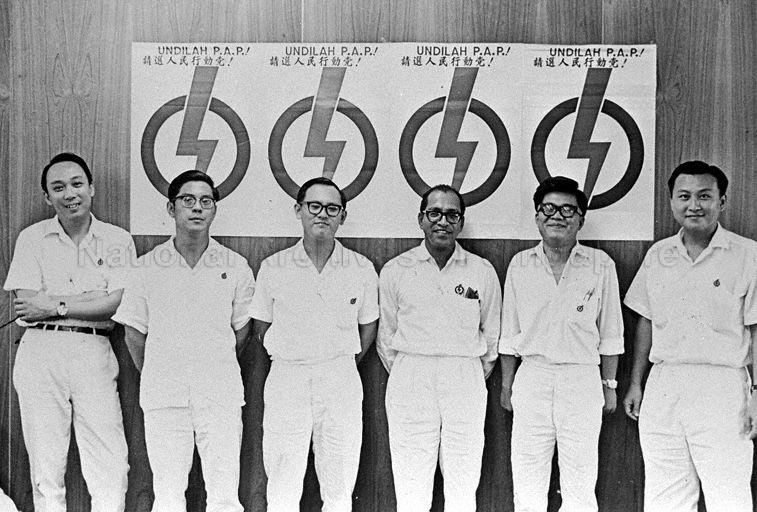
Almost as soon as the merger was finalized, tensions began to surface. Singapore’s leadership, led by Lee Kuan Yew and the People’s Action Party (PAP), promoted a vision of a “Malaysian Malaysia,” where all citizens would be treated equally regardless of race or religion.
This was in direct conflict with the Malay-dominated United Malays National Organization (UMNO), which sought to maintain special privileges for Malays under a policy of affirmative action.
The ideological differences sparked social unrest and racial tensions, culminating in violent riots in 1964. Economically, Singapore's rapid industrialization and push for foreign investment began to outpace other parts of Malaysia, breeding resentment.
Politically, the PAP’s attempts to expand into Malaysian politics were seen as a direct challenge to UMNO’s influence. The union, once full of promise, became increasingly untenable. Trust between the Singaporean and Malaysian leadership eroded quickly.
The Eventual Break, August 9,1985

On August 7, 1965, Malaysian Prime Minister Tunku Abdul Rahman made the shocking announcement that Malaysia would expel Singapore from the federation.
Just two years into what was supposed to be a lasting union, Singapore was unceremoniously cast out. The separation was finalized on August 9, 1965.
Singapore’s independence was not won; it was thrust upon the island city-state. Lee Kuan Yew, visibly emotional, announced the separation on national television, calling it a moment of anguish.
It was a painful split, made all the more difficult by the uncertainty it brought. Singapore had no army, minimal infrastructure, and almost no natural resources. The future looked grim for the new small country that didn’t even want to be independent.
Unlike countries that had fought tooth and nail to shake off colonial rule, Singapore was not celebrating. There were no triumphant parades or symbolic tearing down of colonial statues. There was anxiety, sadness, and a pervasive sense of vulnerability.
The Turning Point

Yet, out of this forced independence emerged one of the most remarkable nation-building stories of the 20th century. Singapore, under Lee’s leadership, transformed itself rapidly.
The government focused on building strong institutions, eradicating corruption, and creating a business-friendly environment. Its strategic geographic location was leveraged to become a global trade and finance hub.
The very fact that Singapore was pushed into independence became a central part of its national psyche. It fostered a sense of self-reliance, discipline, and pragmatism. The country could not afford to fail, and that urgency helped drive its astonishing progress.
The Magic of Lee Kuan Yew

Lee Kuan Yew played the most crucial role in transforming Singapore from a struggling, resource-poor island into one of the world’s richest and most developed nations.
As its founding Prime Minister, he implemented policies focused on clean governance, economic openness, and investment in education and infrastructure. He attracted foreign investment, emphasized meritocracy, and maintained political stability.
Lee’s vision of a disciplined, efficient government and a global trade-oriented economy laid the foundation for rapid industrialization and prosperity.
His leadership turned Singapore into a global financial hub, proving that good governance and strategic planning could overcome geographical and resource limitations


