

For years now, Malaysia has quietly — and consistently — built a reputation as one of Southeast Asia’s most trusted destinations for medical care. While neighbours often trumpet their tech industries or financial prowess, Malaysia has focused on something more intimate, more human: the art of healing.
From Penang to Johor Bahru, across well-lit hospital corridors and calm recovery rooms, patients from Indonesia, Singapore, Bangladesh, and beyond have come not just for affordable surgery or diagnostics, but for something they struggle to find at home — care that feels personal. This soft power has been cultivated, not declared.
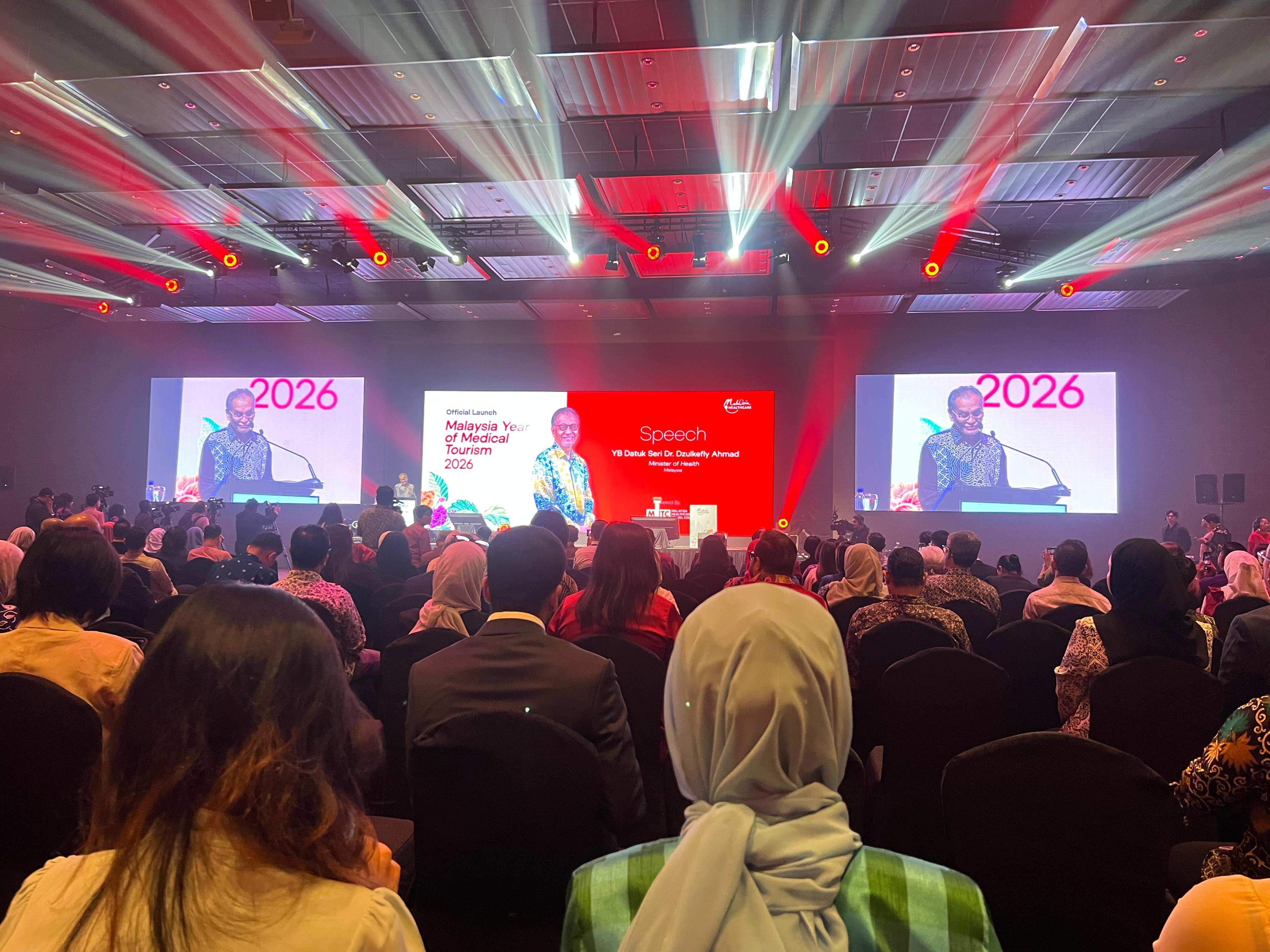
And on July 24th, at the Malaysia International Trade and Exhibition Centre (MITEC), the government made it official: Malaysia Year of Medical Tourism 2026 (MYMT 2026) was launched — the country’s first-ever dedicated year for medical tourism.
The event, officiated by Health Minister YB Datuk Seri Dr. Dzulkefly Ahmad, was both polished and hopeful. The campaign’s tagline — “Healing Meets Hospitality” — wasn’t just a marketing slogan. It was an articulation of something deeply Malaysian.
“MYMT 2026 sets Malaysia apart via excellent medical care delivered with cultural sensitivity, warmth, and a deep commitment to patient well-being,” Dr. Dzulkefly said in his keynote address.
He wasn’t wrong. In 2024, Malaysia welcomed 1.6 million healthcare travellers, generating RM2.72 billion in revenue — a 21% increase from the previous year. With MYMT 2026, MHTC now sets its sights on a bolder target: RM12 billion by 2030.
But beyond the figures lies something subtler — Malaysia’s emerging confidence in its soft power.
From Service Sector to Strategy
The campaign, launched by the Malaysia Healthcare Travel Council (MHTC), is part of a wider strategy to position Malaysia not just as a place where people come to relax, but as a nation people turn to when they are vulnerable and in need of care.
With 82 member hospitals under its umbrella, MHTC has evolved from a quiet industry facilitator into one of Malaysia’s most active vehicles for national branding. Healthcare, once seen as a domestic concern, is now part of Malaysia’s export strategy.
At the heart of this campaign is an embrace of what Dr. Dzulkefly called an “integrative healthcare ecosystem” — one that blends modern clinical medicine with wellness, Traditional & Complementary Medicine (T&CM), and preventive care. It’s a model that feels authentic in a country where spiritual wellbeing is often considered just as important as lab results.
“Malaysia is no stranger to being the medical tourism destination of choice,” he reminded the audience. “Now, not only are we focusing on modern medicine alone, we are also exploring a more holistic approach.”
Hospitals as Diplomats
Part of MYMT 2026’s credibility lies in its focus on quality. Four hospitals — Institut Jantung Negara, Island Hospital Penang, Mahkota Medical Centre, and Subang Jaya Medical Centre — are currently in the running for the Flagship Medical Tourism Hospital (FMTH) title. The winner will be announced this December.
These hospitals aren’t just centres of care — they’re also ambassadors, representing the best of Malaysian hospitality and medical excellence to an international audience.
And then, there’s the appointment of Dato’ Sri Siti Nurhaliza as the campaign’s official ambassador — a move that blends emotional resonance with marketing savvy. Few individuals embody Malaysian authenticity the way she does. Her face, her voice, her manner — they make people feel safe.
“She embodies the very values we aspire to in Malaysia Healthcare — trust, authenticity, and compassion,” Dr. Dzulkefly explained.
The Real Test
Still, one can't help but ask — how does this campaign translate beyond glittering launch events and glossy brochures? In small towns and rural clinics, many Malaysians still face long waits and understaffed wards. And while medical tourism grows, will it trickle down to improve the public system too?
To his credit, Dr. Dzulkefly acknowledged the deeper implications of this campaign.
“This campaign reminds us that we are all ambassadors of Malaysia Healthcare,” he said. “From clinicians and nurses to airport frontliners and tour operators.”
Indeed, it’s not just about bringing in revenue. It’s about cultivating a sense of national dignity, where every Malaysian — regardless of profession or background — plays a role in the country's global image.
More Than a Campaign
What makes MYMT 2026 different is not its ambition, but its tone. It doesn’t shout. It doesn’t posture. Instead, it leans into something very Malaysian: quiet competence.
Even the Malay proverb chosen to close the Minister’s speech — “Berat sama dipikul, ringan sama dijinjing” — reflects that ethos. It’s a reminder that the real strength of Malaysia’s healthcare offering is not in the machines or the marketing, but in togetherness, compassion, and the everyday humanity of its people.
If done right, this campaign won’t just bring more patients to Malaysia — it may inspire the country to care for its own more deeply, more generously.
And that, truly, would be Malaysia’s greatest soft power export of all.