


On Wednesday, July 30, 2025, the world was once again reminded of the immense power of nature when a massive 8.8-magnitude earthquake struck off the eastern coast of Kamchatka, Russia.
This quake, one of the strongest in modern history, not only shook Russian territory but also triggered tsunami waves across the Pacific region, including Japan, the Philippines, Indonesia, and even as far as the western coast of the United States.
What Happened in Kamchatka?
According to the Geophysical Service of the Russian Academy of Sciences, this was the strongest earthquake to hit the region since 1952. The epicenter was located near the Kuril-Kamchatka Trench, an area known as one of the most active subduction zones on Earth.
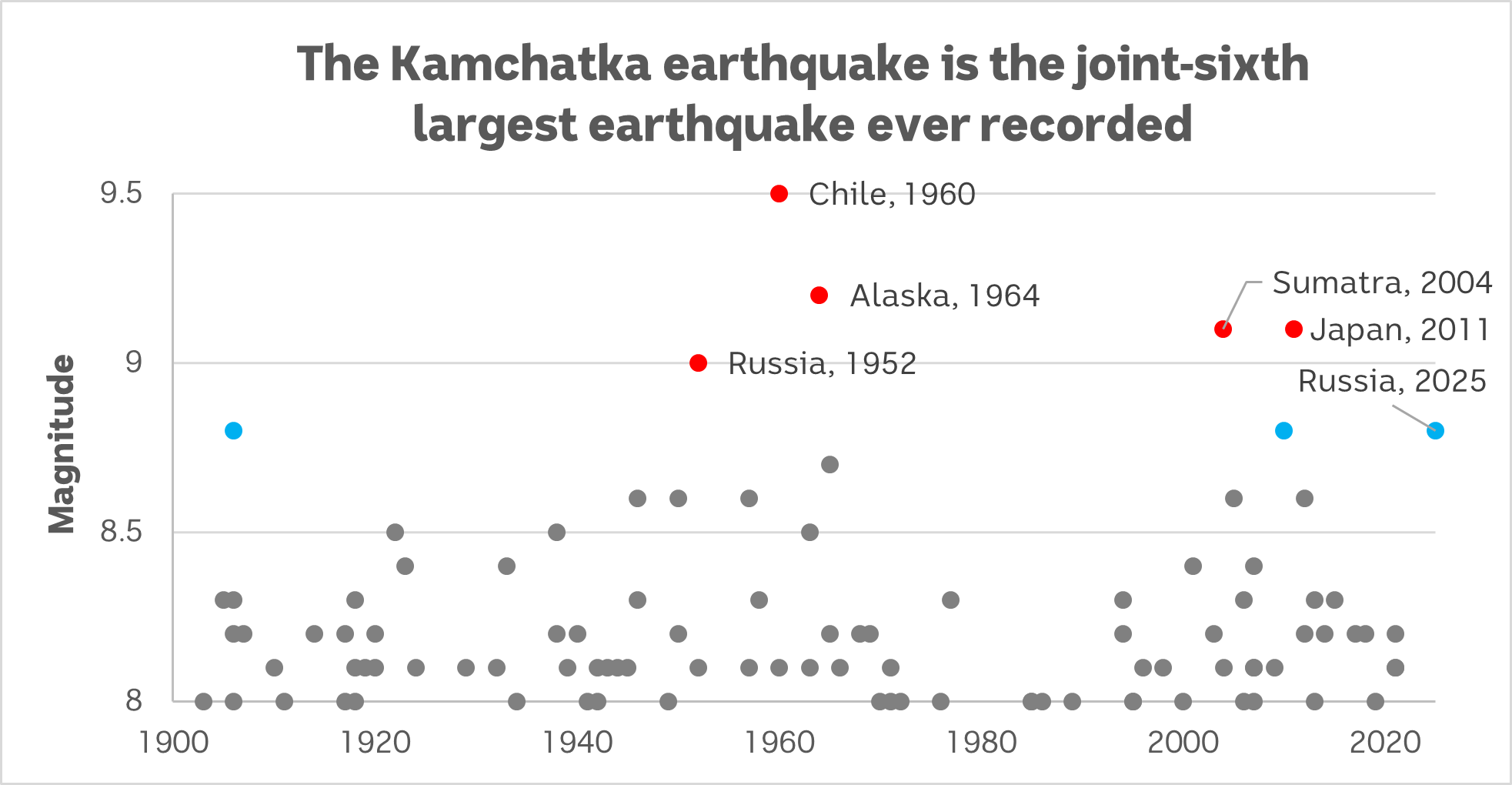
This was a megathrust earthquake, a powerful type of quake that occurs when one tectonic plate is forced beneath another. In this case, the Pacific Plate was thrust beneath the North American Plate, causing a massive shift along the seafloor that generated the tsunami.
At least six aftershocks followed the main quake, including a 6.9 and a 6.3-magnitude tremor.
Tsunami Hits Severo-Kurilsk
One of the hardest-hit areas in Russia was the port town of Severo-Kurilsk, home to about 2,000 people. The tsunami inundated parts of the town, forcing a mass evacuation of residents.
Videos circulating on social media showed buildings submerged by seawater. While some injuries were reported, there have been no confirmed fatalities so far.
Japan's Rapid Response
Japan responded swiftly. The Japan Meteorological Agency initially predicted tsunami waves up to 1 meter in height, later updating that estimate to 3 meters. A nationwide tsunami warning was issued, accompanied by visual and audible alerts declaring: “Tsunami! Evacuate!”
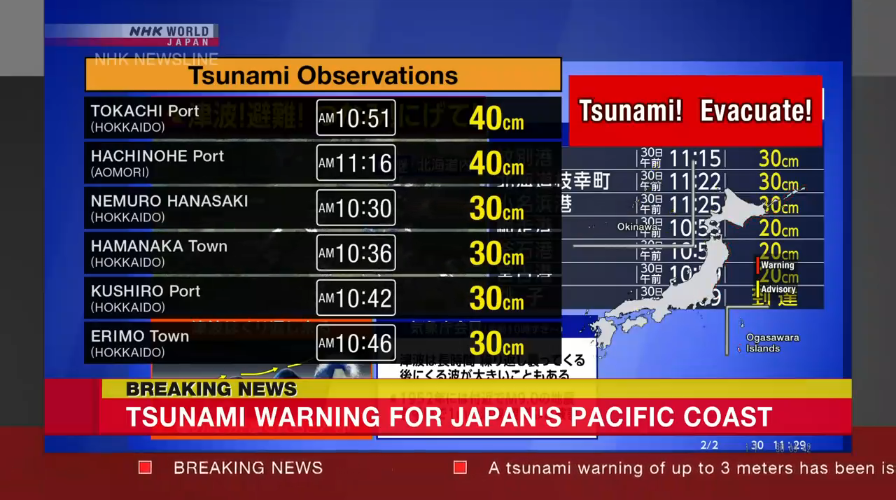
The first wave, measuring 30 centimeters, was recorded on Hokkaido Island. Immediate evacuations were carried out, including in areas near Fukushima—the site of the infamous 2011 nuclear disaster.
Rail services in several coastal regions, including Chiba, Yokohama, and the Izu Peninsula, were temporarily suspended for safety.
Southeast Asia on Alert
Japan was not the only country affected by tsunami warnings. Several Southeast Asian nations also took precautionary measures. In Indonesia, the Meteorology, Climatology, and Geophysics Agency (BMKG) promptly issued a tsunami early warning (Alert status) for 10 eastern coastal regions, including Talaud, Gorontalo, Raja Ampat, Manokwari, and Jayapura.
The National Search and Rescue Agency (Basarnas) heightened preparedness by deploying SAR teams and evacuation equipment to affected areas. Close coordination was carried out with local governments and relevant technical agencies.
In the Philippines, authorities advised citizens to stay away from eastern coastal areas. Although the predicted wave height was under 1 meter, officials emphasized that the tsunami could last a long time and pose serious danger to anyone in or near the water.
Impact Across the Pacific
The Pacific Tsunami Warning Center (PTWC) recorded the potential for tsunami waves exceeding 3 meters along the Russian coast and in several small islands scattered across the Pacific Ocean.
Other countries potentially affected include: Japan, Hawaii, Guam, the Philippines, Alaska, Taiwan, Australia, Chile, Mexico, Colombia, French Polynesia, Palau, and Ecuador.
Waves ranging from 1 to 3 meters were reported as possible in some of these areas, with height variations depending on the seafloor topography near the coast. In the Marquesas Islands in French Polynesia—thousands of kilometers away—local authorities estimated waves could reach up to 4 meters.
China also issued warnings for its eastern coastal provinces, including Shanghai and Zhejiang. This drew special attention, as the region was already on alert for Typhoon Co-May, raising concerns over multiple overlapping natural disasters.
Why This Wasn’t Like 2011
Although the earthquake was massive and the tsunami spread widely, the damage was significantly less severe than the devastating event in Japan in 2011. Experts noted that the epicenter was farther from major landmasses, giving early warning systems more time to operate and giving people more time to evacuate.
Additionally, the shape of the seabed and coastal terrain influenced how high the waves became upon reaching land. In many places, the waves remained relatively low despite the strength of the quake.
According to geologists, the improved speed and sophistication of modern tsunami warning systems played a major role in reducing the disaster’s impact. Many countries now have far more effective monitoring and evacuation infrastructure than they did two decades ago.


