


On Tuesday, August 5, 2025, the planet will experience one of the shortest days in recorded history. According to data from Timeanddate.com, Earth’s rotation will complete a solar day in just 1.25 milliseconds less than the standard 24 hours. It’s not something humans will notice—we’re talking about thousandths of a second—but the scientific implications are huge.
This seemingly minor anomaly is part of a strange and accelerating trend: Earth is spinning faster than it has in decades, and scientists are unsure why.
What Exactly Is a "Day"? Sidereal vs. Solar
To understand what’s happening, it helps to define what a "day" actually means. Earth has two main ways of measuring its rotation:
- Sidereal Day: This is the time it takes Earth to complete a full 360-degree spin relative to distant stars. It lasts about 23 hours, 56 minutes, and 4.1 seconds. That’s why stars rise about four minutes earlier each night.
- Solar Day: This is the more familiar 24-hour cycle, measured from one noon to the next as the Sun appears to move across the sky. It equals exactly 86,400 seconds.
The solar day is the one used for civil timekeeping, and it’s this day that is now slightly shorter than usual due to Earth’s increasing spin rate.
The Shortest Days on Record: 2024 and 2025
August 5 isn’t the only short day this year. In fact, 2025 will include three days that are measurably shorter than the standard 24-hour length:
- July 9: 1.23 milliseconds shorter
- July 22: 1.36 milliseconds shorter
- August 5: 1.25 milliseconds shorter
The current record for the shortest day ever recorded belongs to July 5, 2024, when the Earth spun just fast enough to make the day 1.66 milliseconds shorter than 24 hours.
These measurements come from highly precise atomic clocks and GPS satellite tracking, which can detect even the tiniest changes in Earth’s rotation.
Isn’t Earth Supposed to Be Slowing Down?
Yes—and that’s exactly why this trend is so puzzling. Since timekeeping records began in 1973, Earth’s rotation has generally slowed down, primarily due to the Moon. As the Moon slowly moves away from Earth (about 3.8 cm per year), its gravitational pull creates tidal friction. This gradually transfers Earth’s rotational energy to the Moon, lengthening our days.
So why the sudden acceleration?
The Moon's Role — and Beyond
While the Moon still influences Earth’s rotation, short-term fluctuations can occur due to its position relative to Earth’s equator. According to Graham Jones in Timeanddate.com, when the Moon is far north or south of the equator (a position called "maximum declination"), it can subtly speed up Earth’s spin.
But that only explains brief changes. The more persistent acceleration over recent years suggests other, deeper factors may be at work.
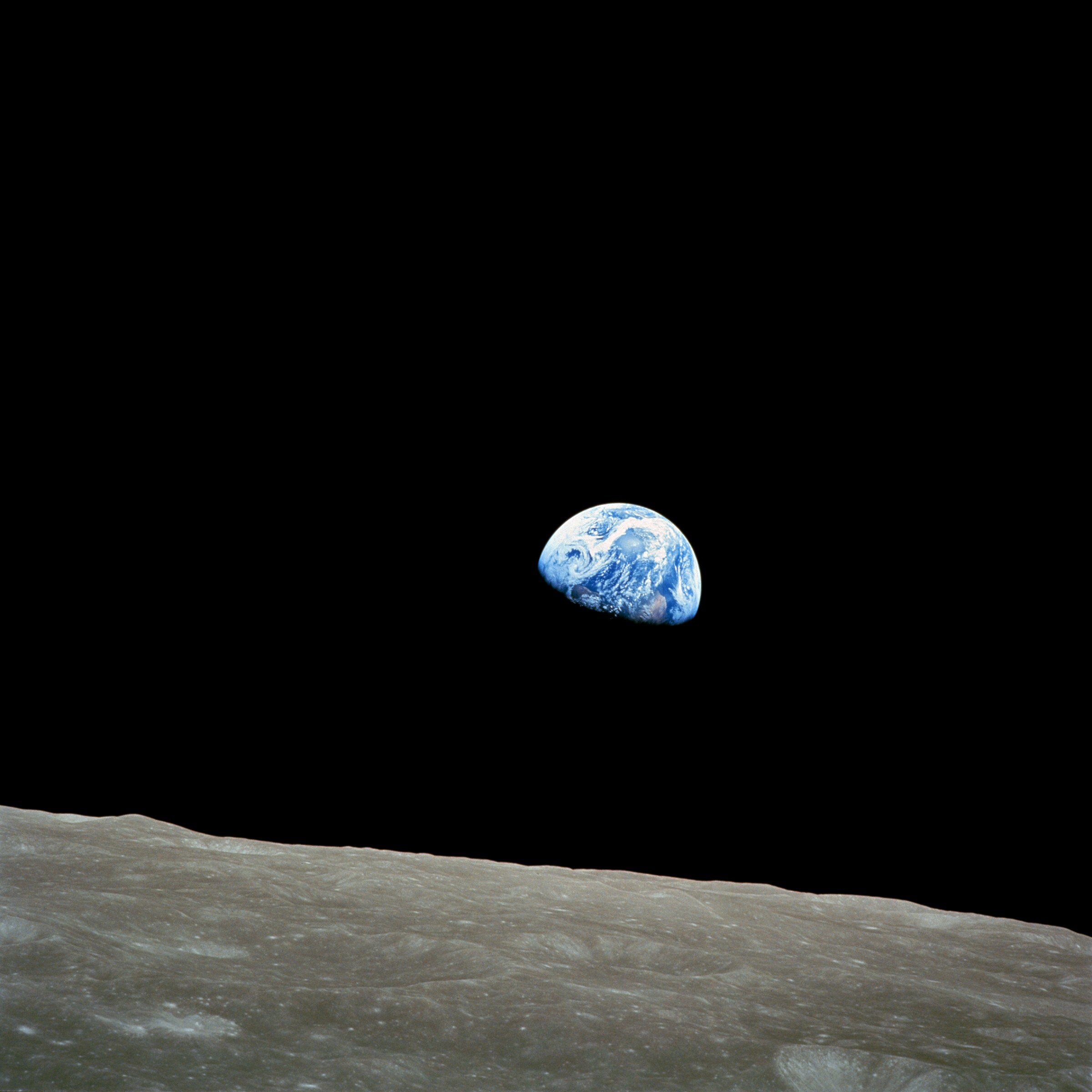
One hypothesis involves the Earth’s liquid core. Some scientists, including researcher Leonid Zotov, suggest that a slowing of the core’s rotation may be causing the outer layers of Earth to spin slightly faster—a kind of internal rebalancing. Others speculate that climate change, shifting ocean currents, or polar ice melt may also influence the planet's rotation in complex ways.
At present, no single explanation fully accounts for the ongoing trend.
What Happens If the Spin Keeps Speeding Up?
While the millisecond changes are tiny, they matter in precision-based systems like satellite navigation, communication networks, and atomic clocks. If Earth’s rotation continues to speed up, scientists may need to introduce a negative leap second as early as 2029.
This would be the first time in history a second is subtracted from official timekeeping—a reversal of the usual positive leap second, which adds time to account for Earth’s previous slowing.
Agencies like the International Earth Rotation and Reference Systems Service (IERS) closely monitor these changes to ensure coordinated global timekeeping.
You Won’t Feel It — But It Matters
The average person won’t feel a day that’s 1.25 milliseconds shorter. But for scientists, timekeepers, and those studying the Earth’s dynamic systems, these micro-shifts are telling us something important: our planet is more complex, and more alive, than we often assume.
As our instruments become more precise, we’re beginning to detect the subtle rhythms and wobbles of Earth’s inner workings. What’s causing the spin-up? The answer could rewrite what we know about Earth’s core, its atmosphere, and even its future.
For now, August 5 will quietly make history as one of the shortest days ever recorded—a tiny clue in a big mystery that’s still unfolding.


