


Picture this: You’re trekking deep in the Indonesian tropics. The air is thick with humidity, your shirt clings to your back, and nature’s tiniest warriors—mosquitoes, fire ants, even hairy caterpillars—are treating your skin like an all-you-can-eat buffet. The itch, the burn, the sting.....it’s a full-blown drama on your arms and legs.
Then your local guide stops, plucks a leaf the size of a dinner plate—strangely covered in fine, almost shimmering hairs—and says with a sly smile, “Put this on. Trust me.”
You hesitate. Is this a jungle prank or a secret remedy? But minutes later, the sting fades, the heat subsides, and the itch all but disappears. You’ve just met Laportea decumana—the “itchy leaf” that doubles as a healer.
What Exactly is Laportea decumana?
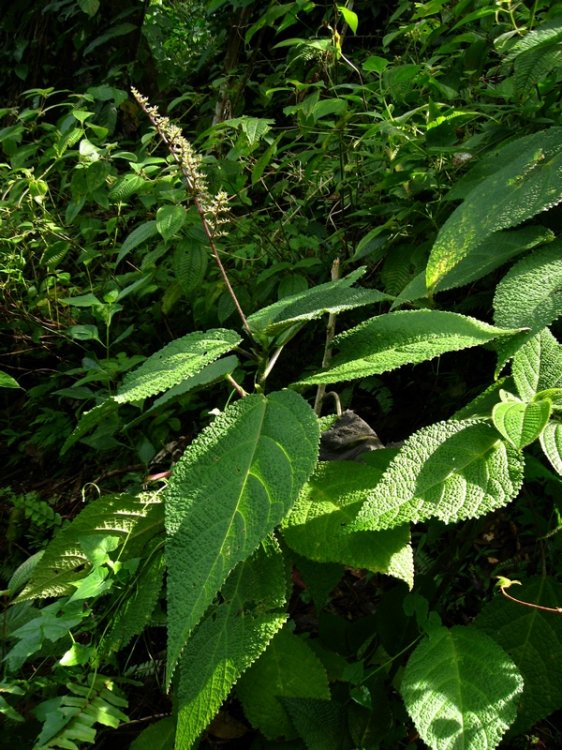
Laportea decumana belongs to the Urticaceae family, a cousin of the stinging nettle. The difference? This plant is a giant: its leaves can grow as long as an adult’s arm. On the surface are thousands of microscopic, hair-like structures ready to trigger a tingling, burning, or itchy sensation on contact.
It grows wild in the lush rainforests of Southeast Asia, from Maluku, Papua, and Nusa Tenggara to Papua New Guinea. Locals call it “daun gatal” or “itchy leaf” in English, or by various regional names.
You’ll find it thriving in secondary forests, edging farmlands, and—if you know where to look—even tucked among the produce at traditional markets.
A Traditional Cure: From Irritation to Remedy
In Maluku and Papua, Laportea decumana has a special reputation. Local apply it directly to the skin for the following purposes: relieve muscle aches and stiffness; ease postpartum fatigue; and soothe pain from insect stings or bites.
At first, it’s fire—sharp, hot, and tingly enough to make you flinch. But as the minutes pass, the discomfort melts into a deep, pleasant warmth. Pain eases, muscles loosen, and you feel… lighter. Many believe the leaf’s magic lies in “distracting” nerve signals while boosting blood circulation in the affected area.
The Science Behind the Sensation
Modern research is starting to catch up with what villagers have known for centuries. Inside the leaf are an impressive array of natural compounds:
- Phytochemicals: Contains alkaloids, flavonoids, tannins, saponins, glycosides, and triterpenoids.
- Anti-inflammatory effects: Some compounds inhibit COX-1 and COX-2 enzymes—similar to how modern painkillers work.
- Antibacterial & antioxidant properties: Help prevent infection and speed up wound healing.
- Natural analgesic action: Reduces pain without synthetic chemicals.
Why Something That Stings Can Heal
Think of it like nature’s version of micro-needling therapy. The fine hairs on Laportea decumana activate nerve endings in the skin, triggering a rush of the body’s own pain-relieving chemicals. Meanwhile, its active compounds get to work right at the source, calming inflammation and supporting recovery.
Fun Fact: From Market Stalls to Medicine Labs
In Papua’s open-air markets, you can buy a bundle of these leaves alongside chilies and cassava—no packaging, no warning labels, just fresh from the forest. But far from the bustle of the market, in white-walled laboratories, pharmaceutical scientists are now studying it as a potential ingredient for next-generation herbal medicines.
Still, the path from folklore to pharmacy is long. Researchers need to nail down safe dosage guidelines, standardize extracts whose chemical content can vary wildly, run rigorous human trials, and develop sustainable farming methods that won’t strip wild populations from the forest.
Reference:
- https://tropical.theferns.info/viewtropical.php?id=Laportea+decumana&utm
- https://oamjms.eu/index.php/mjms/article/view/7759
- https://www.scirp.org/journal/paperinformation?paperid=74413&utm
- https://iopscience.iop.org/article/10.1088/1742-6596/1503/1/012041


