

Step into a tropical forest and it’s like walking into a living rainbow. In Southeast Asia, South America, and other lush corners of the world, birds flaunt colors so vivid they look painted by an artist with an unlimited palette. From the majestic bird-of-paradise in Papua to the golden-hued Javan oriole, these creatures are nature’s own fashion icons. But why are tropical birds so much more colorful than those in cooler parts of the world?
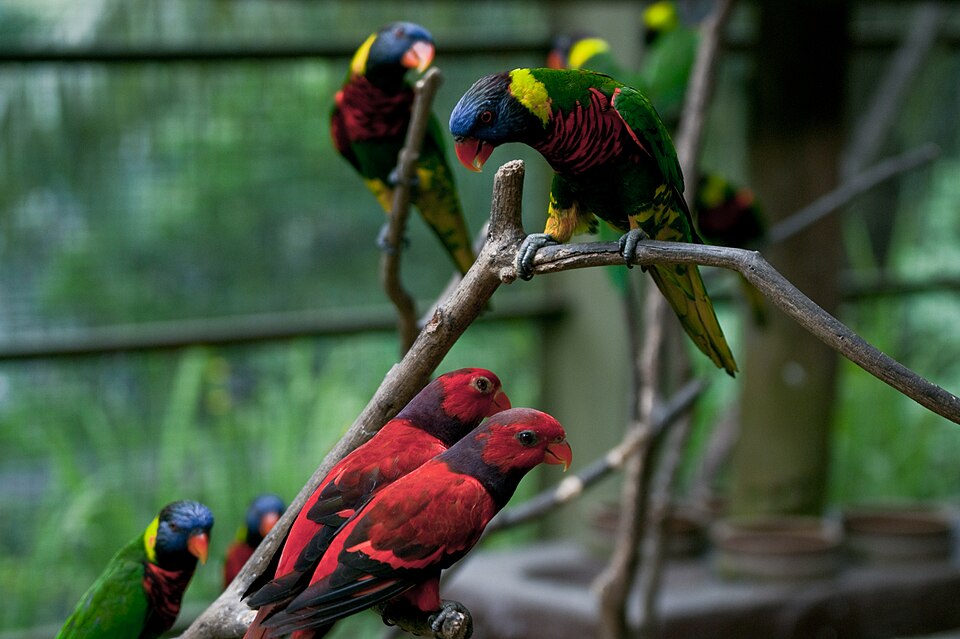
A major study led by Christopher R. Cooney from the University of Sheffield offers some answers. His team examined more than 24,000 photographs covering 4,500 songbird species from every continent. The verdict: birds in tropical forests—places like Brazil, New Zealand, Indonesia, Australia, Ecuador, and Chile—are on average 30% more colorful than their temperate-zone cousins. The effect is especially striking in areas below 23.5° latitude, where both males and females often wear feathers with richer tones and a broader color spectrum. The Amazon, West Africa, and Southeast Asia top the charts for these “avian rainbows.”
The Science Behind the Color
Published in Nature Ecology & Evolution, the research points to three main reasons for the tropics’ bold color palette:
- A stable climate – With no freezing winters or scorching summers, tropical birds can keep delicate, vibrant feathers year-round without seasonal damage.
- Nature’s buffet – An abundance of fruits, seeds, and insects means plenty of carotenoids, the pigments that produce reds, oranges, and yellows.
- Survival and romance – In dense, competitive forests, standing out can be the difference between finding a mate and being overlooked. Bright plumage can also serve as a visual signal to rivals or predators.
And this isn’t just a bird phenomenon. Tropical oceans are just as flamboyant. According to marine ecologist Oscar Puebla, fish, squid, and mollusks use color for everything from flirting to warning predators of their toxicity—or blending in with their surroundings to stay safe. While birds rely on pigments from their diet, many marine creatures use microscopic structures in their skin to bend light, creating dazzling, changeable hues.
A Beauty Contest in the Canopy
In crowded rainforests, where dozens of bird species might share the same space, competition for attention is fierce. Take the Wilson’s bird-of-paradise (Cicinnurus respublica), for example. Found in Indonesia’s Raja Ampat Islands, the male sports a surreal mix of scarlet, cobalt blue, canary yellow, and metallic green. During courtship, he performs an elaborate dance, flashing his emerald back feathers to mesmerize the female—proof that in the bird world, style really does matter.
Color, in this sense, is more than decoration. It’s a survival strategy, a language, and an identity card. Some species use it to warn predators (“Don’t mess with me”), others to signal readiness to mate, and some to make sure they’re never mistaken for the wrong species. Whether it’s a parrot in the rainforest or a reef fish in the Coral Triangle, the tropics provide the perfect backdrop for nature’s most spectacular fashion parade.
In the end, the riot of color we see in tropical birds isn’t just about beauty—it’s about the evolutionary pressures of living in an environment that’s rich, competitive, and full of opportunity. And that’s why, in the warm, lush regions of the world, the skies aren’t just blue—they’re every color you can imagine.