

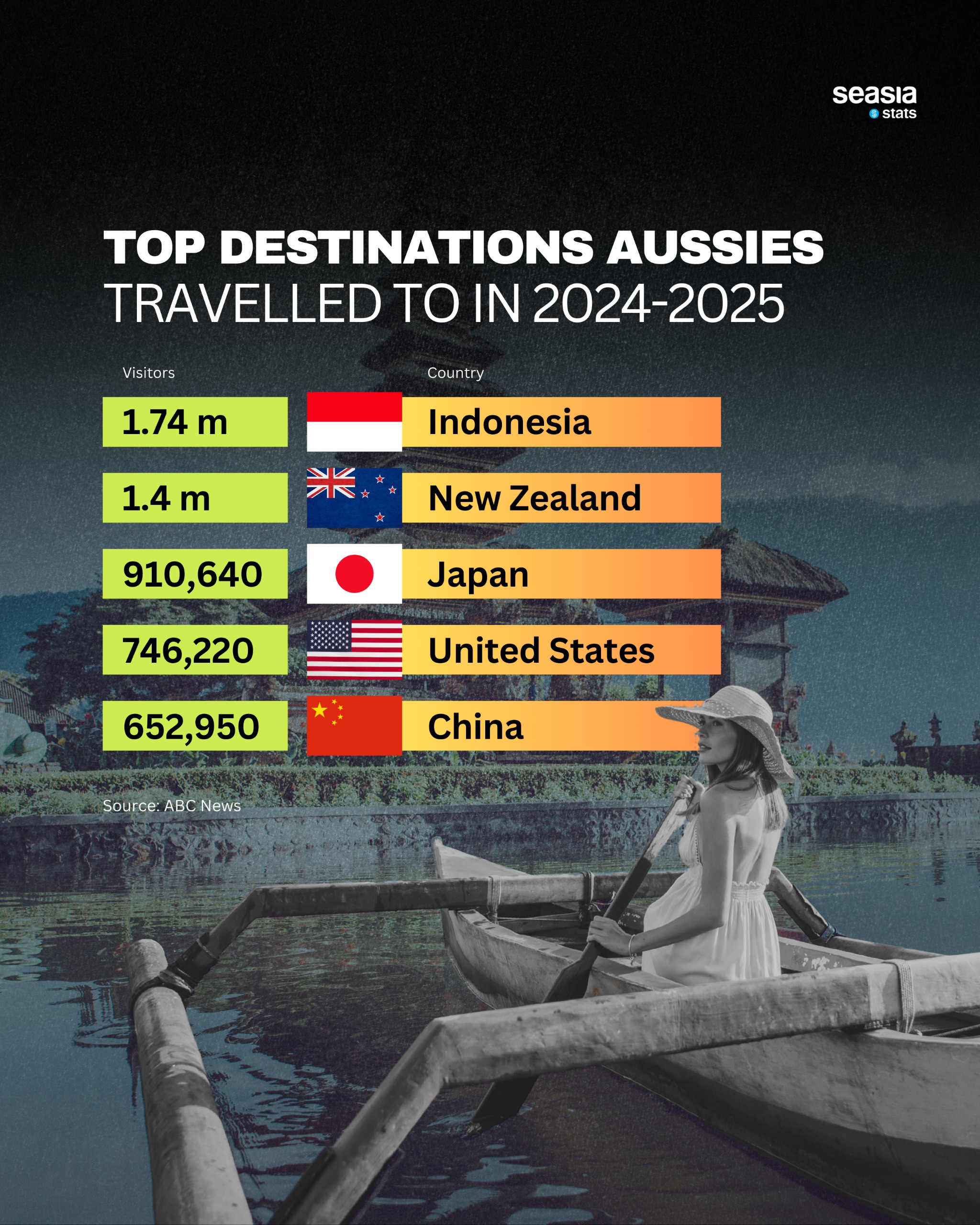
In 2024-2025, Indonesia continues to claim its place as the top travel destination for Australians. According to the latest report from the Australian Bureau of Statistics, an impressive 14% of all Australian international trips were made to Indonesia.
This makes Indonesia the number one international destination, surpassing other global hotspots and solidifying its status as the leading travel magnet for Aussie tourists.
Bali’s Continued Reign as Australia’s Favorite Escape
Bali’s status as the ultimate getaway for Australians remains unshaken. The island’s reputation as a paradise filled with cultural richness, serene beaches, vibrant nightlife, and world-class hospitality has made it a top choice for Australian travelers.
Bali is not just a place; it’s a symbol of relaxation, adventure, and authentic cultural experiences that consistently attract millions each year.
While many Southeast Asian destinations have risen in popularity, Bali’s affordable charm, coupled with its warm hospitality and cultural diversity, continues to make it Australia’s number one choice for an overseas holiday. Whether it’s surfing the beaches of Kuta or unwinding in the mountains of Ubud, Bali offers something for everyone.
The Changing Landscape: Japan’s Rise and China’s Entry
While Bali and Indonesia remain firmly at the top, there have been significant shifts in global tourism patterns. Japan has seen a massive surge in popularity, now becoming the third most visited destination by Australians.
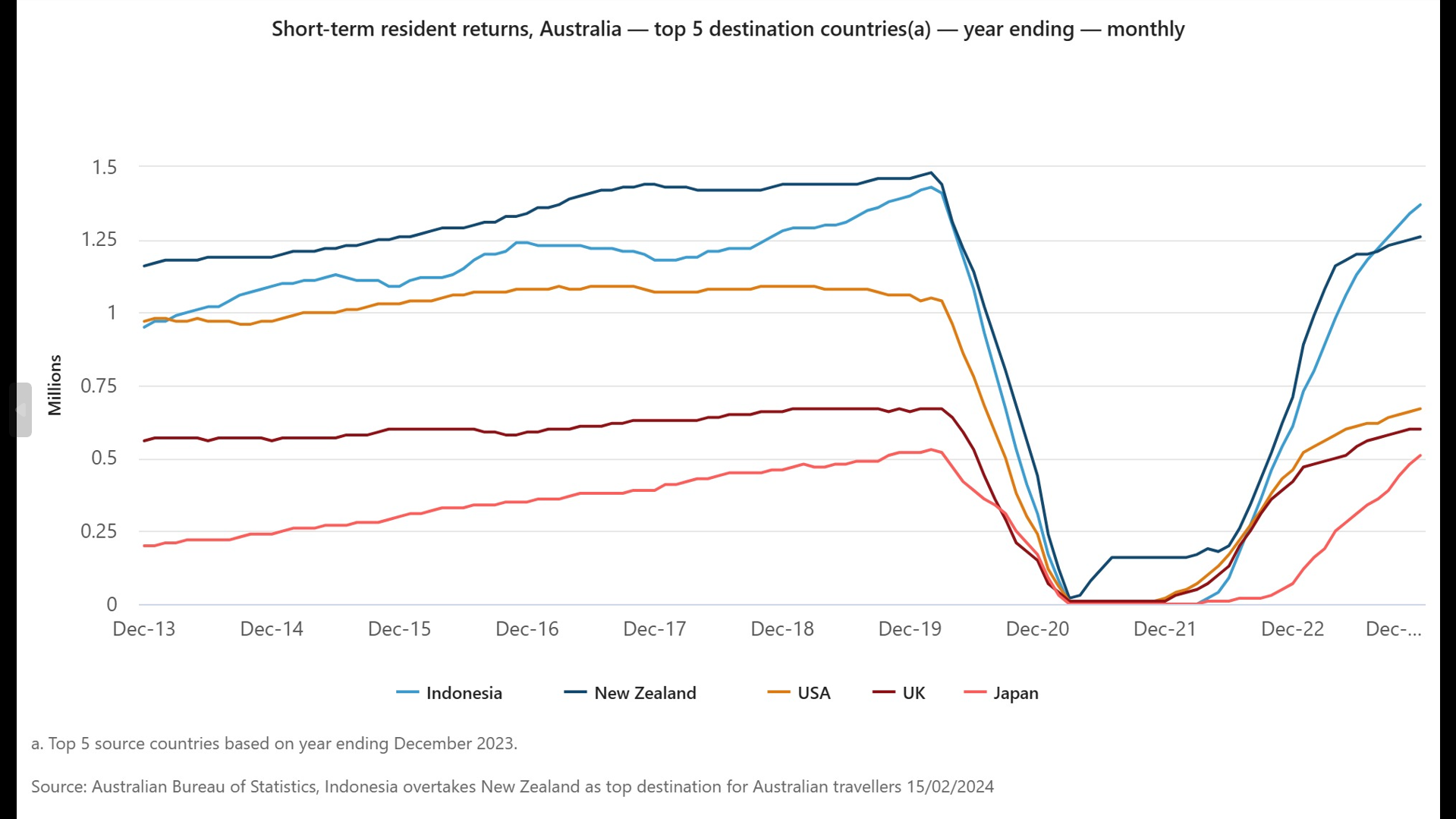
According to the latest statistics, trips to Japan have tripled since 2014-15, overtaking the United States as a prime tourist destination. This growth highlights a shift in traveler interest, with Japan offering everything from bustling cities like Tokyo to tranquil landscapes like Kyoto’s temples.
The USA, once a regular contender in the top three, has seen a decline in visits, now ranking fourth. This marks a 25% decrease in American tourism over the past decade, reflecting broader shifts in travel preferences.
On the other hand, China has made significant strides, moving up to the fifth spot in the rankings, a two-place jump from the previous year. This is a testament to the growing appeal of China’s rich cultural heritage and expanding tourist offerings.
A Decade of Change: From 2014 to 2024
In 2014, the top five countries visited by Australians were New Zealand, Indonesia, the USA, the UK, and Thailand. Fast forward to 2024, and we see a shift in the top rankings.
While Indonesia and New Zealand retain their positions, Japan, China, and the USA have reshuffled, with China making a notable rise to the fifth position.
This decade-long shift reflects a growing interest in Asian destinations among Australian tourists, driven by factors such as proximity, cultural connections, and increased flight accessibility.
Furthermore, the rise of affordable travel options to Japan and China, along with economic ties between Australia and these countries, has made them more accessible to Australian travelers.
Tourism Growth and Its Impact on Indonesia
Indonesia’s sustained appeal to Australian tourists highlights the country’s growing prominence as a global tourism player. The Indonesian government continues to invest in its tourism infrastructure, making it an increasingly attractive destination for visitors not just from Australia but from all over the world.
The country's vast and diverse landscapes, from Bali’s beaches to Yogyakarta’s cultural heritage, are key factors in its appeal.
Indonesia’s tourism sector not only boosts the economy but also promotes cultural exchange between Australia and Indonesia, strengthening the ties between the two nations.
As more Australians flock to Indonesia, the nation has a unique opportunity to diversify its tourism offerings and create more sustainable travel experiences that can attract a broader audience.
The Future of Tourism in Southeast Asia
As tourism in Southeast Asia continues to recover and evolve post-pandemic, Indonesia remains a key player in shaping the region’s tourism future.
The consistent rise in visitors from Australia reflects a broader trend in global travel, with Southeast Asia becoming a center of gravity for international tourism.
While Bali continues to dominate, other parts of Indonesia, such as Lombok, Sumatra, and Jakarta, are also beginning to gain recognition. This diversification of tourism offerings is crucial for ensuring that Indonesia can meet the growing demand for sustainable and enriching travel experiences.



