


You may have never seen a musical instrument like this anywhere else in the world. It is massive, made of steel, operated manually, and capable of playing classical music by Beethoven, Mozart, and Strauss.
What makes it even more remarkable is that this object is not housed in a European museum, but in an old palace in Riau, Indonesia. Its name is the Komet—a giant gramophone, of which only two exist in the world today, and the one in Siak is the only one still functioning.
The Komet can be found in the Siak Sri Indrapura Palace, a grand building from the Siak Sultanate established in 1889. While the palace holds many luxurious collections from Europe, Turkey, and China, this musical device is one of the most captivating treasures.
The Komet: A 19th-Century Giant Music Box
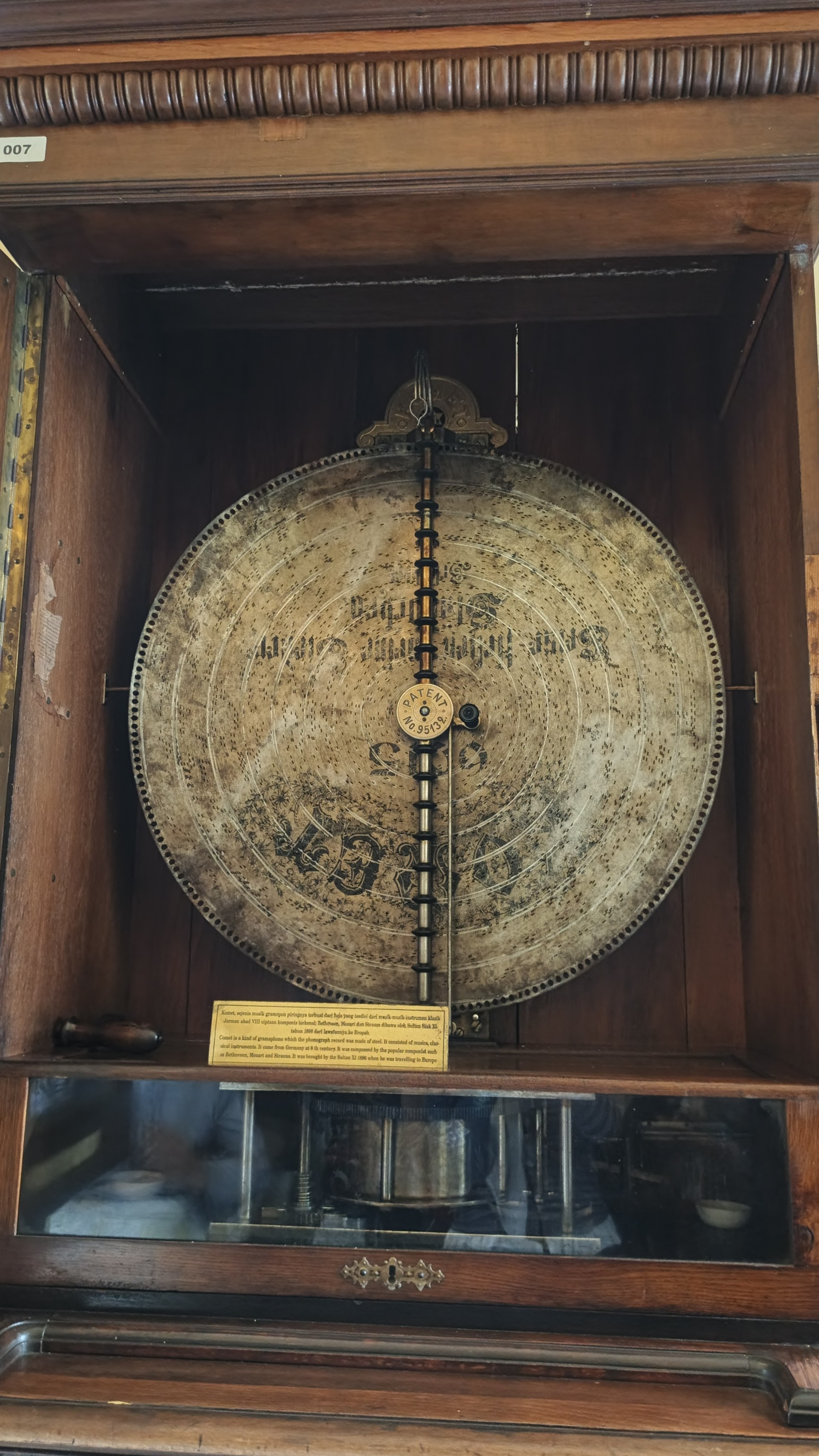
The Komet is more than just a music player—it is a masterpiece of past technology. The instrument is stored inside a wooden cabinet about three meters tall and one meter wide. On its player section, there is a glass door engraved with the classic inscription “Komet Goldenberg & Zeitlin.”
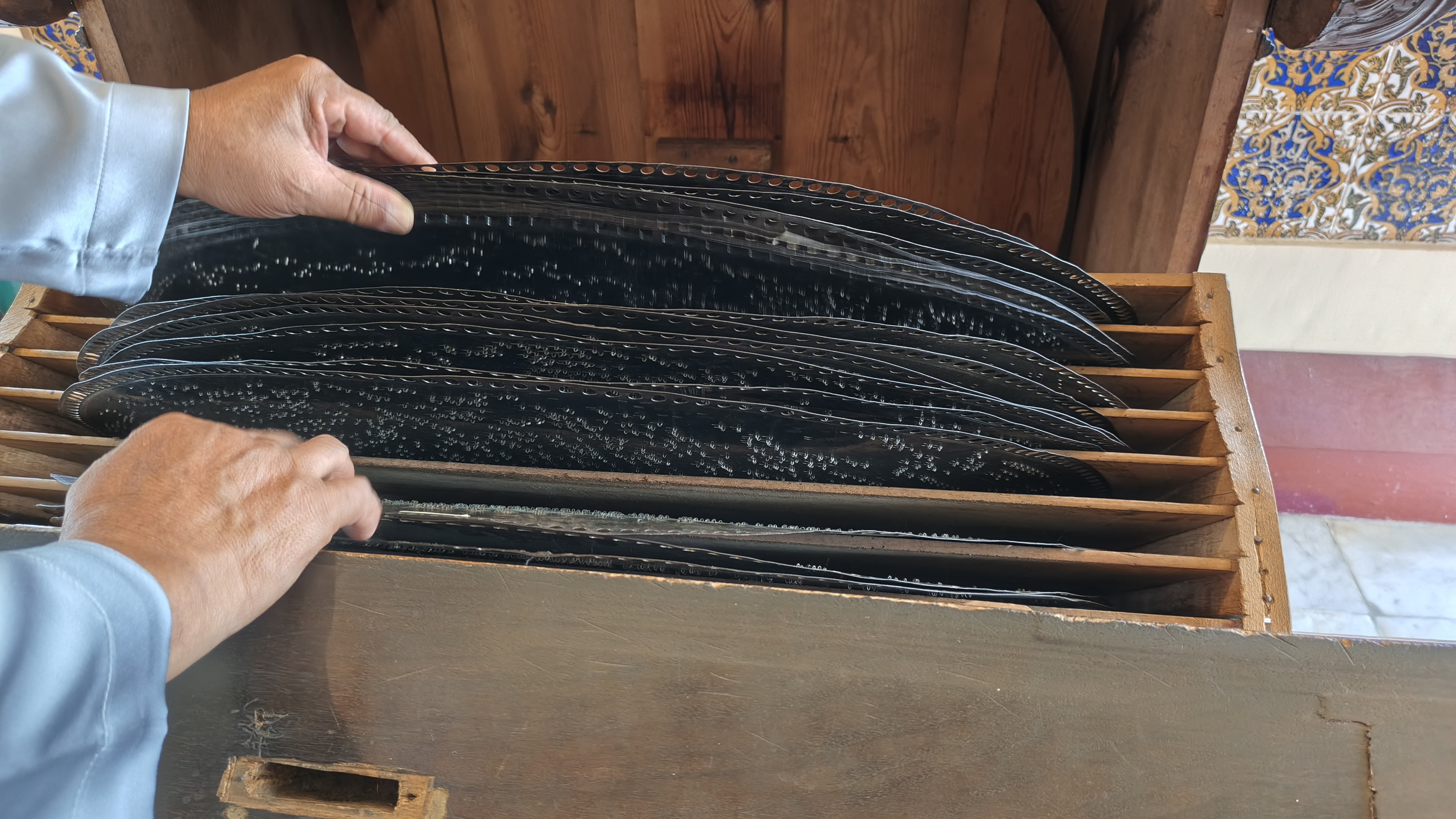
Its collection of discs is equally impressive: 17 steel plates, each with a diameter of around 90 centimeters. These discs are perforated with tiny holes arranged according to classical music compositions. When played, the phonograph’s needles trace these holes, producing clear melodies that sound much like a piano.
How It Works: No Electricity, Just Human Power
What makes the Komet even more unique is its mechanism. There is no electricity involved. To play it, a spring crank on the left side of the cabinet must be wound by hand. Once the crank is turned, the steel disc begins to rotate, filling the palace room with beautiful classical notes.
Each disc can spin for 10 to 15 minutes, long enough to perform a full musical arrangement by legendary composers such as Beethoven, Mozart, Bach, and Strauss.
A Musical Treasure from the Sultan’s Journey
The Komet arrived in Siak in 1896, brought home by Sultan Syarif Hasyim (the 11th Sultan of Siak) after his travels to Europe. From this royal journey, he returned with various world-class items—one of them being this giant gramophone from Germany.
In its early days, the Komet was used to entertain the Sultan and his royal guests. After meetings or official ceremonies, it would be played to accompany moments of rest with the grandeur of classical music. Therefore, it was placed in the palace’s main meeting hall, where the sultan and his guests could enjoy it.
Eternal Music That Cannot Be Heard Every Day
Although it still works, the Komet cannot be played at any time. Being more than a century old, it is only used on special occasions—usually to welcome important guests or during significant palace events. This careful practice ensures the authenticity and preservation of the historic instrument.
The process of playing it remains exactly the same as in the past: it must be wound manually. As the nearly 5-kilogram steel disc begins to spin, the room fills with the majestic sounds of classical music.
Imagine standing inside an old palace in Riau, listening to Mozart’s compositions played through 19th-century technology. It feels like stepping back in time.


