


National flags are more than just symbols flown at embassies or during international sporting events, they’re deep reflections of a country’s history, culture, beliefs, and identity.
While many nations opt for simple tricolors or conventional designs, some countries take a more distinctive approach. Whether it's through shape, symbolism, or complex imagery, the following flags stand out for their originality and cultural depth.
Nepal

Nepal’s flag is famously one of a kind, it is the world’s only national flag that is not rectangular or square. Instead, it features two stacked triangles forming a pennant-like shape. This unusual geometry immediately sets it apart.
The crimson red background represents the bravery of the Nepalese people and is also the country’s national color, while the blue border stands for peace. The upper triangle contains a white moon with a crescent and the lower triangle a white sun with twelve rays.
These celestial symbols represent the permanence of the nation and pay homage to Nepal’s Hindu and Buddhist heritage. The triangular shape also reflects the Himalayas and the two major religions of the country.
Bhutan
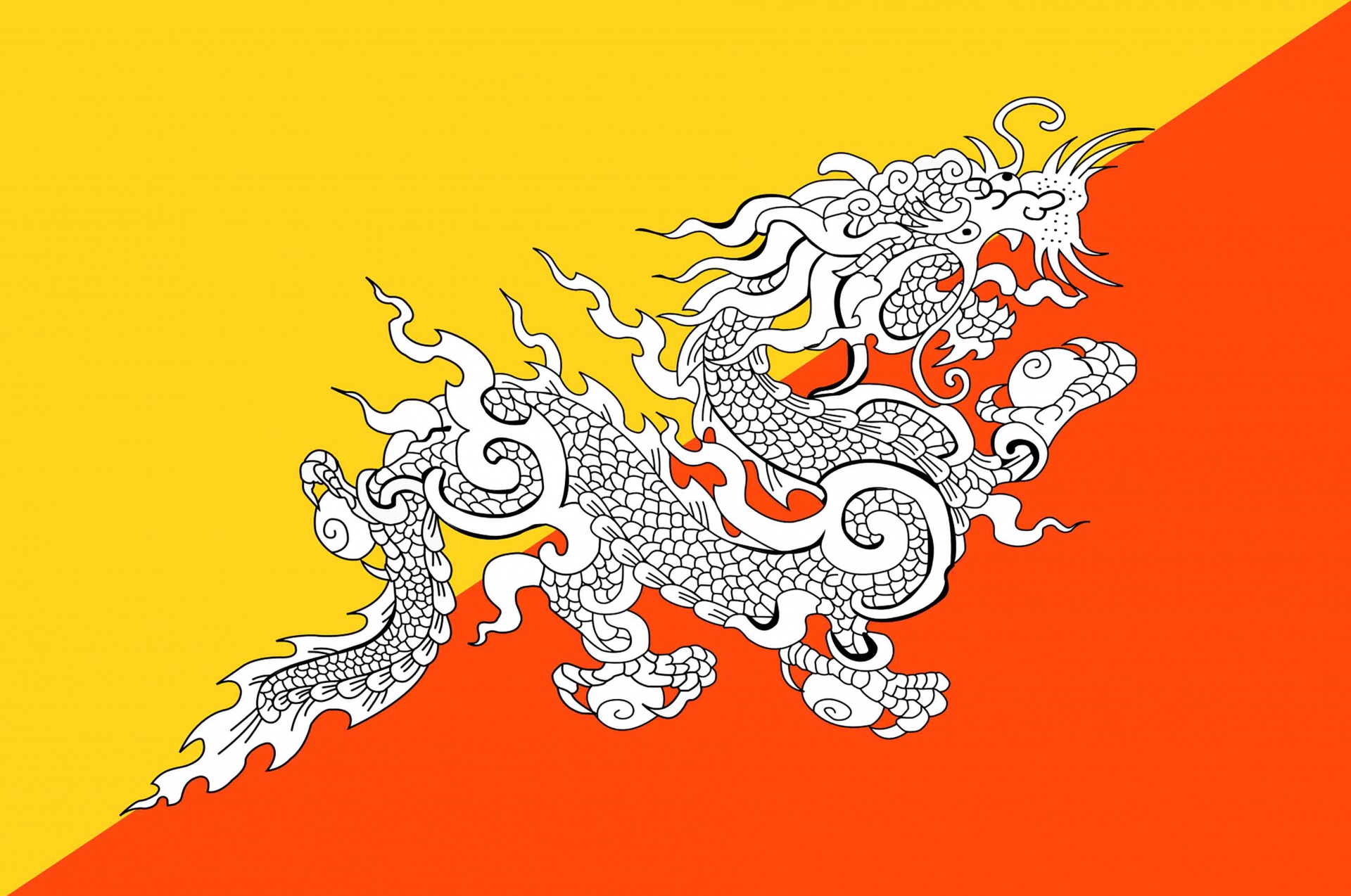
Bhutan’s flag is a vibrant expression of both political and spiritual identity. It is divided diagonally with the upper half in yellow and the lower half in orange. The yellow symbolizes the secular authority of the king, while the orange represents the spiritual tradition of Buddhism.
Dominating the center is the Druk, a white dragon that symbolizes Bhutan’s popular name, "Land of the Thunder Dragon." The dragon holds jewels in its claws, symbolizing the wealth and security of the nation.
The white color of the dragon stands for purity, and its snarling mouth reflects the strength of the people in defending their country and culture.hutan
Wales

The flag of Wales is instantly recognizable due to its fearsome red dragon, known as the "Y Ddraig Goch," set against a field of white and green.
Although it is not the official flag of a sovereign country, Wales is part of the United Kingdom, it is a national flag rich in symbolism and history.
The red dragon is believed to date back to Roman times and has been associated with Welsh royalty for centuries. The white and green stripes were added by the Tudors, a Welsh dynasty that once ruled England.
This mythological creature and unique color scheme make the Welsh flag one of the most eye-catching in the world.
Kiribati

Kiribati’s flag is a vibrant depiction of the island nation’s oceanic identity. The top half is a deep red with a golden frigatebird flying above a rising sun. The bottom half consists of blue and white wavy stripes representing the Pacific Ocean.
The sun has seventeen rays, symbolizing the 16 Gilbert Islands and Banaba, which make up Kiribati. The frigatebird symbolizes freedom, cultural dance, and command over the sea.
Few national flags feature such a direct and vivid portrayal of natural elements, making Kiribati’s flag both beautiful and unmistakably unique.
Dominica
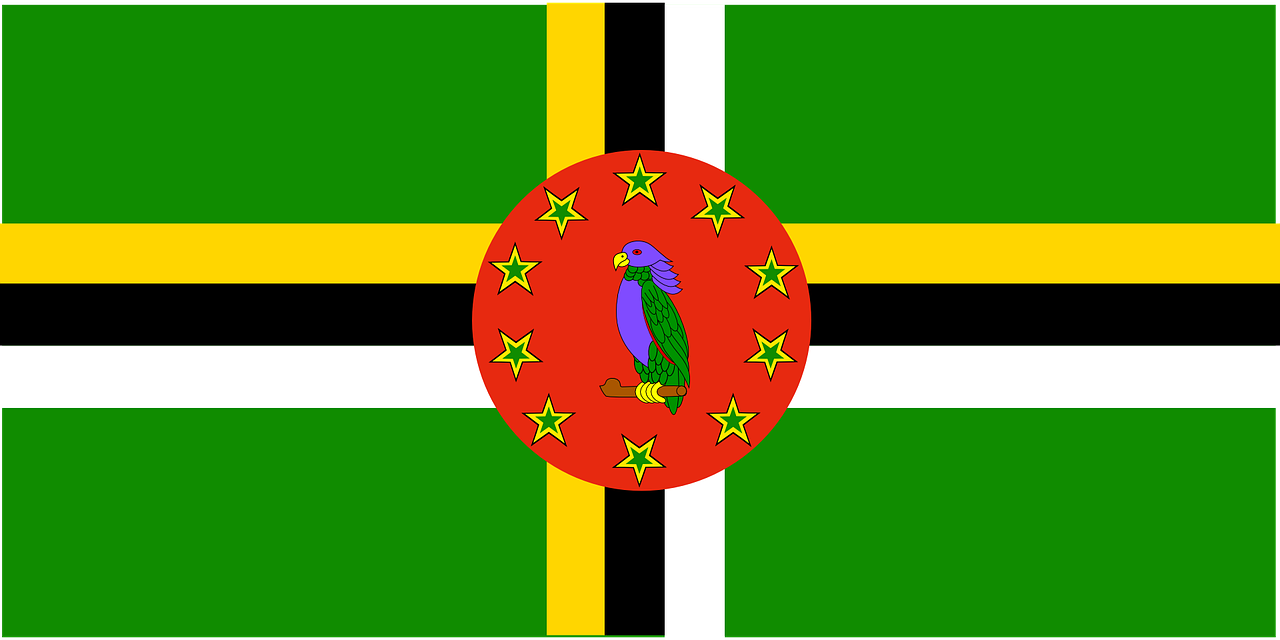
The flag of Dominica is a complex blend of color and symbolism that celebrates the island’s rich culture and biodiversity. At the center is a red circle featuring the rare Sisserou parrot, native only to Dominica, perched on a twig. This bird is also the country’s national emblem.
The circle is surrounded by ten green stars representing the country’s administrative parishes. Behind the central emblem is a cross of yellow, white, and black lines, which represent the island’s people, culture, and the Christian faith.
The green field symbolizes Dominica’s lush rainforests. The use of a parrot and the layering of multiple symbolic elements make this flag highly distinctive.
Eswatini
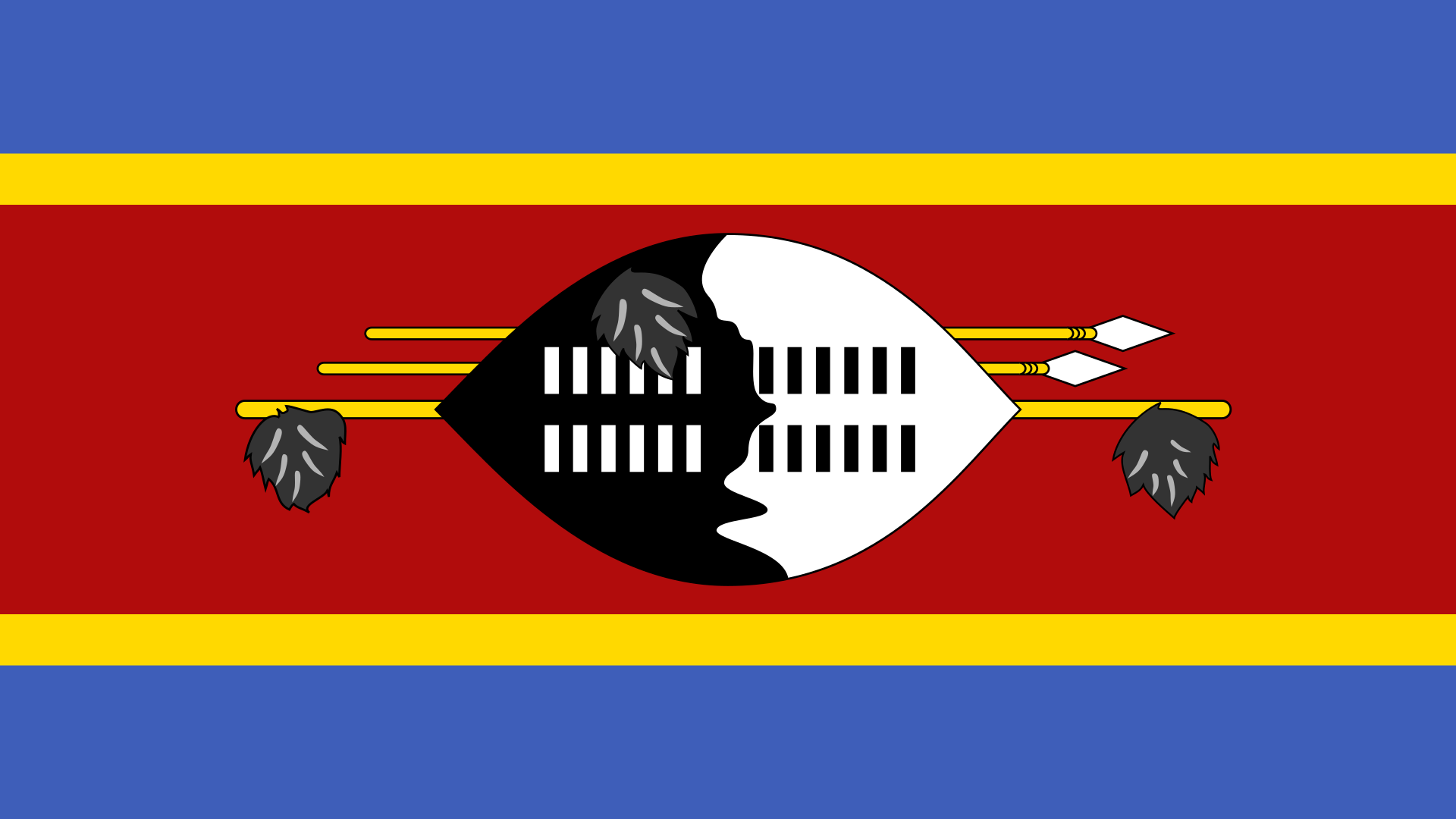
The flag of Eswatini is a colorful representation of its traditional military culture and identity. It consists of horizontal stripes of blue, red, and yellow. Centered on the red field is a large black and white Nguni shield, along with two spears and a staff adorned with feathers.
The shield and weapons symbolize protection from enemies and represent Eswatini’s warrior heritage. The color red stands for past battles, blue symbolizes peace, and yellow denotes the country’s resources.
The prominent display of indigenous weaponry makes Eswatini’s flag one of the most culturally rooted and visually unique in Africa.
Mozambique

Mozambique has one of the world’s most controversial and unique flags due to its inclusion of a modern assault rifle. It features horizontal stripes of green, black, and yellow separated by white borders, with a red triangle on the hoist side.
Inside the triangle sits a yellow star with a book, a hoe, and an AK-47 with a bayonet. Each element carries meaning: the rifle represents the country's armed struggle for independence, the hoe stands for agriculture, and the book signifies education.
The bold decision to include a firearm on a national flag underscores Mozambique’s revolutionary history and sets its flag apart from all others.
Northern Mariana Islands

The flag of the Northern Mariana Islands, a U.S. territory in the Pacific, combines elements of local Chamorro culture with U.S. symbolism.
Set against a blue background representing the Pacific Ocean, the flag features a white star that symbolizes the territory's relationship with the United States.
Behind the star is a gray latte stone, a traditional Chamorro house foundation used by indigenous people, signifying cultural strength and heritage.
Encircling these elements is a decorative wreath called a mwarmwar, made from native flowers and plants, symbolizing respect and peace. This blend of indigenous and political symbolism makes the flag especially distinct.