


Long before Captain James Cook claimed the east coast of Australia for Britain in 1770, another European had already set foot on the continent. In 1606, Dutch navigator Willem Janszoon became the first recorded European to land on Australian soil.
Sailing the Duyfken, Janszoon reached the western coast of Cape York Peninsula in what is now Queensland. His journey marked the beginning of European awareness of the vast southern landmass, then referred to as Terra Australis Incognita, the unknown southern land.
Janszoon’s voyage, undertaken on behalf of the Dutch East India Company (VOC), was not aimed at discovering new continents but at finding new trade routes and resources to support the spice trade.
What he found, however, was an unfamiliar coast with little apparent commercial value. Especially compared to what the Dutch had found in Southeast Asia.
His brief and mostly negative impressions would shape Dutch attitudes toward Australia for more than a century, and cost them the chance to claim the continent.
Why the Dutch Wasn’t Interested
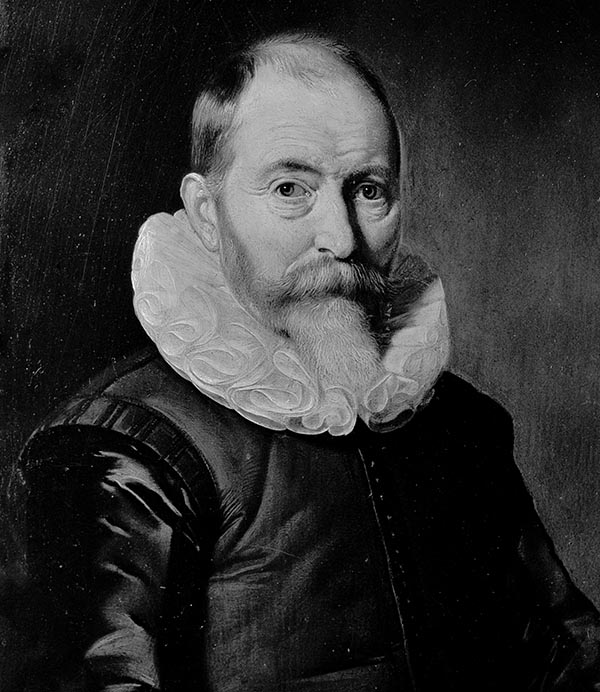
After sailing along the coast for hundreds of kilometers, Janszoon and his crew encountered the indigenous peoples of the region, likely from the Wik or other Aboriginal groups. The encounter ended violently, with several of his men killed.
Combined with the lack of visible wealth or fertile land, this reinforced Janszoon’s belief that the territory was both dangerous and barren. He charted parts of the coastline as unpromising and eventually abandoned his exploration.
These first impressions played a critical role in the Dutch decision not to pursue colonization. The VOC was primarily a commercial enterprise, and Janszoon’s reports did not suggest there was anything of value to exploit.
Unlike the spice-rich islands of Indonesia or the lucrative trade routes through the Indian Ocean, Australia (or “New Holland” as the Dutch would later call it) seemed empty, dry, and devoid of opportunity.
Over the next century, Dutch explorers such as Dirk Hartog, Abel Tasman, and others would map large portions of Australia’s western and southern coasts.
However, none saw sufficient reason to establish a permanent presence. In effect, the Dutch mapped Australia without claiming it.
Missed Opportunities

While the Dutch were the first Europeans to discover Australia, their priorities lay elsewhere. The Dutch East Indies (present-day Indonesia) was a far more lucrative venture, producing spices, coffee, and other valuable commodities that could be traded across Asia and Europe.
The VOC invested heavily in maintaining and expanding its influence in Southeast Asia, where profits were high and competition from other European powers was fierce.
Australia, by contrast, did not fit into the VOC’s commercial objectives. It lacked the tropical climate needed for spice cultivation, and it had no apparent strategic value at the time.
The Dutch were content to mark it on their maps and move on. This lack of interest left the continent essentially unclaimed by any European power for over 160 years.
Had the Dutch made a different judgment, had they established even a small outpost or explored further inland, they could have laid the groundwork for a future colony. Instead, their early lead was squandered.
The British Took the Chance

In 1770, the British explorer James Cook reached the eastern coast of Australia, sailing along what he would name New South Wales. Unlike Janszoon,
Cook saw potential. The east coast was more fertile, the climate milder, and the harbors promising for settlement. Britain was also seeking a new location for penal colonies, having lost its American colonies after the Revolutionary War.
In 1788, just 18 years after Cook’s voyage, the British established the first European colony at Port Jackson, now Sydney. It marked the beginning of permanent European settlement in Australia, and cemented British claims over the continent.
From this point forward, Australia’s destiny was shaped by British, not Dutch, colonial ambitions. English became the dominant language, British legal and political systems took root, and a new colonial identity began to emerge.
What If the Dutch Stayed?

It is tempting to imagine a different Australia, one where Dutch is spoken, where place names reflect Amsterdam and Rotterdam instead of Sydney and Melbourne, and where the VOC, rather than the British Crown, defined the early colonial legacy.
Such a scenario isn’t pure fantasy. The Dutch had the maritime power, the navigational skills, and the geographic proximity to make colonization viable.
Had Janszoon or his successors seen greater promise in the land, they may have laid claim to the continent long before the British ever arrived.
However, history turned on a few key decisions. The Dutch labeled the land unworthy and moved on, while the British, with a different set of needs and a more expansive colonial vision, seized the opportunity decades later.


