


Long before Manila became a city of skyscrapers and business, it was ruled by a courageous Muslim king. His name was Rajah Sulayman III—also known in the records as Sulaiman, Sulasman, Solimán, and Rajah Mura (Rajah Muda or Young Rajah). He is one of the most significant figures in Philippine history, remembered as a symbol of resistance against Spanish colonization in the 16th century.
The story of Rajah Sulayman is not merely a tale of battles; it is also a portrait of how the local people defended their sovereignty, culture, and faith against the relentless push of colonial influence. Let’s take a closer look at this fascinating history.
Manila Before the Spaniards Arrived
Long before Europeans set foot in the islands, the Philippines was already home to thriving communities with advanced systems of governance and trade. One of the strongest centers was the Kingdom of Maynila, located at the mouth of the Pasig River, serving as an important international port.
Maynila was no ordinary settlement. The city was fortified with wooden palisades, equipped with lantaka—small bronze cannons typical of Southeast Asia—and ruled by its rajahs.
Rajah Sulayman III ruled Maynila, while his uncle, Lakandula, governed Tondo to the north. Though they led separate domains, the two forged a strong alliance.
As a maritime kingdom, Maynila flourished through trade with merchants from China, Borneo, and other parts of Southeast Asia. Islam had already taken root in the region since the 14th century, brought by Muslim traders. Thus, when the Spaniards arrived, they were not just facing a powerful local force but also a society deeply rooted in its culture and beliefs.
First Encounter with the Spaniards (1570)
The dramatic clash began when Miguel López de Legazpi, the Spanish governor in Cebu and Panay, heard of Maynila’s wealth and strength. In 1570, he sent Martín de Goiti and his grandson, Juan de Salcedo, to investigate.
Upon reaching Manila Bay, the Spaniards were astonished by Maynila’s strong defenses and prosperity. Negotiations were attempted, but Rajah Sulayman refused to submit. He firmly declared that his people would never be subjects of anyone.
Conflict was inevitable. Despite Maynila’s warriors fighting bravely with lantaka, spears, and arrows, the Spaniards’ cannons and muskets eventually overwhelmed them. The city was set ablaze, and its people were forced to retreat.
The Second Conquest: The Fall of Maynila (1571)
Unsatisfied with the earlier outcome, Legazpi personally returned in 1571 with a much larger force. He attempted a peaceful approach, even inviting Lakandula to make peace.
Lakandula seemed more cautious and leaned toward diplomacy, but Sulayman stood firm in choosing resistance.
A major battle became inevitable. From the sea, Spanish ships fired their cannons, while troops on land stormed the palisades. Maynila was once again reduced to ashes—this time more devastatingly—because the Spaniards intended to build Intramuros, the walled city that would become the center of colonial power.
Sulayman’s Resistance Lives On
Although Maynila fell, the resistance did not immediately die out. Historical records show that Rajah Sulayman continued to play a key role in the struggle against Spanish rule.
In 1574, together with Lakan Banaw Dula of Tondo, he led a rebellion in Navotas. The uprising coincided with the attack of the famous Chinese pirate Limahong on Manila.
Unfortunately, despite causing considerable trouble for the Spaniards, the rebellion failed. It became remembered as the Manila Revolution of 1574, or “Sulayman’s Revolt”—sometimes even called the “First Battle of Manila Bay.”
Afterward, Sulayman reportedly reached a peace agreement with Salcedo. However, the accounts of his death remain unclear. Some sources say he fell in 1571, while others claim he died around 1575.
Legacy and Symbol of Resistance
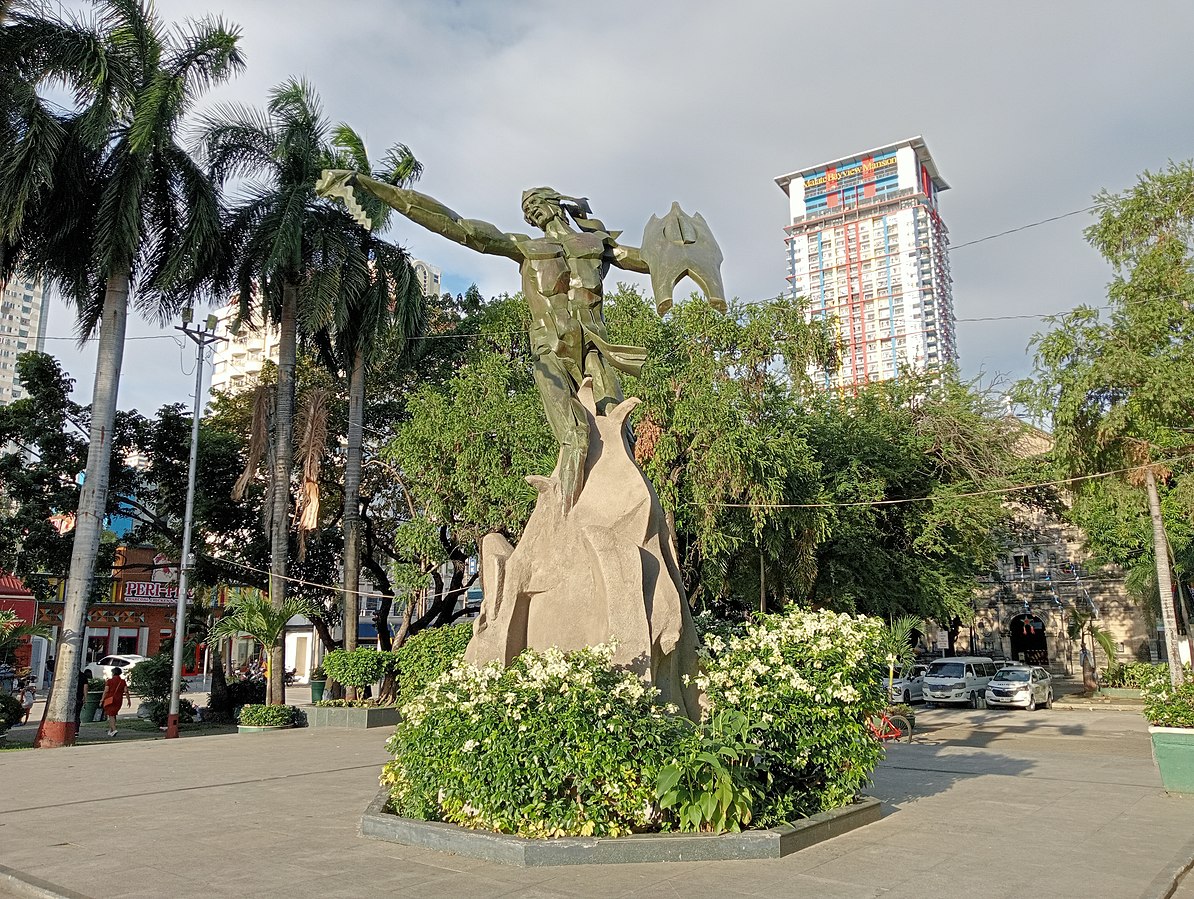
Whatever the true circumstances of his death, Rajah Sulayman is remembered as one of the Philippines’ earliest heroes. He chose to fight rather than surrender his kingdom, a stance that stood in contrast to some local leaders who opted to cooperate with the Spaniards.
History records the fall of Maynila as a major turning point. From its ruins, the Spaniards established the colonial seat of power. Yet Sulayman’s legacy as a symbol of resistance endured. He embodied the courage to defend land, culture, and sovereignty.
Today, his memory lives on in many forms: through streets and parks bearing his name, and most notably, the Rajah Sulayman Monument in Malate, Manila. The statue gazes out over Manila Bay, as if still standing guard against threats from the sea, just as he once did against the Spanish ships.


