


Not many countries in the world can claim to have four distinct seasons in one region, and only two in another. Viet Nam, however, is a fascinating exception.
Imagine landing in Hanoi in January, the air crisp and biting, a thin mist drifting over Hoan Kiem Lake, people hurrying past in heavy coats. Then, just a two-hour flight south in Ho Chi Minh City, you’re greeted by tropical sunshine. Locals lounge in open-air cafés in light T-shirts, worrying only about whether the afternoon will bring blazing sun or a sudden downpour.
Viet Nam’s Geographic Secret
The first clue lies in Viet Nam’s unique shape. It is slender yet stretched out, spanning more than 1,600 kilometers from north to south.
At the northern tip, the country sits at 23°N, within a subtropical zone often swept by cold air masses from southern China. At the southern end, however, Viet Nam lies just 8° north of the equator, firmly within the embrace of the tropics.
This north–south span gives Viet Nam an extraordinary spectrum of weather, from biting winters to steamy tropical heat.
Layered Climate Zones

But latitude alone doesn’t explain it all. Climatological studies show that Viet Nam can be divided into seven distinct climate zones, each with its own rainfall rhythm and seasonal peaks.
In the north, the wet season runs from May to September, peaking in August. In the south, rains last longer—until November—with the heaviest downpours from June to October.
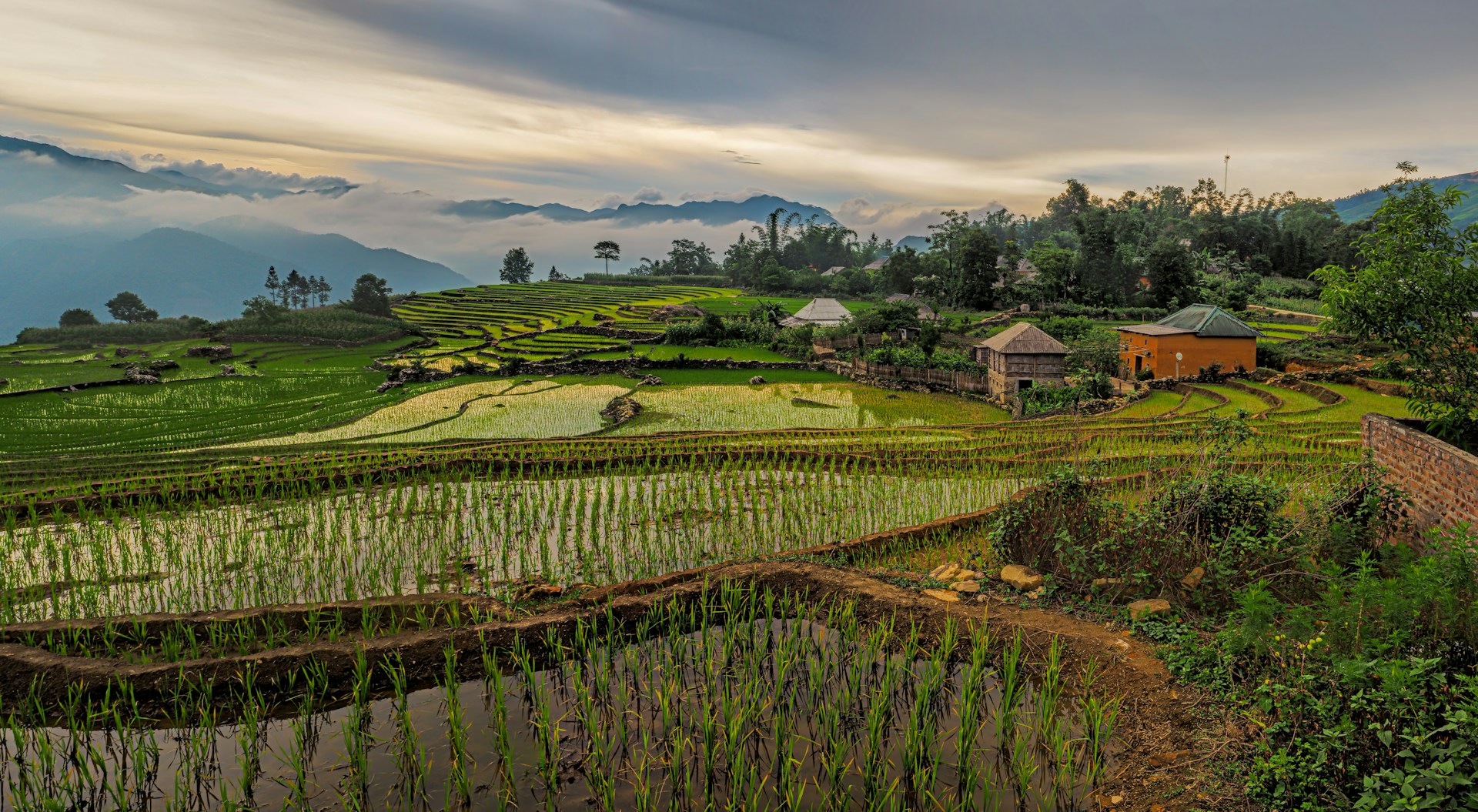
The north, with the Red River Delta and the highlands of Sa Pa, experiences four contrasting seasons—spring, summer, autumn, and winter. The south, by contrast, knows only two: the wet season and the dry.
Meanwhile, central Viet Nam, shielded by the Annamite Mountains, becomes a kind of climate laboratory. Winds and clouds trapped by the mountains create a bimodal rainfall pattern, with two distinct peaks—one in mid-summer, and another toward the year’s end.
The Dancing Monsoons and the Atmosphere
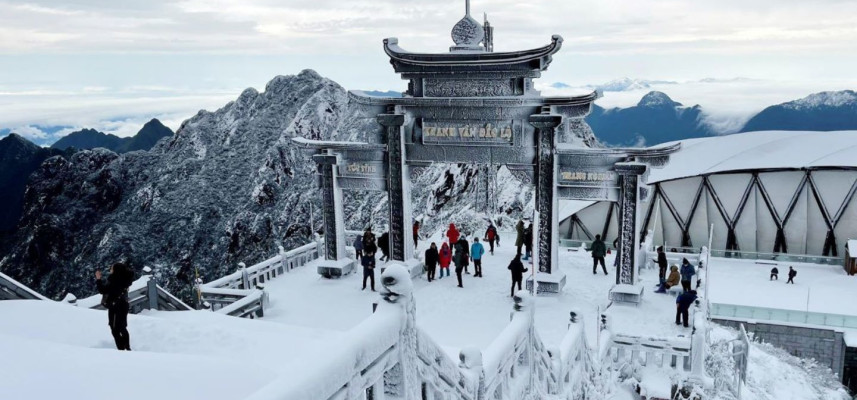
This climate puzzle is also the result of a complex dance of monsoons. From the north, the East Asian winter monsoon sweeps in with cold, dry air, making Hanoi feel almost like a subtropical city in China or Korea.
When summer arrives, the South Asian southwest monsoon carries moisture from the Andaman Sea and the Bay of Bengal, drenching the northern skies with heavy rains. Meanwhile, the south experiences a simpler rhythm: the Southeast Asian tropical monsoon alternates between torrential downpours and scorching heat, driven by low-pressure systems over the Indian Ocean and the South China Sea.
The interaction of these three monsoon systems gives Viet Nam its two climatic faces. The north follows the rhythm of four distinct seasons, while the south moves to the sharp contrast of wet and dry cycles.
Even the character of the rain differs. In the south, afternoon showers are almost ritualistic—intense downpours lasting an hour, then clear skies as if nothing happened. In central Viet Nam, autumn rains often fall at night, unlike the summer rains that arrive in the afternoons.
In the north, rainfall is more evenly spread throughout the day, influenced not only by monsoon winds but also by larger atmospheric phenomena.
One of these is the Madden–Julian Oscillation (MJO), a giant atmospheric wave moving eastward across the tropics, bringing clouds and rainfall in its wake. Another is the 10–20-day oscillation, a kind of short-term “pulse of weather” that helps determine when rains will come.
Seasons That Shape Life

These seasonal contrasts are more than scientific curiosities, they shape the way people live. In the north, farmers adjust their planting schedules to the arrival of spring and summer, waiting for the perfect moment to sow their seeds. In the south, agriculture follows a simpler calendar: the rains mark the season when rice fields come alive with green once again.
Tourism, too, is deeply influenced by the seasons. Travelers flock to Hanoi in autumn, drawn by the cool air and golden foliage, while southern beaches like Nha Trang and Phu Quoc come alive during the dry season, when endless blue skies promise perfect days by the sea.
Reference:
- https://www.mdpi.com/2073-4433/12/2/198
- https://www.researchgate.net/publication/348974698_Characteristic_of_the_Regional_Rainy_Season_Onset_over_Vietnam_Tailoring_to_Agricultural_Application
- https://journals.ametsoc.org/view/journals/clim/32/8/jcli-d-18-0453.1.xml
- https://pubmed.ncbi.nlm.nih.gov/40058016/


