


Not all countries lose land because of rising seas — some lose it because their neighbor buys it by the shipload. For decades, Singapore, a small nation with big ambitions, imported millions of tons of sand from Indonesia to expand its territory. This was not just construction material; this was the very foundation of Singapore’s growth story.
But behind Singapore’s futuristic skyline and reclaimed waterfronts lies a quieter, unsettling story. In Indonesia’s coastal regions, small islands began to vanish. Fishermen returned from the sea to find their familiar coastlines altered, while maps had to be redrawn.
Imagine it: an entire nation’s territory disappearing not by natural disaster or conflict, but by dredgers and barges. A disappearance bucket by bucket — quietly erasing Indonesia’s smallest, most fragile islands.
Singapore’s Insatiable Need for Land
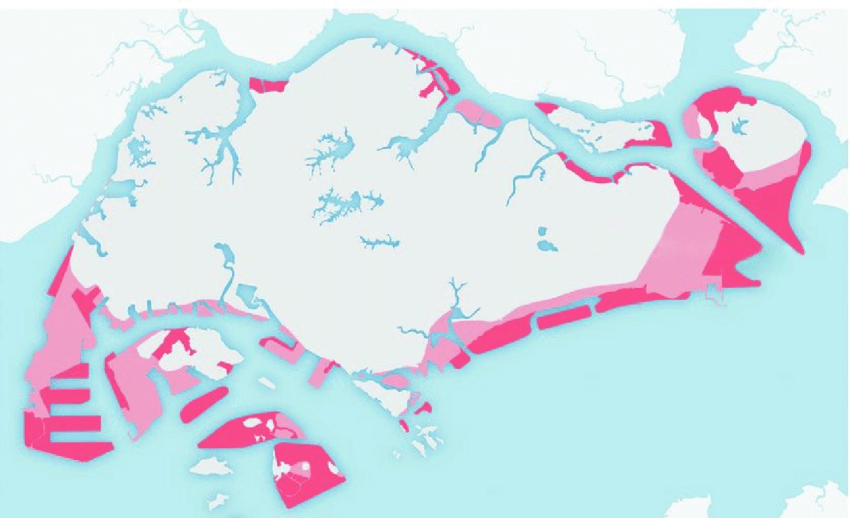
Land is Singapore’s most precious commodity. With a population squeezed into less than 750 square kilometers, the city-state has turned to land reclamation since independence. Today, iconic landmarks like Marina Bay Sands, Changi Airport’s runways, and parts of Sentosa all stand on reclaimed land.
To achieve this, Singapore became the world’s largest importer of sand, bringing in hundreds of millions of tons each year. Indonesia, with its vast archipelago and sandy coasts, was a natural supplier. Barges laden with sand left Sumatra, Riau, and Kalimantan for Singapore’s shores on a daily basis.
As Singapore grew bigger, the price became clear: Indonesia was shrinking. What looked like progress on one side of the Strait spelled erosion, habitat loss, and vanishing islands on the other.
Islands That Disappeared
By the early 2000s, Indonesian officials and local communities raised alarm. Reports suggested that at least 24 islands were lost due to erosion and over-extraction linked to sand mining for export. These were not just dots on a map; they were homes, fishing grounds, and markers of sovereignty.
The disappearance of islands also posed a serious geopolitical problem. In a maritime nation, islands help define territorial waters and exclusive economic zones. When an island is gone, so too is the maritime claim around it. For Indonesia, this threatened not just its geography but also its rights to surrounding seas, especially near the resource-rich Natuna and Riau regions.
For coastal villagers, the impact was immediate and devastating. Sand dredging destroyed coral reefs and seabeds, wiping out fish populations. Communities that once thrived on traditional fishing saw their livelihoods crumble.
The Ban and Its Consequences
By 2007, the issue had grown so serious that Indonesia imposed a total ban on sand exports to Singapore. Officials cited environmental destruction, loss of islands, and risks to national security. Malaysia and Vietnam followed with similar restrictions, forcing Singapore to diversify its sand sources from Cambodia and Myanmar — until those, too, tightened controls.
But for many Indonesians, the ban came too late. The damage had already been done, with some islands permanently erased from the map. Environmentalists argue that these vanishing islets are a cautionary tale of unchecked trade — where development in one country directly undermined the territory of another.
Singapore has since tried to reduce reliance on imported sand by recycling construction materials and exploring alternatives. Yet the irony remains: one of the world’s most advanced nations expanded, in part, by consuming the land of its neighbor.


