


Timor-Leste is a small country with a long and complex history. One of the most fascinating things that sets Timor-Leste apart from many other nations is its choice of currency.
Instead of issuing its own money after gaining independence, Timor-Leste decided to adopt the United States Dollar (USD) as its official currency. This raises an important question: why was this decision made, and how has it shaped the country’s economy to this day?
From Referendum to the U.S. Dollar
After gaining independence in 2002, Timor-Leste entered a transition period under the United Nations Transitional Administration in East Timor (UNTAET).
In the midst of political and economic uncertainty, on January 24, 2000, through Regulation 2000/7, the UN and Timor-Leste’s transitional government declared the USD as the nation’s official currency. All transactions, whether paying for electricity or government salaries, had to be made in dollars.
In the early days, however, people could still use a mix of other currencies that had been circulating, such as the Indonesian Rupiah, Thai Baht, Portuguese Escudo, and Australian Dollar. In other words, Timor-Leste briefly operated as a “multi-currency” economy before consolidating fully under the U.S. dollar.
Why the Dollar?
There were several reasons behind this choice:
- Stability – The U.S. dollar is considered a strong, stable currency that is widely accepted around the world.
- International trust – Using dollars allows trade and foreign investment to flow more smoothly, with investors facing less risk from currency fluctuations.
- Simplicity and practicality – Coming out of conflict, printing and maintaining its own currency was not a priority for the new government. By using the dollar, they avoided the costs and complexities of issuing and stabilizing a new currency.
This decision was not without controversy. Many citizens complained about soaring prices.
Imagine, goods that were once priced in local standards suddenly had to match the much higher value of the U.S. dollar. The government, however, argued that the price hikes were not caused by the currency itself, but rather by basic market forces of supply and demand.
The Story of the “Centavo”: A Half-Hearted Local Currency
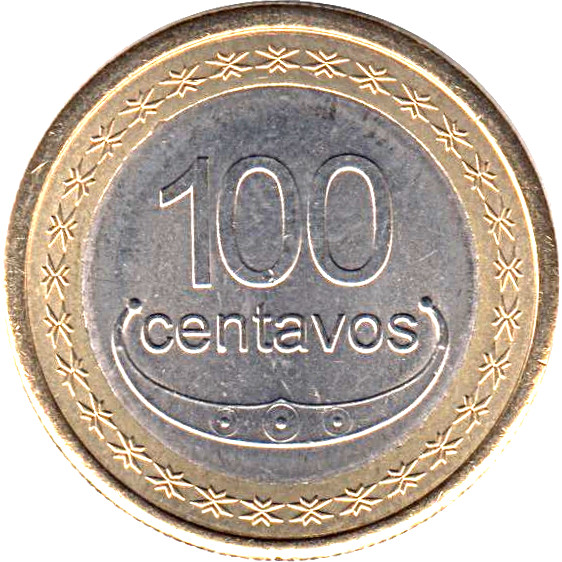
Although the U.S. dollar remains the primary currency, since 2003 Timor-Leste has also issued its own coins, called centavos. These coins are minted in Portugal and used as small change for everyday transactions. Banknotes, however, are still entirely in U.S. dollars, supplied directly by the Federal Reserve in the United States.
Interestingly, the introduction of centavos did not change the fact that Timor-Leste remains fully dollarized. The local coins exist purely to facilitate small transactions, not as a true symbol of monetary sovereignty.
A Two-Year Promise That Became Permanent
Initially, both the UN and the transitional government stated that the use of the dollar would last only two to three years after independence. After that, the plan was to consider launching a national currency.
But in reality, more than two decades later, Timor-Leste continues to rely on the U.S. dollar.
Why? The answer is simple: stability. With a still-fragile economy, the government has prioritized building infrastructure, reducing poverty, and maintaining political stability over taking on the complex task of creating and managing its own currency.
The Pros and Cons of Dollarization
Adopting another country’s currency brings both advantages and disadvantages.
Advantages:
- Inflation remains relatively controlled because it is “tied” to the stability of the U.S. dollar.
- Attracts foreign investors more easily.
- Reduces the risk of exchange-rate volatility.
Disadvantages:
- Timor-Leste loses control over monetary policy. Its central bank cannot print money or set interest rates.
- No income from seigniorage (the profit a country earns from issuing its own currency).
- The economy becomes more vulnerable to global dollar dynamics, when the dollar strengthens globally, citizens’ purchasing power can be squeezed.
Research from the IMF also shows that countries fully adopting a foreign currency often experience slower economic growth and more volatile output. However, they generally benefit from lower inflation compared to nations with their own currencies.
Economic Growth: A Roller-Coaster Ride
After gaining independence in 2002, Timor-Leste’s economic growth was initially sluggish. But from 2007 onward, growth picked up sharply, outpacing the average for many other post-conflict countries. This was fueled by greater political stability and, most importantly, substantial revenues from oil and gas.
Unfortunately, while the macroeconomic numbers looked impressive, the day-to-day lives of ordinary citizens did not always improve. Timor-Leste’s per capita income still lags far behind that of its neighbors, countries like Cambodia, Laos, and Myanmar that were once just as poor.
Since 2017, the non-oil economy has been largely stagnant. This is despite the government spending heavily on public projects—at one point, public expenditure reached up to 80% of the non-oil GDP in 2010. However, because much of that spending was of “low quality” and heavily reliant on imports, its impact on the local private sector was limited.
Inflation: Riding the Waves of Global Prices
Like many small nations, Timor-Leste’s inflation is highly influenced by global commodity prices, especially food. Inflation spiked in the early 2000s but has been more controlled over the past decade.
On average, inflation over the past 20 years has hovered around 4.9%, lower than in many other post-conflict nations, though still higher than in countries with fixed exchange-rate systems.
So, What’s Next?
Today, the U.S. dollar remains the backbone of Timor-Leste’s economy. The Indonesian Rupiah is still used in border areas, and in some rural regions, bartering is still practiced. But for official transactions, the dollar remains king.
Issuing a national currency could indeed serve as a symbol of sovereignty. But for Timor-Leste, continuing to use the dollar is a pragmatic choice: simple, stable, and relatively safe. With the country still facing serious economic challenges, launching a new currency is far from the top of the priority list.
In short, Timor-Leste’s currency story is a fascinating example of a nation choosing practical stability over symbolic nationhood. To this day, the U.S. dollar remains the “lifeblood” flowing through the veins of this small country at the far eastern edge of the Indonesian archipelago.


