


In late April 2017, the conservation world was shaken by an extraordinarily rare discovery. A female orangutan with pure white fur was found weak and tied up in Tanggirang Village, Kapuas Regency, Central Kalimantan.
This was no ordinary orangutan, she was an individual with a genetic condition almost never seen in the wild: albinism.
The unique orangutan was later named Alba, which means “white” in Latin. From that moment on, Alba became the focus of international attention as the first scientifically recorded albino orangutan.
Her presence not only symbolizes the incredible biodiversity of Kalimantan but also reminds us of the vulnerability of animals with such special conditions in the wild.
Meet the Rare Beauty of Borneo
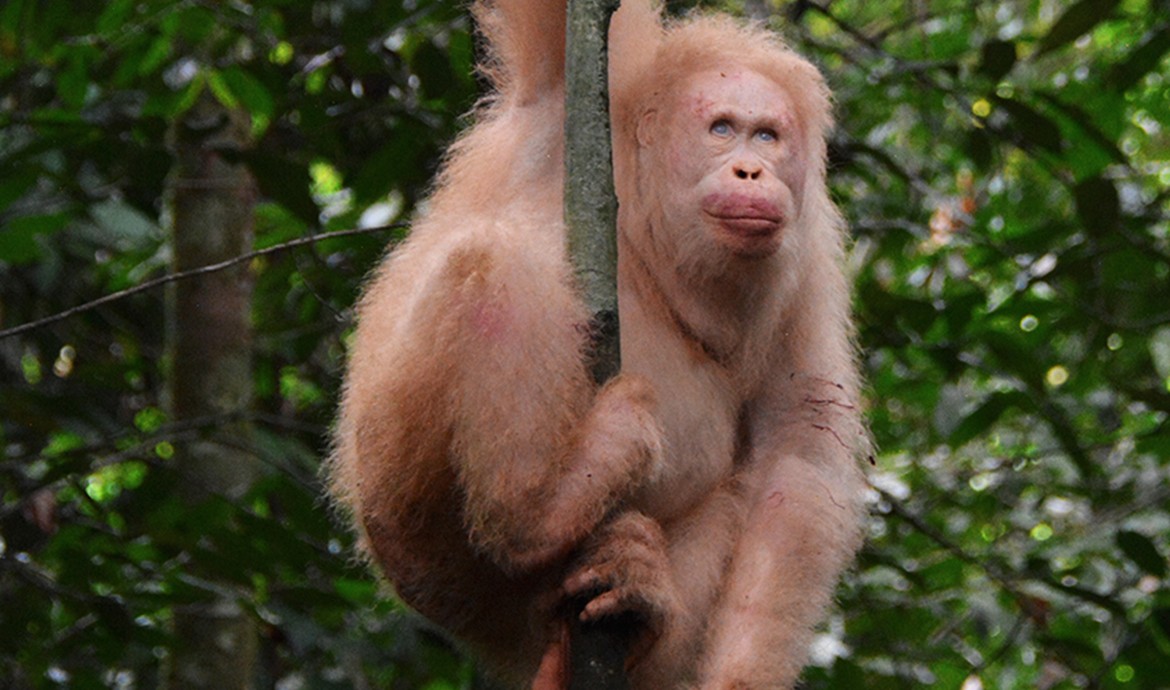
Alba belongs to the Bornean orangutan species (Pongo pygmaeus), one of three orangutan species in existence, alongside the Sumatran orangutan (Pongo abelii) and the Tapanuli orangutan (Pongo tapanuliensis).
All three species live exclusively in Indonesia and are currently classified as Critically Endangered on the IUCN Red List.
When Alba was first discovered, her condition was deeply concerning. She was dehydrated, suffering from a parasitic infection, physically weak, and showing signs of severe stress.
She was estimated to be about five years old at the time. Fortunately, a community report quickly reached the Borneo Orangutan Survival (BOS) Foundation, which then rescued Alba and brought her to the Nyaru Menteng rehabilitation center.
After nearly two years of intensive care, Alba was finally released back into the wild in December 2018, in Bukit Baka Bukit Raya National Park, a protected area considered safe and suitable for her survival.
Alba’s Unique Physical Traits
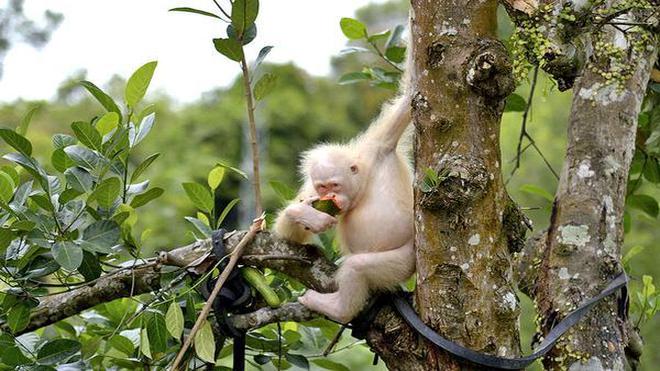
Compared to most orangutans, Alba’s appearance is strikingly different. Her fur ranges from creamy white to pale blonde, instead of the typical reddish-brown of Bornean orangutans.
Her skin is pale with a reddish tint, standing in contrast to the usual dark gray skin of her species. Her eyes are bright blue due to the absence of pigment in the iris.
But with this beauty comes a challenge: Alba suffers from photophobia, an extreme sensitivity to light. These distinctive traits make her both stunningly unique and more fragile when living freely in the wild.
Why Alba Was Born Albino
Albinism is a genetic condition caused by mutations in the genes responsible for producing melanin, the pigment that gives color to hair, skin, and eyes. When melanin production is drastically reduced or entirely absent, albinism occurs.
This condition is recessive, meaning an individual must inherit two copies of the mutated gene (one from each parent) to express the albino trait. In other words, even though Alba’s parents were not albino, they were most likely both carriers of the gene.
This phenomenon is extremely rare, but it is not unique to orangutans. Cases of albinism have also been recorded in other animals such as gorillas, dolphins, and even porcupines.
Life Isn’t Easy for Alba
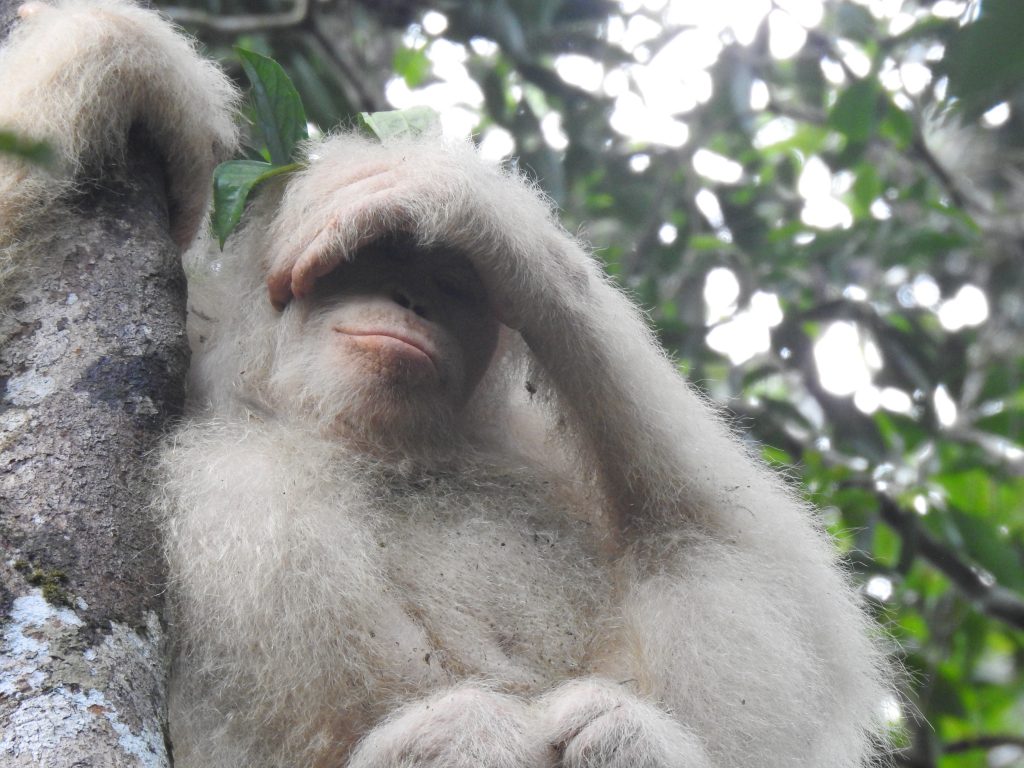
For albino animals like Alba, survival in the wild is far from easy. Without melanin to protect her, Alba’s skin and eyes are highly vulnerable to sunlight exposure. She is prone to sunburn and faces an increased risk of developing skin cancer.
Vision problems pose another serious challenge. Photophobia (light sensitivity) and poor visual acuity make it difficult for her to move through the forest canopy, find food, and stay alert to potential predators.
Additionally, Alba’s white coloration robs her of the natural camouflage that orangutans typically rely on. While other orangutans can blend into the forest, Alba stands out, making her more visible not only to predators but also to humans who may pose a threat.
Reports from the BOS Foundation also note that Alba tends to be shyer and less active compared to other orangutans in the rehabilitation center, likely due to her visual impairment.
Journey Back to the Jungle
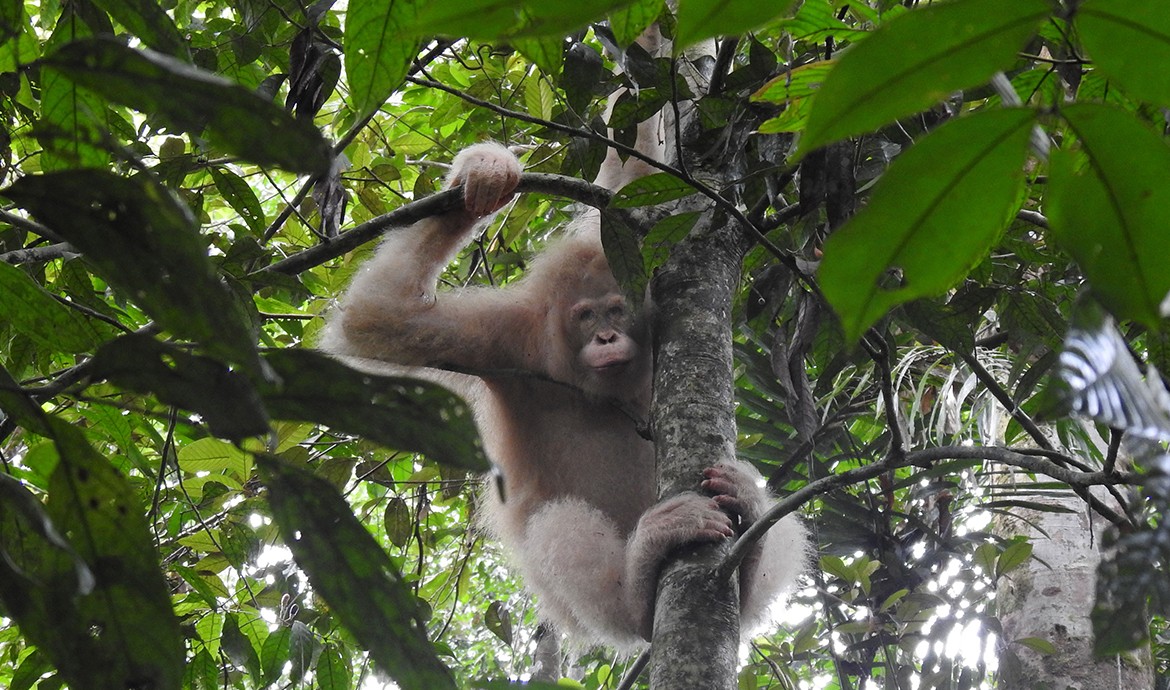
Despite the many challenges, the decision to release Alba back into the wild was made with careful consideration. Bukit Baka Bukit Raya National Park was chosen because it offers an abundance of food sources, a low level of poaching, and strict monitoring.
To keep track of her, Alba was fitted with a GPS collar, allowing conservation teams to ensure her safety.
A year after her return to her natural habitat, good news arrived: Alba had successfully adapted. She was seen exploring the forest with agility, foraging skillfully, building her own nests, and even socializing with other orangutans. One of the most memorable moments was her reunion with Unyu, a companion from her days at the rehabilitation center.
Alba: A Beacon of Hope
Alba’s story is both a miracle and a reminder. She proves that even animals born with rare conditions and significant challenges deserve the right to live freely in their natural habitat.
But her story also highlights a sobering reality: Bornean orangutans remain critically endangered. According to World Wildlife Fund (WWF), they have lost over 55% of their natural habitat in the past 20 years, mainly due to deforestation for palm oil plantations, illegal logging, mining, and forest fires.
The Orangutan Foundation warns that if current trends continue, up to 80% of Bornean orangutan habitat could be gone by 2080.
In addition to habitat loss, orangutans face threats from hunting, illegal wildlife trade, and human-wildlife conflict. Alba may have been given a second chance, but countless other orangutans are not as fortunate.


