


There has been a significant development on the global political stage that more and more Western nations are now formally recognizing Palestine as a sovereign state. This marks a major shift in stance from several of Israel’s long-standing allies, who for decades had approached this issue with great caution.
Yesterday (September 21), the United Kingdom, Canada, Australia, and Portugal jointly announced their recognition of Palestine. And today, France, Belgium, Luxembourg, Malta, Andorra, and Monaco followed suit during the UN General Assembly in New York.
This wave of recognition sends a powerful political message: Israel is becoming increasingly diplomatically isolated, especially amid the prolonged attack in Gaza that has claimed tens of thousands of lives.
Why This Moment Matters
The question of recognizing Palestine has always been a complex one. Palestine is already recognized by a majority of UN member states, around 147 out of 193. However, key Western nations had typically held back, citing the need to “wait for a peace settlement.” Now, with the UK and its allies taking this step, the diplomatic landscape has shifted significantly.
It is worth noting that the UK has a profound historical role in the creation of modern-day Israel. After World War II, Britain was one of the key drivers behind the establishment of a Jewish state in Palestine. So London’s recognition of Palestine today has come as a surprise to many.
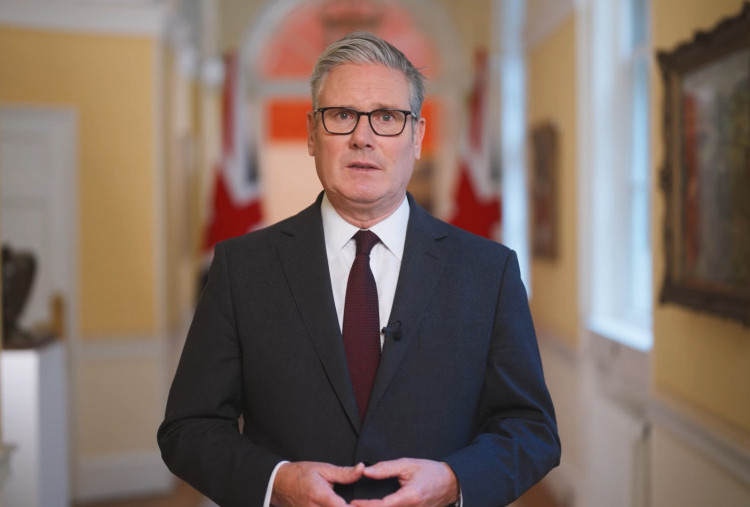
UK Prime Minister Keir Starmer stated that the decision was made to “rekindle hope for peace” amid what he called a “man-made humanitarian disaster” in Gaza.
“The man-made humanitarian crisis in Gaza reaches new depths. The Israeli government's relentless and increasing bombardment of Gaza, the offensive of recent weeks, the starvation and devastation are utterly intolerable,” said Starmer in a statement.
A Unified Message
Canada’s Prime Minister Mark Carney stressed that recognizing Palestine is an effort to strengthen those seeking peace, not to endorse terrorism.
Australia framed its decision as part of a broader international push toward a two-state solution. Prime Minister Anthony Albanese and Foreign Minister Penny Wong emphasized that a Gaza ceasefire and the release of hostages must be the first steps in that process.
Meanwhile, Portugal emphasised that this recognition is not a temporary stance, but rather a fundamental pillar of their foreign policy.
“The recognition of the state of Palestine is the realisation of a fundamental, constant, and fundamental line of Portuguese foreign policy,” said Portugal’s Foreign Minister, Paulo Rangel, at the United Nations headquarters.
Israel Responds with Fury
As expected, Israel reacted sharply. Prime Minister Benjamin Netanyahu called the recognition of Palestine a “gift to Hamas,” insisting that a Palestinian state “will never be established west of the Jordan River.”
“You are giving a huge reward to terrorism. And I have another message for you: It will not happen. A Palestinian state will not be established west of the Jordan River,” Netanyahu said on Sunday.
Israel’s National Security Minister, Itamar Ben-Gvir, even announced plans to submit a proposal to extend Israeli sovereignty over the West Bank, effectively amounting to the annexation of Palestinian territory.
Palestine Welcomes the Move with Hope
On the other side, the Palestinians expressed deep gratitude. In a letter to the leader, President Mahmoud Abbas stated that this recognition paves the way for “the State of Palestine to live side by side with the State of Israel in security, peace, and good neighbourliness.”
Hamas also welcomed the decision but emphasized that recognition must be followed by concrete measures to end the war and prevent Israel from seizing more land.
The Reality on the Ground: Gaza on the Brink
Despite the wave of diplomatic support, the situation in Gaza remains dire. The war, now approaching its second year, has killed more than 65,000 Palestinians (most of them civilians) according to local health authorities. Infrastructure has been obliterated, hospitals have collapsed, millions have been displaced, and famine is spreading.
Israel maintains that the war is a response to Hamas’s October 7, 2023 attack, which killed 1,200 Israelis and resulted in 251 hostages. Yet many observers now describe Israel’s retaliation as genocidal in scale.
A recent UN commission even concluded that Israel has committed acts of genocide, an allegation that Israel has categorically rejected.
The United States and the Decisive Veto
Even though over 80% of UN member states now recognize Palestine, one major obstacle remains: the UN Security Council. To become a full UN member, Palestine needs Security Council approval. The problem is that the United States, which holds veto power, has repeatedly blocked the move.
The administration of Donald Trump even called Western recognition of Palestine “a gift to Hamas.” The White House reiterated its stance that Palestine does not deserve recognition at this time.
“President Donald Trump believes the countries’ recognition of Palestine is a reward to Hamas,” said White House spokesperson Karoline Leavitt.
A Divided Europe and Growing Public Pressure
Interestingly, the stance of Western governments is being shaped by intense domestic pressure. Massive protests have taken place across European cities, including Italy, where tens of thousands have joined demonstrations in solidarity with Gaza.
Some countries—such as Spain, Ireland, and the Netherlands—have even declared they will boycott the Eurovision Song Contest, Europe’s largest annual music event, if Israel is allowed to participate.
This shows that the question of Palestine is no longer confined to high-level diplomacy but has spilled over into popular culture and public opinion.
“A Right, Not a Reward”
UN Secretary-General António Guterres emphasized that Palestinian statehood is a right, not a privilege.
“Let’s be clear: Statehood for Palestinians is a right, not a reward,” Guterres said at UN headquarters on September 22.
His statement directly challenges the narrative from Israel and the United States that recognition amounts to rewarding Hamas.
Now, with more Western countries joining the list of nations recognizing Palestine, the geopolitical map of the Middle East is entering a new chapter. While this recognition does not immediately stop the bombing in Gaza or change Palestine’s UN status, its political message is clear: the world is no longer willing to remain silent in the face of Palestinian suffering.


