


Across Southeast Asia, lumpia takes on many identities. In Indonesia, Lumpia Semarang is a beloved street food, its golden wrappers filled with bamboo shoots, shrimp, or eggs. In other places, the word points back to Chinese spring rolls, the ancestor that inspired countless variations around the region.
But in the Philippines, lumpia has gone far beyond its Chinese roots. It has become a staple of national cuisine, appearing in both everyday meals and festive spreads. And among the many kinds of Filipino lumpia, two versions stand out in contrast, Lumpiang Shanghai and Lumpiang Sariwa. One is golden and crunchy, the other is fresh and light. Together, they tell the story of how a simple roll can carry different flavors of culture.
Lumpiang Shanghai
These bite-sized rolls, packed with minced meat, such as pork or beef, and vegetables, are fried to a golden crunch. Though its name suggests a Chinese origin, Lumpiang Shanghai is a creation Filipino have made their own. It reflects the legacy of Chinese settlers in Southeast Asia, where the idea of spring rolls was introduced and then reshaped by local kitchens.
Beyond its flavor, Shanghai lumpia carries meaning in the way it is made. Families often gather in the kitchen, talking and laughing as they roll dozens together before frying. The act of preparing it is already a celebration, long before the food reaches the plate.
Lumpiang Sariwa
If Shanghai is the noisy life of the party, Lumpiang Sariwa is its softer counterpart. Instead of deep-fried wrappers, it uses a delicate crepe-like skin that folds around a filling of sautéed vegetables, such as carrots, jicama, green beans, and sometimes with seafood or meat.
Its soul lies in the sauce. A thick, savory-sweet peanut blend poured generously over the roll, then sprinkled with fried garlic. Where Shanghai delivers crunch and comfort, Sariwa offers lightness. Both fried and fresh lumpia are crowd favorites and are commonly served at Filipino celebrations and holidays, especially during Christmas.
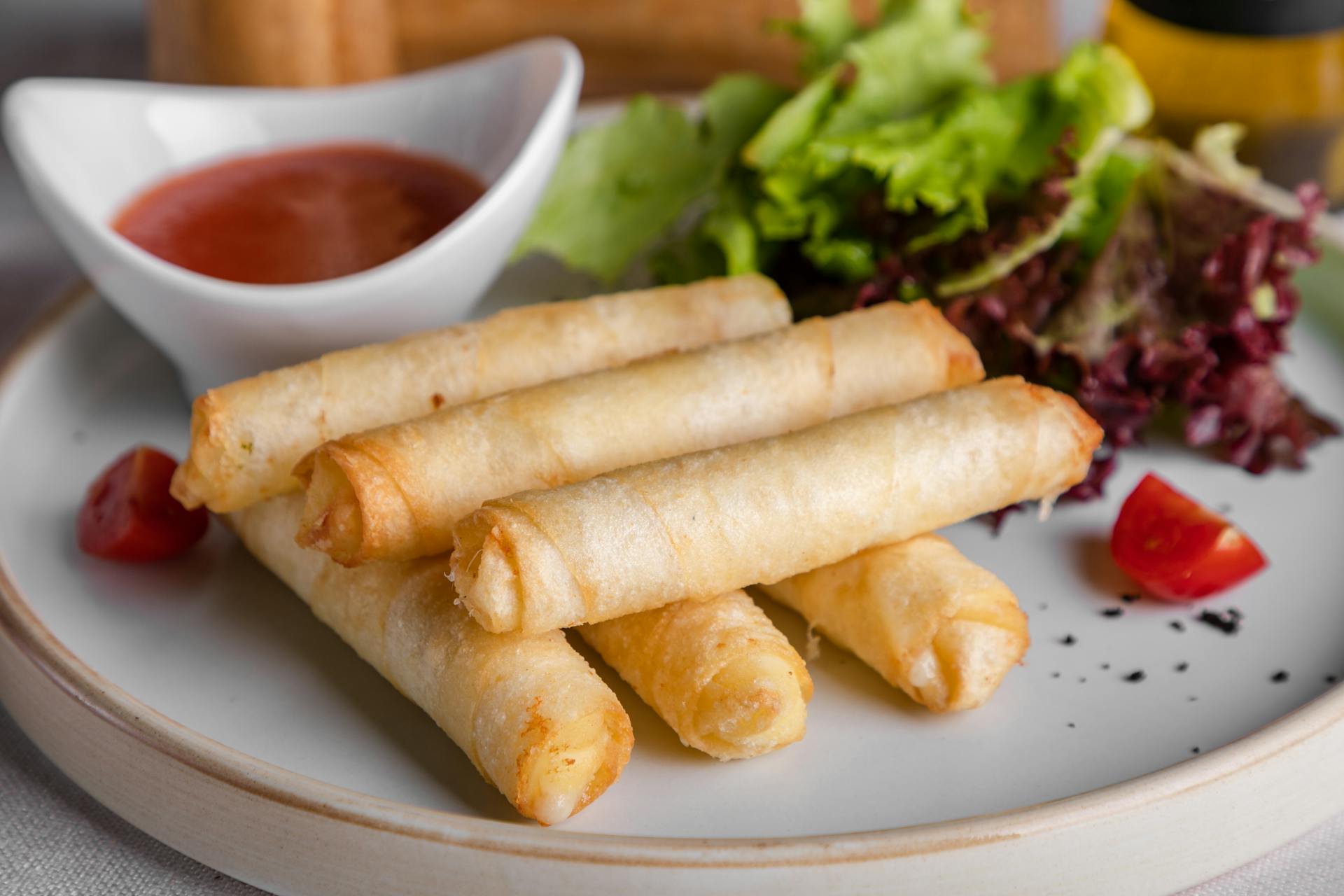
Though they look and taste worlds apart, Lumpiang Shanghai and Lumpiang Sariwa share one essence. They are dishes meant to be shared. Lumpia is rarely eaten alone. It sits at the center of the table, inviting hands to reach in, grab, and enjoy together. Just like Lumpia Semarang in Indonesia or popiah in Malaysia and Singapore, the Filipino versions show how one culinary idea can be reshaped across borders and kitchens.
In the Philippines, lumpia is far more than a finger food. They reflect how food can hold identity, history, and a sense of belonging. And when we zoom out across Southeast Asia, the story feels even bigger. Just as Lumpia Semarang, Lumpia Jakarta, Chicken Lumpia, and Pisang Cokelat (banana and chocolate wrapped in lumpia skin) in Indonesia has become a symbol of cultural blending, Filipino lumpia shows how the same humble roll can evolve into something deeply local yet instantly recognizable. Whether crispy or fresh, lumpia reminds us that food travels, adapts, and connects. Wrapping layers of history, migration, and community into every flavor.
Source:
Kiddle | Pepper | South China Morning Post | Taste Atllas
This article was created by Seasians in accordance with the writing rules on Seasia. The content of this article is entirely the responsibility of the author.


