Plastic waste is one of the most widespread types of pollution in the world. Single-use plastics from food and beverages are among the biggest contributors. Plastic waste takes centuries to decompose, so it continues to accumulate and threatens future generations.
According to UNEP, an estimated 19 to 23 million tons of plastic leak into aquatic ecosystems every year, polluting lakes, rivers, and oceans. But the plastic problem is not limited to the sea. On land, it poses equally severe challenges.
In contrast, communities across Southeast Asia have long embraced local wisdom in sustainable packaging. For centuries, they have used banana leaves, teak leaves, bamboo, and other natural materials as eco-friendly food containers and wrappers. Unlike plastic, these natural materials break down in just weeks rather than centuries.
Here are five natural materials behind Southeast Asia’s traditional food packaging, offering inspiration for sustainable choices today.
Banana Leaves
Banana leaves are one of the most popular sustainable materials for food packaging in Southeast Asia. For generations, they have been folded into simple yet functional pouches and plates to hold food.
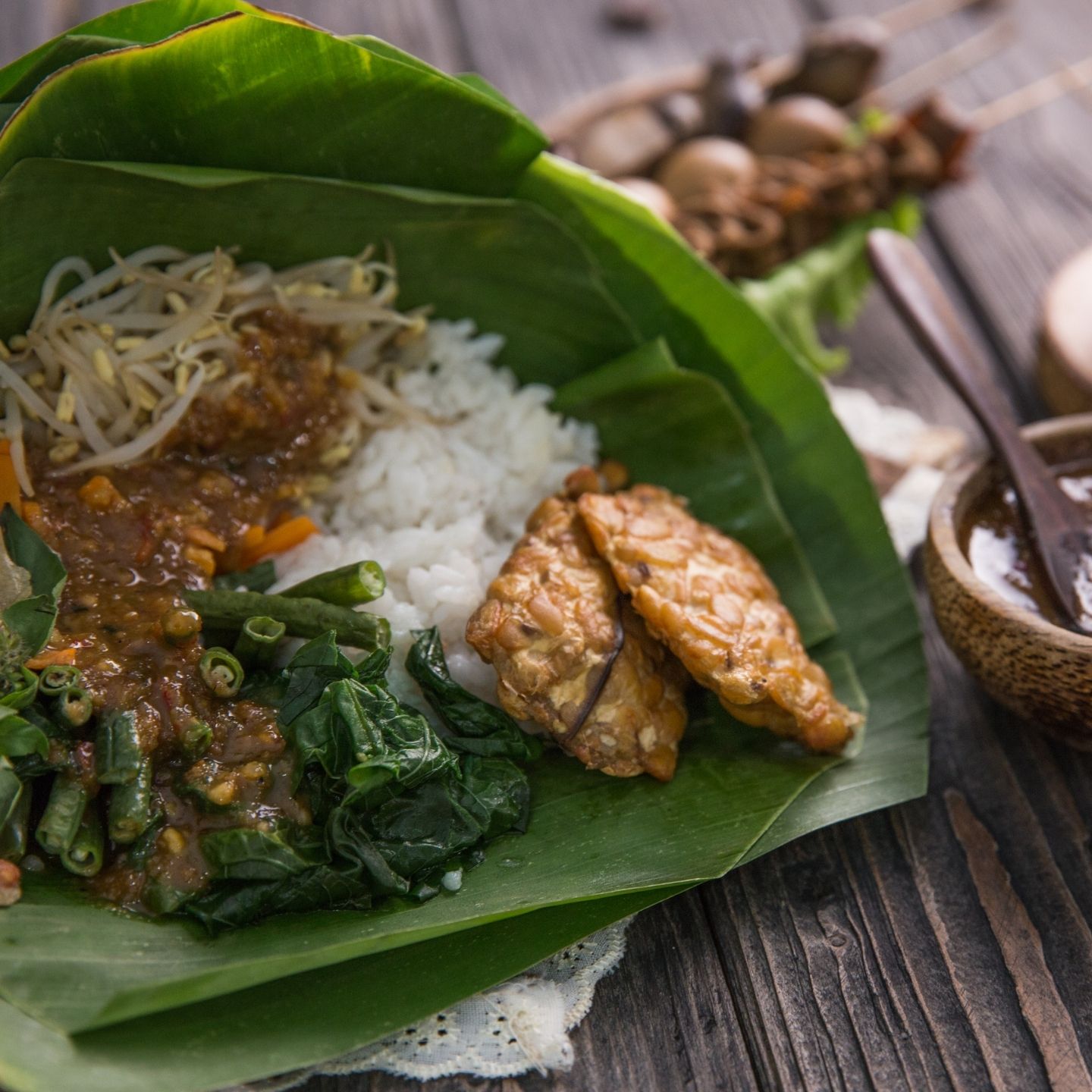
This tradition goes beyond Indonesia, where dishes like pecel pincuk are served, and extends across the region. In Malaysia and Singapore, nasi lemak is often wrapped in banana leaves.
Meanwhile in the Philippines, suman, similar to Indonesia’s lemper, relies on the same material. In Thailand, treats such as khanom tan, a steamed palm sugar and coconut cake, are also beautifully wrapped in banana leaves before being served.
Woven Bamboo
If banana leaves are popular for wrapping food, woven bamboo is widely used for larger food packaging and storage. This traditional material is strong, reusable, and biodegradable, making it both practical and eco-friendly.
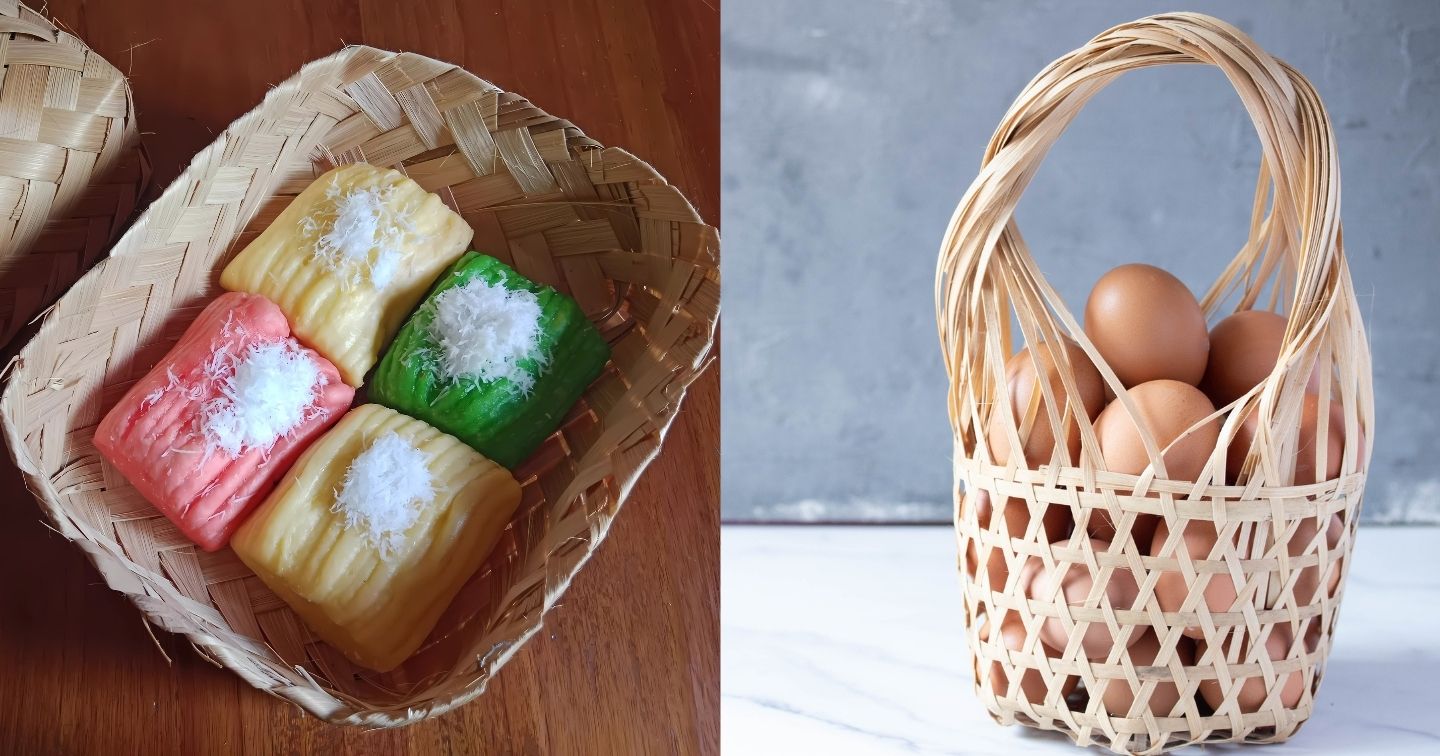
In Thailand, bamboo is woven into chalom, a round basket used to carry goods. In Indonesia, a similar round basket is called bongsang, while the besek is a square, tightly woven bamboo container with a lid.
These containers are usually made from young bamboo, which is more flexible and easy to shape. Besides being practical, both besek and chalom are appreciated for their strength, reusability, and attractive look, especially as gift packaging.
Palm Leaves
Palm leaves are another natural material widely used for food packaging in Southeast Asia. In Malaysia and Indonesia, they are commonly woven into ketupat, a rice cake with deep cultural significance during Eid al-Fitr.
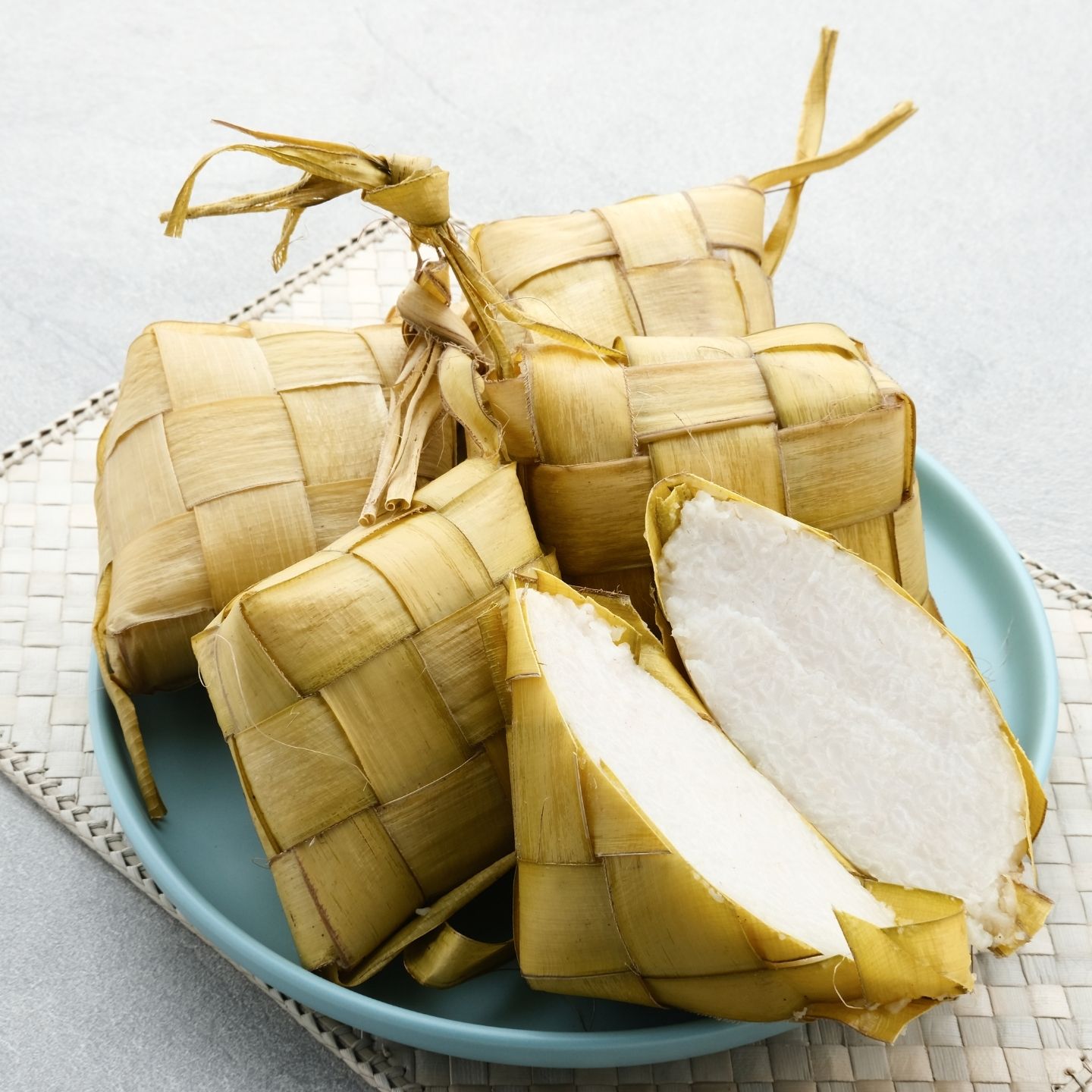
More than just wrapping, ketupat in Java symbolizes togetherness and community, as the woven knots represent human connections during the festive season. This shows how eco-friendly packaging in the region often carries cultural meaning as well as practical value.
In the Philippines, a similar delicacy called puso is also wrapped in woven leaves. Another sweet snack, pakaskas, is also packaged in buri palm leaves.
Lotus Leaves
In some Southeast Asian countries, lotus leaves are also used as a sustainable material for food packaging. Their broad, flat, and durable surface makes them ideal for wrapping a variety of traditional dishes.
One famous example is khao hor bai bua from Thailand, a dish of rice mixed with pork, mushrooms, dried shrimp, and lotus seeds, wrapped in lotus leaves and steamed. A similar dish in Vietnam, known as com sen, also uses lotus leaves as the wrapper.
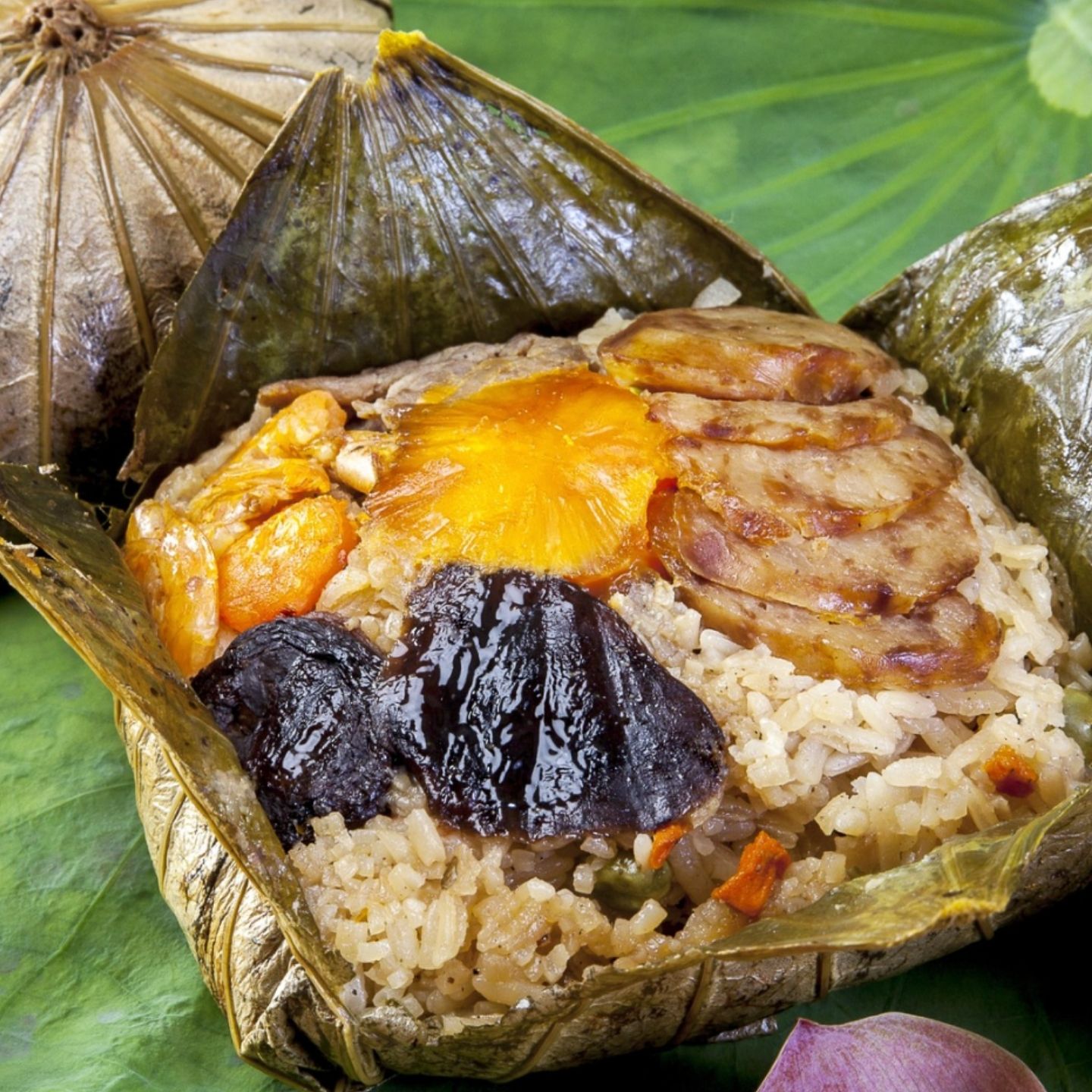
Beyond being biodegradable, lotus leaves add a distinctive aroma and flavor to the food, making these dishes both eco-friendly and culturally rich.
Teak Leaves
Teak leaves are another natural material often used for wrapping rice, alongside banana leaves. They are free from harmful chemicals, making them a safe and eco-friendly choice for food packaging.
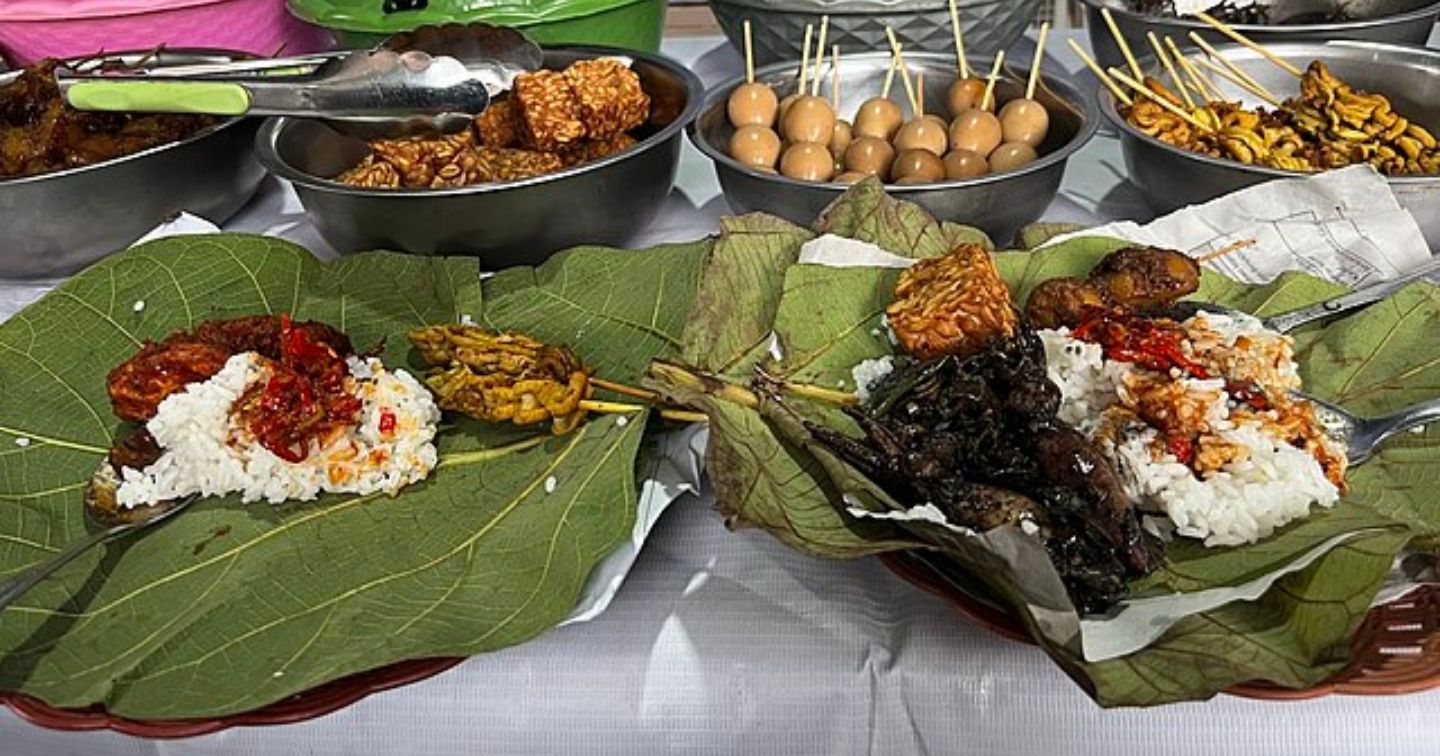
In Java, Indonesia, teak leaves are commonly used to wrap sego berkat and nasi jamblang, a traditional rice dish shared at community gatherings. Locals appreciate them not only because they are easy to find but also because they add a subtle, earthy aroma to the food.
Compared to banana leaves, teak leaves are thicker and sturdier, making them more resistant to heat and better for keeping food warm. This makes them especially useful for meals that need to be stored or shared at communal events.
Ancient Wisdom, Sustainable Future
Natural packaging is more than a local custom. It is shared wisdom across Southeast Asia. Almost every culture in the region has long used leaves and bamboo to prepare, store, and present food.
Unlike plastic, these materials are biodegradable, chemical-free, and abundant in the tropical climate, making them practical and safe for both people and the planet. They also carry cultural value, keeping alive traditional dining practices while promoting sustainable living.
By reviving these traditions, Southeast Asia offers inspiration for a future where packaging is not only functional but also sustainable.
This article was created by Seasians in accordance with the writing rules on Seasia. The content of this article is entirely the responsibility of the author.