Southeast Asian countries not only share similarities in cuisine or tourism spots, but also in language. Some of their languages resemble each other, just like Tagalog and Bahasa Indonesia.
Though the two may sound similar, they both still carry their own characteristics. This sparks curiosity to learn the reasons behind their resemblance and to explore what words look alike within the two languages.
Historical Background of Tagalog and Bahasa Indonesia
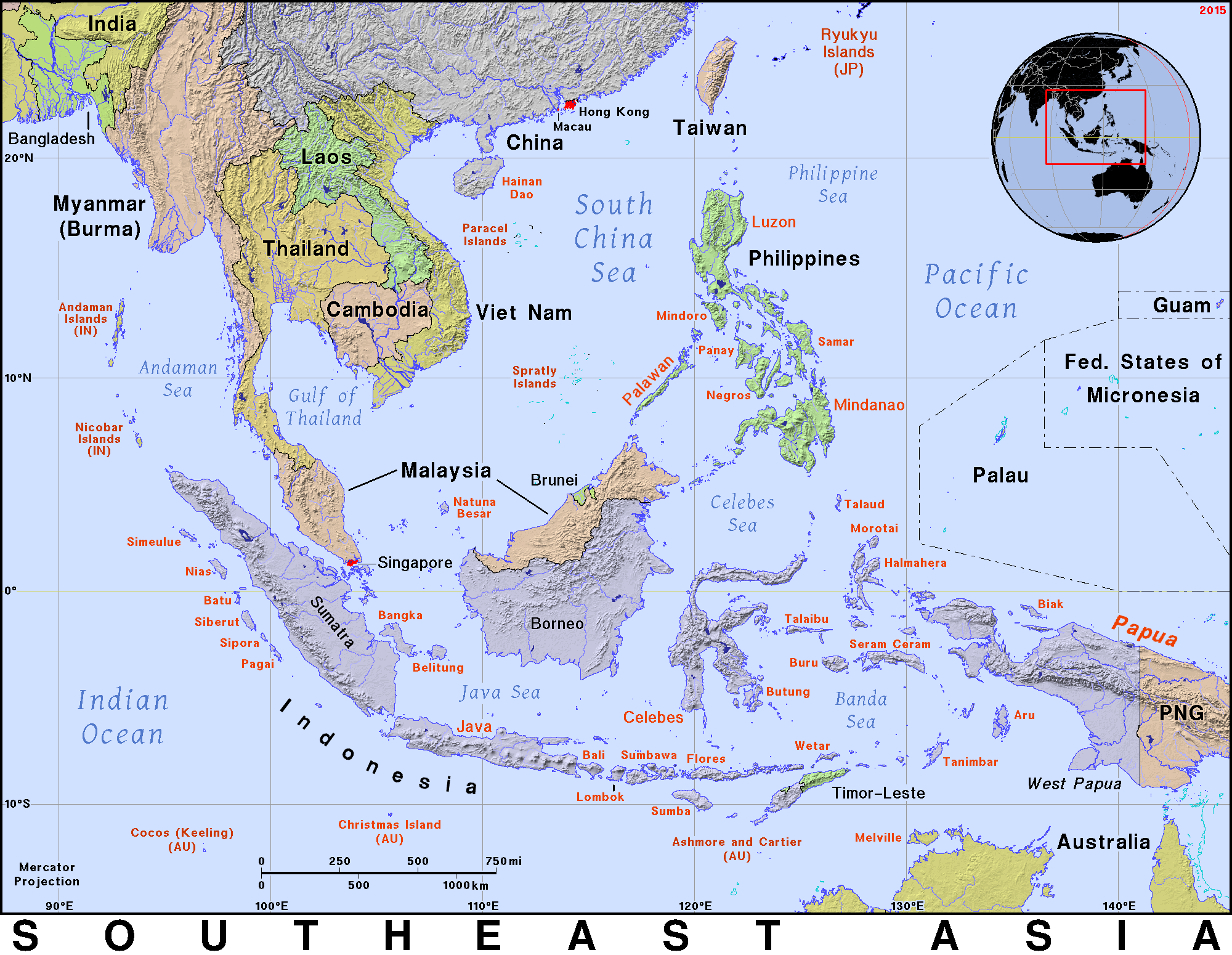
Historically, Tagalog was first used by the native Tagalog people in an area that is now Manila metropolitan. These were Austronesian people who introduced Tagalog language, which now becomes one of the national languages in the Philippines. Tagalog was also heavily influenced by Spanish during the Spanish colonial period.
On the other hand, Bahasa Indonesia essentially evolved from the Malay language, which is a part of Austronesian family languages. The local dialect in Malay language then shaped Bahasa Indonesia. Modern Bahasa Indonesia was also changing and developed rapidly by the influence from Arabic and Dutch.
From this, it can be seen that Tagalog and Bahasa Indonesia share similarities in some of their vocabulary due to the shared historical background. The two are both influenced heavily in their base by Austronesian family language, particularly Malay language.
Differences Between Tagalog and Bahasa Indonesia

Although Tagalog and Bahasa Indonesia are considered similar, the differences between two of them are actually quite significant. In terms of sentence structure, Tagalog usually uses verb-subject-object order, while Bahasa Indonesia uses subject-verb-object pattern.
The sounds also differ. One of Tagalog’s unique characteristics is the “ng” sound and the glottal stop that occurs when speaking the language. Meanwhile, Bahasa Indonesia is simpler, since it has fewer phonemes.
Tagalog verbs tend to change forms through affixes for various tenses. In contrast, verbs in Bahasa Indonesia usually change forms by using auxiliary words for its tenses, though some experts say Bahasa Indonesia has no tenses at all.
The differences between these two languages actually go back to their own historical background, where Tagalog was influenced by Spanish, while Bahasa Indonesia was influenced a lot by diverse cultures, like Arabic and Dutch.
Similar Vocabulary in Tagalog and Bahasa Indonesia

Now, let’s go into more specific examples of vocabulary in Tagalog and Bahasa Indonesia that are considered similar. Some of them are almost identical, while others look slightly alike.
The vocabulary that are almost identical in both Tagalog and Bahasa Indonesia, just like mirror reflections, include anak which means “child”, kami means “us/we”, langit means “sky”, and senang that means “happy” in both languages.
Other vocabulary that show slight differences includes mura in Tagalog and murah in Bahasa Indonesia which both mean “cheap”. The word takot in Tagalog is slightly similar with takut in Bahasa Indonesia which means the same, “fear or afraid”.
There is also a word like salamat in Tagalog, which seems slightly similar with selamat in Bahasa Indonesia, but they actually differ in meaning. In Tagalog, it means “thank you”, while in Bahasa Indonesia, it means “safe”.
Tagalog from the Philippines and Bahasa Indonesia from Indonesia sound share similarities in some of their vocabulary, but they also actually differ in a lot of aspects. Both languages function as an essential part of their cultural heritage, and more broadly, of Southeast Asia.
This article was created by Seasians in accordance with the writing rules on Seasia. The content of this article is entirely the responsibility of the author.