


A landmark discovery has confirmed a new, isolated population of the Tapanuli orangutan (Pongo tapanuliensis), the world's most endangered great ape. Previously believed to exist exclusively in the Batang Toru forest ecosystem in North Sumatra, this small group was found in a peat swamp forest approximately 32 kilometers to the west, offering a glimmer of hope for the species' survival but simultaneously highlighting a critical conservation crisis.
For years, the global population of the Tapanuli orangutan, known locally as mawas juhut bontar, was thought to be confined entirely to the forests of the Batang Toru landscape, which spans the South, North, and Central Tapanuli Regencies. However, recent surveys conducted by the Sumatran Orangutan Conservation Foundation - Orangutan Information Centre (YOSL-OIC) have revealed their presence in the peat swamp forest of Lumut Maju Village in Central Tapanuli.
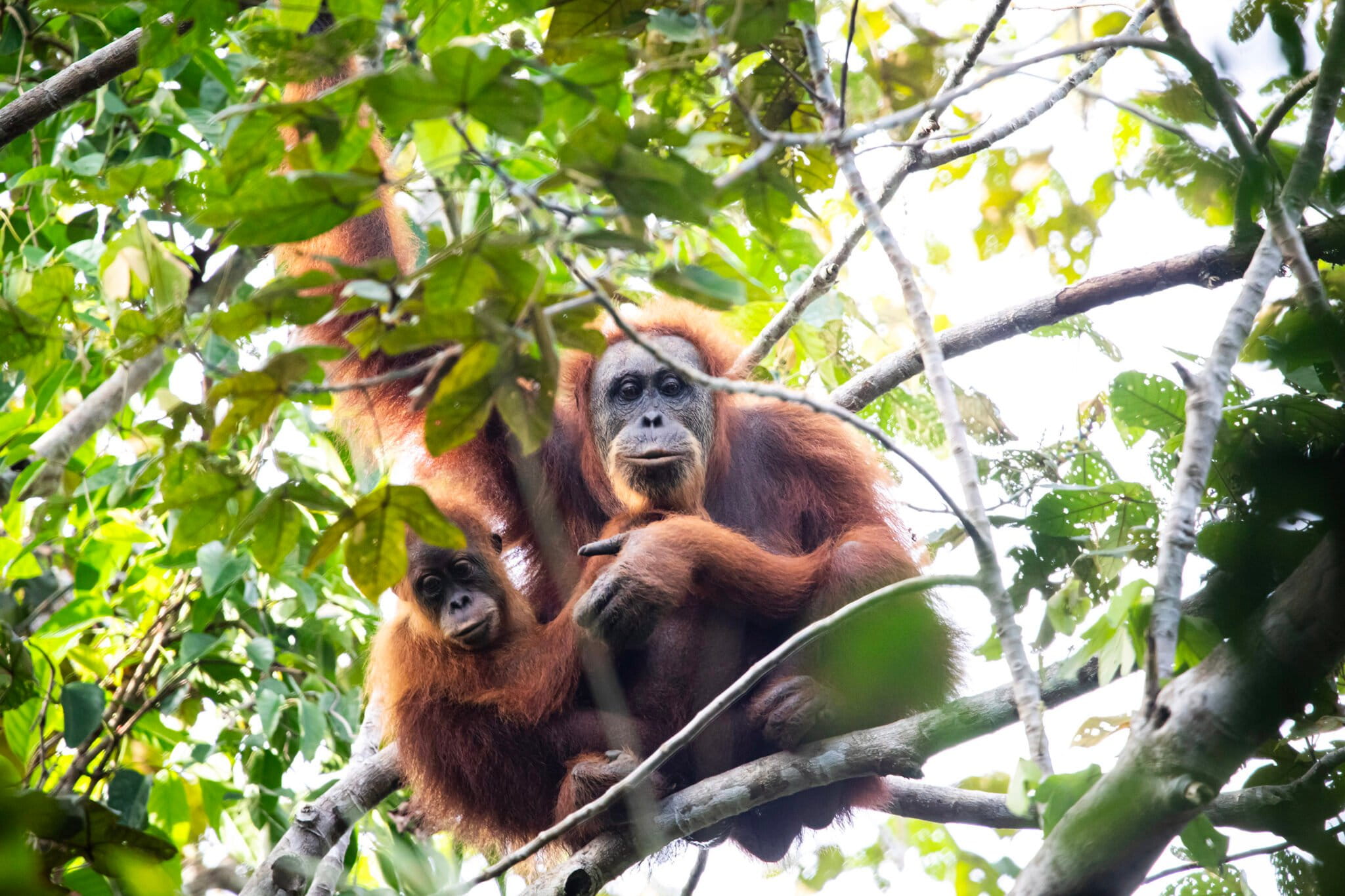
The journey to this discovery began in May 2022, when a local resident reported an orangutan sighting to YOSL-OIC's Human Orangutan Conflict Response Unit (HOCRU). While the initial field visit did not yield a direct sighting, the team discovered five orangutan nests, confirming their presence. This prompted further investigation by YOSL-OIC's research team.
"Follow-up monitoring in October 2022 in the roughly 1,234-hectare Lumut Maju forest revealed 17 nests, some of which were newly built," explained Rio Ardi, Restoration and Biodiversity Research Manager at YOSL-OIC. "Based on our joint surveys with the North Sumatra Natural Resources Conservation Agency (BBKSDA) from 2023 to 2024, we estimated the population to be between five and eight individuals."
The first direct confirmation came in October 2024 with the sighting of a lone male. More recently, on September 26, 2025, Mongabay Indonesia journalist Junaidi Hanafiah, accompanying the YOSL-OIC team, successfully photographed a mother and her infant after a challenging three-hour trek into the forest.
To eliminate any doubt that these were not the more common Sumatran orangutans, the team collected fecal samples in January 2025. DNA analysis conducted at a laboratory in Bogor, West Java, definitively confirmed the orangutans belong to the rare Pongo tapanuliensis species.
An Ecosystem on the Brink
This scientific breakthrough is overshadowed by the extreme vulnerability of the newly discovered habitat. The forest is not a protected conservation area but is designated as an "Area for Other Uses" (APL), leaving it legally exposed to land conversion.
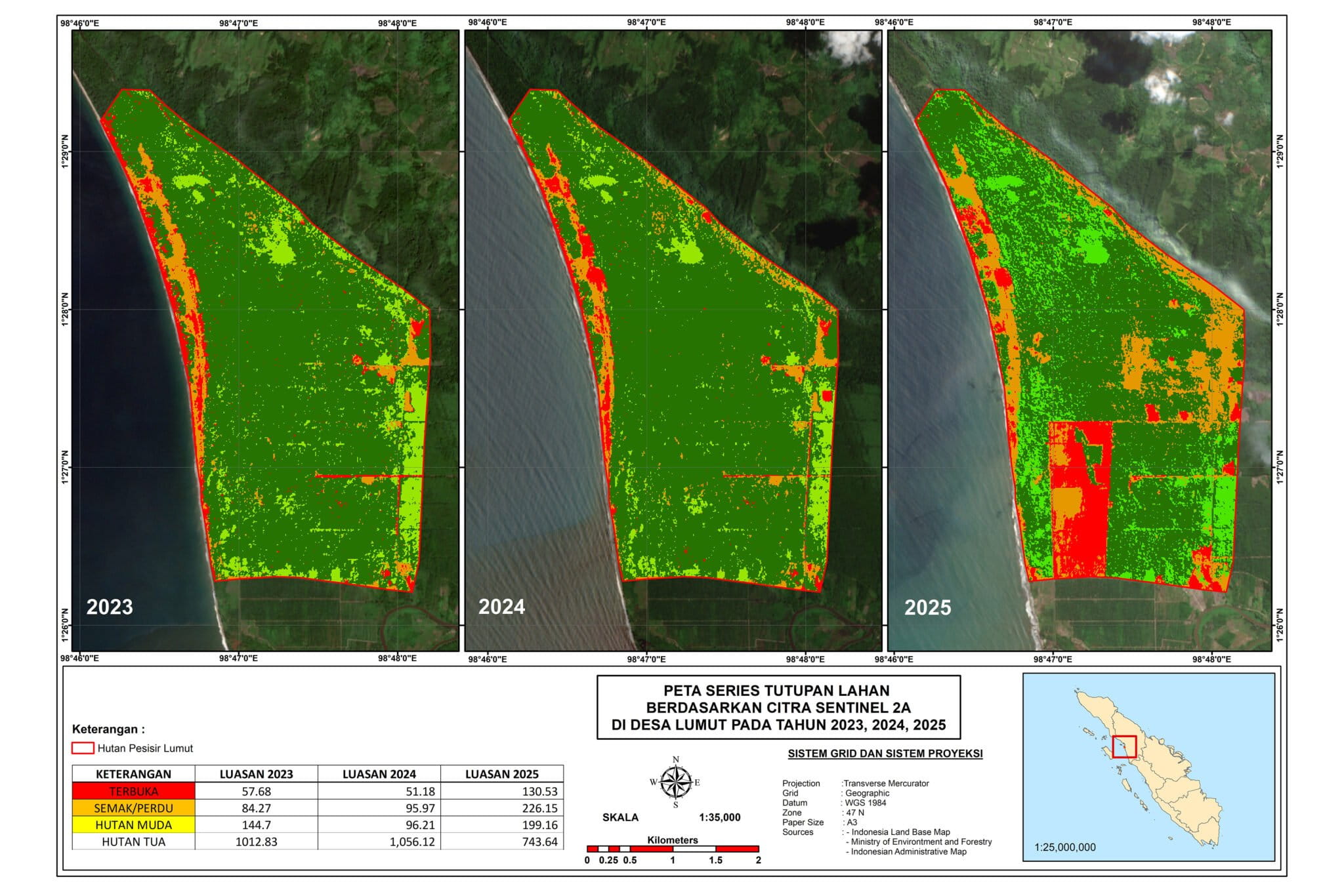
"The situation is urgent," warned Ardi. "In 2025 alone, we have witnessed extraordinary land clearing. Less than 1,000 hectares of this forest remain. We are deeply concerned for the fate of the orangutans there."
The primary threat is the relentless expansion of palm oil plantations, carried out by both corporations and individuals, often using heavy machinery. Aman Rida, a local resident, confirmed that while the community has long known about the orangutans, they assumed the government was also aware. The village's remote location and poor infrastructure have kept it isolated, but development is now encroaching rapidly.
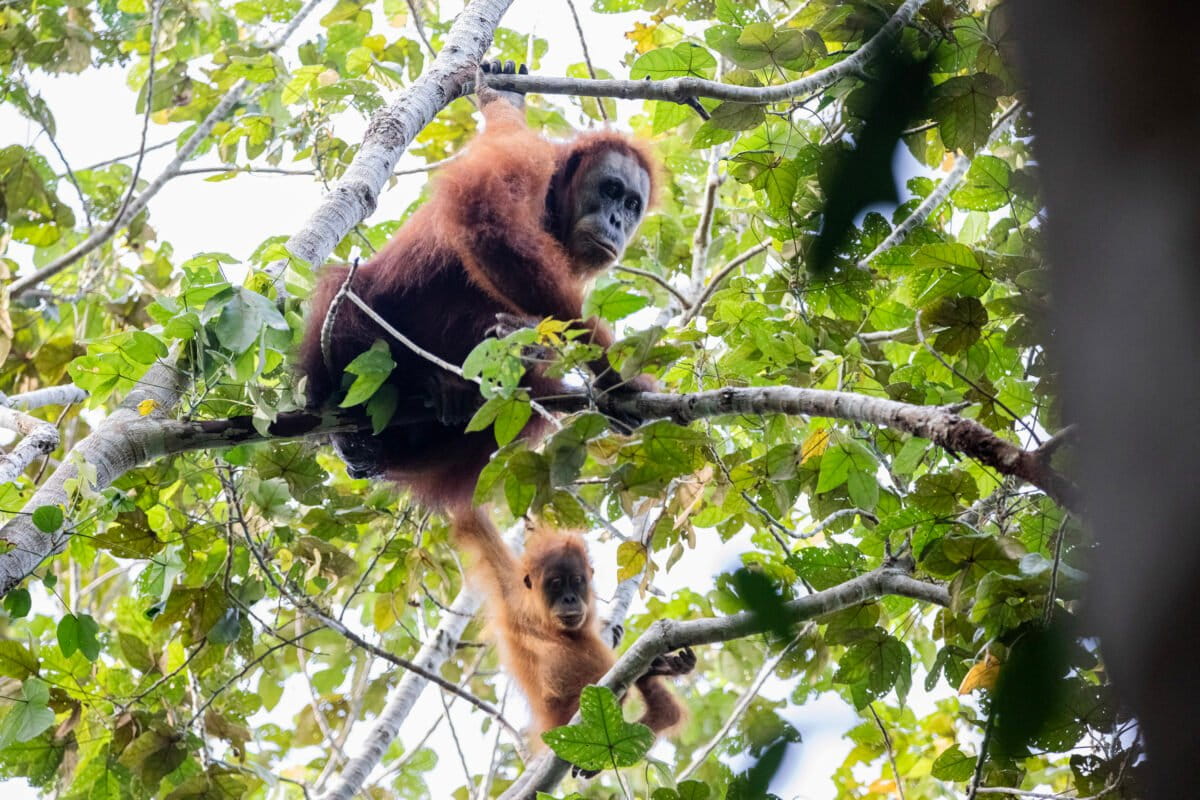
Photo: Junaidi Hanafiah/Mongabay Indonesia
Ferry Aulia Hawari, a graduate student at the University of North Sumatra (USU) and a GIS specialist for YOSL-OIC, is studying the habitat fragmentation. "The Batang Toru forest and the Lumut peat forest are completely disconnected by palm oil plantations and road construction," he stated. His research, which analyzes forest cover data dating back to 1990, aims to quantify the devastating impact of this lost connectivity.
A Conservation Crossroads: Relocate or Reconnect?
The discovery has ignited a critical debate among experts: what is the best strategy to save this fragile population?
Panut Hadisiswoyo, Director of Green Justice Indonesia (GJI) and an orangutan expert, believes translocation may be the only viable long-term solution. "It's wonderful news, but their habitat is being eroded daily," he explained. He argues that the population, likely fewer than 100 individuals, is too small to be genetically sustainable, falling far short of the 250 individuals often cited as a minimum for a viable population. "Reconnecting the Lumut forest to Batang Toru is highly improbable. Moving them to a more secure block within the Batang Toru ecosystem would enhance genetic diversity and population numbers."
However, Wanda Kuswanda, a Senior Researcher at Indonesia's National Research and Innovation Agency (BRIN), advocates for a different approach centered on coexistence and habitat restoration. He warns that fragmentation inevitably leads to human-orangutan conflict as the apes are forced into community-managed lands to find food.
Instead of moving the animals, Wanda suggests creating habitat corridors. This could be achieved by encouraging local communities to cultivate crops that serve both human economic needs and the orangutans' ecological requirements. "For example, communities could be incentivized to plant benzoin trees (Styrax spp)," he proposed. "People can harvest the valuable resin from the trunk, while orangutans can eat the leaves. This creates a win-win scenario, fostering coexistence."
This approach, he argues, respects local livelihoods while providing the ecological connectivity necessary for the orangutans' survival. Ultimately, the future of this newly found population hangs in the balance, demanding swift, innovative, and collaborative conservation action to prevent their fragile new home from disappearing completely.


