


Deep in the mountainous forests of Laos, a team of scientists is carrying out what has been described as one of the most ambitious wildlife searches in the world. Their mission is to rediscover the saola, a mysterious mammal nicknamed the “Asian Unicorn”, which is believed to have only a few dozen individuals left in the wild.
According to Mongabay, the operation is led by the Saola Foundation for Annamite Mountain Conservation in collaboration with the Lao government, the Saola Working Group under the IUCN, and local communities. They are racing against time to save one of the rarest animals on Earth before it disappears forever.
A Race Against Time in the Annamite Forests
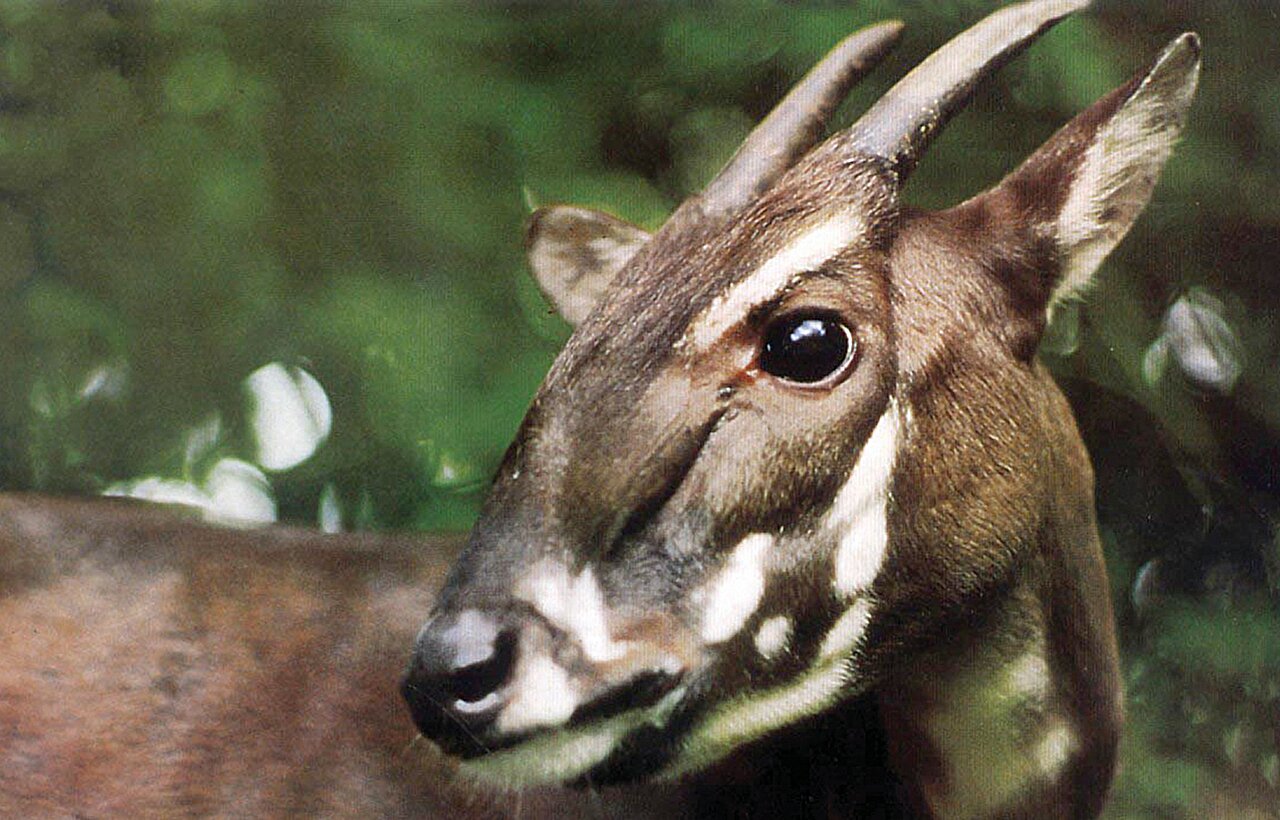
Since April 2025, a conservation team made up of wildlife trackers, scientists, and local residents has launched a large-scale search in Bolikhamxay Province, central Laos. They are combing through an area of 300 square kilometers, a dense forest that remains largely unprotected but is believed to be the saola’s last refuge.
Lorraine Scotson, CEO of the Saola Foundation, described the effort as a race against time. “Even if there are individual saola out there, every day that goes by, those saola are getting older and ultimately beyond breeding age,” she told Mongabay. This reality makes the chances of saving the species increasingly slim.
The Saola Working Group estimates that no more than 50 individuals remain, scattered in small, isolated groups across the Annamite Mountains—a range spanning the borders of Laos, Vietnam, and northeastern Cambodia. With such a critically low number, natural reproduction is almost impossible.
Read also: Saola, the Southeast Asian Unicorn
Technology and Tracks: From DNA to Detection Dogs
To find this almost invisible creature, the team is using a combination of modern techniques. Two trained detection dogs, Norman and Bertie, have been deployed to sniff out the droppings of even-toed ungulates like the saola.
Because no fresh saola scat samples exist, the dogs were trained using the scents of related species to help them recognize potential signs of the animal’s presence.
In addition, the team is using a portable qPCR-based DNA testing device developed by the Wildlife Conservation Society’s Wildlife Diagnostics Lab at the Bronx Zoo in the U.S. This technology can confirm within two hours whether a sample—such as dung, hair, or chewed leaves—comes from a saola.
According to Mongabay, developing this tool was itself a major challenge since no living saola can be used as a reference. Scientists even had to create “artificial dung” by mixing archived saola DNA into antelope feces to build a reliable testing method.
Roots of the Crisis: Snares, Hunting, and Vanishing Habitats
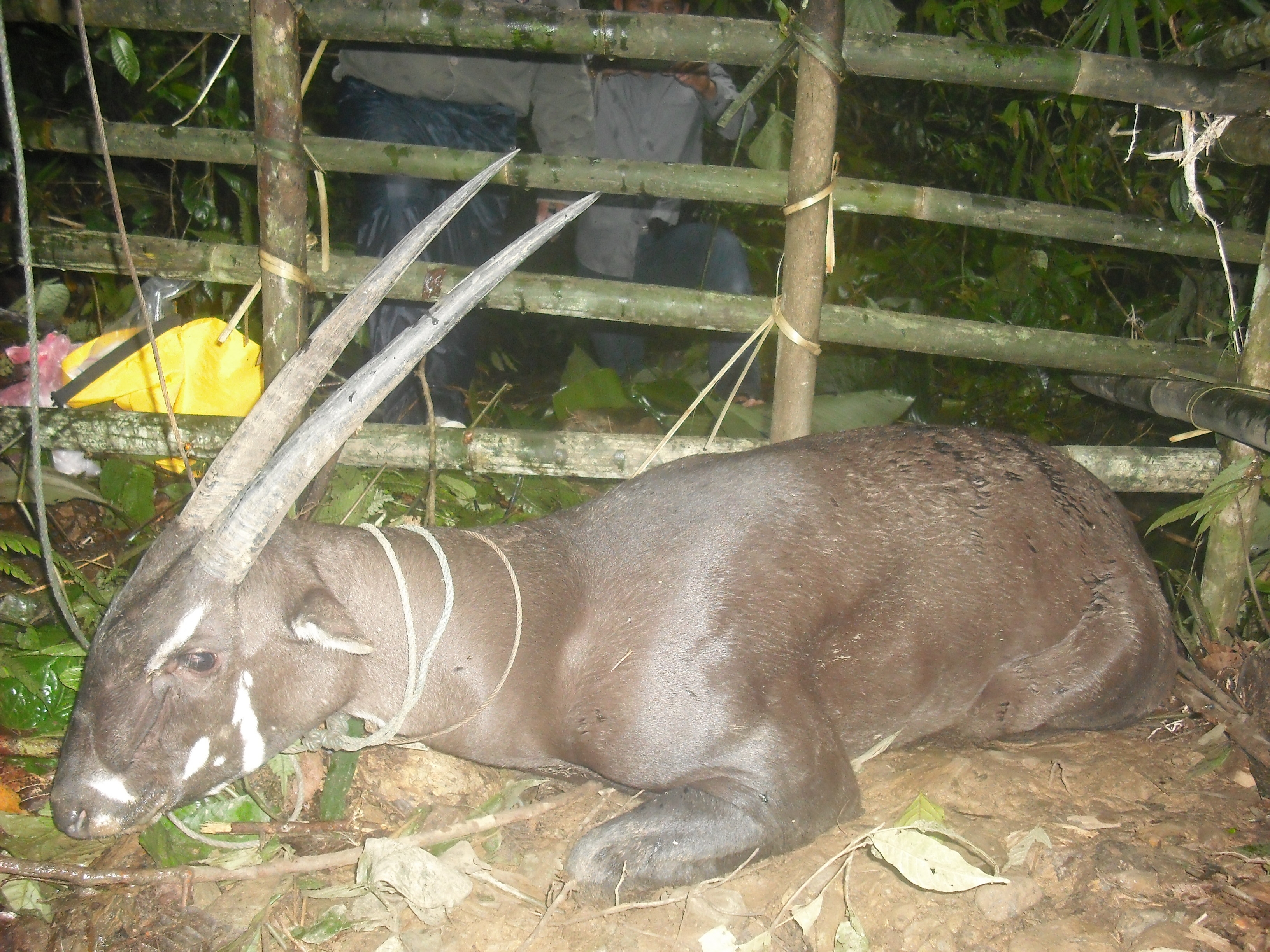
According to WWF, the main threat to saola comes from steel wire snares set in the forest to catch animals like wild boar and deer. Although saola are not the hunters’ intended targets, they often end up as accidental victims.
It is estimated that millions of snares are scattered across the region, making them the deadliest threat to this elusive large mammal. In addition to snares, deforestation and habitat fragmentation have caused a severe population decline.
Land clearing for agriculture, road construction, and logging has divided saola populations into small, isolated groups, making it increasingly difficult for them to find each other and reproduce. WWF warns that the loss of their natural habitat means losing the species’ last chance to survive.
Various conservation efforts have been initiated. Since 2011, the Vietnamese government has established a protected area in Quang Nam Province specifically for saola and other rare mammals. WWF has also trained forest rangers and collaborated with local communities to remove snares and raise awareness about the importance of protecting this endemic species.
In addition, since 2017, Laos and Vietnam have implemented a conservation breeding program aimed at rescuing the remaining saola by capturing a few individuals, raising them safely, and breeding them in captivity. The offspring from this program will eventually be released back into the wild once their habitats are fully secured from snares and poaching.
Read also: The Most Endangered Animals in the World
A Story Still Unfolding
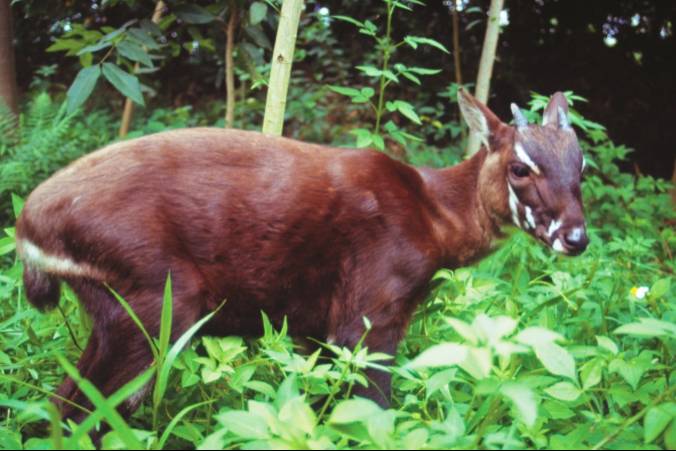
The saola was unknown to the world until 1992, when researchers from the Hanoi Museum of Natural History discovered a pair of unusual horns in a Lao village. Analysis revealed that the horns belonged to a previously unknown species of wild cattle (Bovidae).
The discovery is considered one of the most remarkable zoological findings of the 20th century, because it is extremely rare for a large mammal to be identified in modern times.
Since then, live saola have only been documented a handful of times: through a camera trap photograph in Laos in 1999, in Vietnam in 2013, and through occasional reports from local villagers. According to WWF, the only known physical specimens today consist of skin, horns, and skulls stored at the Zoological Museum in Copenhagen.
In the wild, the saola is known for its calm and gentle nature, perfectly reflected in its Lao nickname, Saat Supphap, which means “the polite animal.”


