


Before the Latin alphabet came to dominate writing in the Philippines, the people of the archipelago already had their own indigenous script known as Baybayin. This writing system was a legacy from the pre-Hispanic era, long before the arrival of the Spanish.
In a 17th-century dictionary, Baybayin was described as the “A-B-C” of the Tagalog people, and the term was later used to refer to similar writing systems used by other Filipino ethnic groups.
However, many mistakenly refer to it as Alibata, a term that was only coined in 1914 and has no historical basis.
The Traces of Baybayin in the Oldest Documents
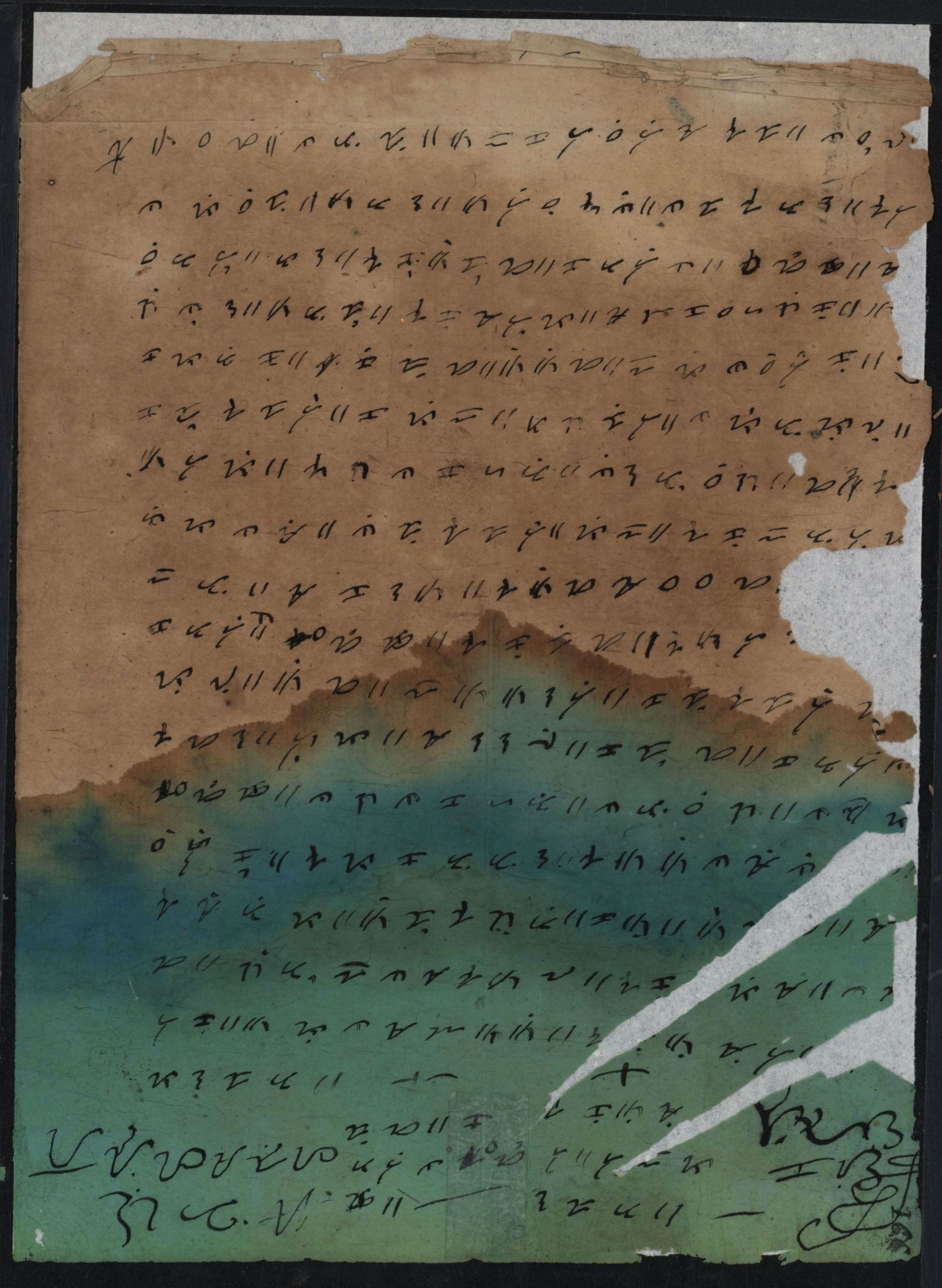
One of the most valuable pieces of evidence proving the existence of Baybayin is the UST Baybayin Documents, two land sale deeds written entirely in this script.
Dating back to the early 17th century, these documents are now carefully preserved in the Archivo de la Universidad de Santo Tomas. On August 22, 2014, the collection was declared a National Cultural Treasure by the National Archives of the Philippines.
The two deeds provide fascinating insights into early Manila society. Names such as Guintoin, Salonquilat, Bayican, and Banaag appear as the parties involved, alongside place names like Tondo, Dilao, Sogmandal, and Amagdangal.
Through these records, we learn how land was bought and sold—and notably, that women actively participated in business transactions at the time, a fact rarely highlighted in early colonial history.
First Scholarly Study of Baybayin
Etymologically, the word Baybayin comes from baybay, meaning “to spell.” This writing system was used to record several Philippine languages, including Tagalog, Ilocano, Pangasinan, and Bisaya.
The first scholarly study of the UST Baybayin Documents was conducted by Filipino scholars Ignacio Villamor and Norberto Romualdez in 1918, and later revised in 1922. Romualdez would eventually serve as the chair of the National Language Committee during the Commonwealth period.
Their research was later expanded by Fr. Alberto Santamaria, O.P., who published his findings in Unitas journal in 1938.
Structure and Uniqueness of the Baybayin Script
Baybayin is written from left to right and consists of 17 basic characters: 14 consonants and 3 vowels. Each consonant carries the inherent sound “a.” Other vowel sounds are indicated using diacritical marks: a dot or line above a character changes the sound to e/i, while a mark below changes it to o/u.
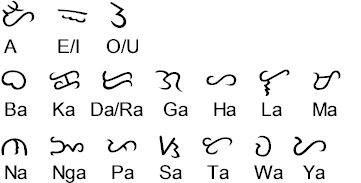
There is also a small cross mark placed below the character to eliminate the inherent “a” sound. Simple yet elegant, the shapes of Baybayin letters combine soft curves and graceful strokes, reflecting the artistic sensibility of ancient Filipino society.
Doctrina Cristiana: A Lost Legacy

One of the most significant pieces of evidence of Baybayin’s use is the Doctrina Cristiana, a religious book written in Spanish and Tagalog, published in 1593. Compiled by Fray Juan de Plasencia, it contains Christian prayers such as the Our Father and Hail Mary, serving as a bridge between faith and local culture.
Unfortunately, all copies of the book were lost in the Philippines until a surviving copy was discovered in Paris in 1946. It was later acquired by American collector Lessing J. Rosenwald and is now preserved at the Library of Congress in the United States.
The Philippine government continues to pursue efforts to repatriate this cultural treasure, similar to the campaign to recover the Bells of Balangiga, three church bells taken by the United States Army in 1901.
From the Past to a New Revival
Although it was once forgotten due to colonization and the adoption of the Latin alphabet, interest in Baybayin has been revived in recent years. Many schools and cultural institutions in the Philippines have begun reintroducing it, while local artists express national pride through murals, calligraphy, and Baybayin tattoos.
The Baybayin character ka, which symbolizes Kalayaan (freedom), once appeared on the Katipunan flag and now forms part of the Philippine Army’s logo.

In 2018, the Philippine Congress passed House Bill 1022, declaring Baybayin the national writing system. The bill even requires local manufacturers to include Baybayin script on their product labels.


